What Is the Difference Between Mold Removal and Mold Remediation?
What Is the Difference Between Mold Removal and Mold Remediation? The terms mold removal and mold remediation are often used interchangeably, but they do not
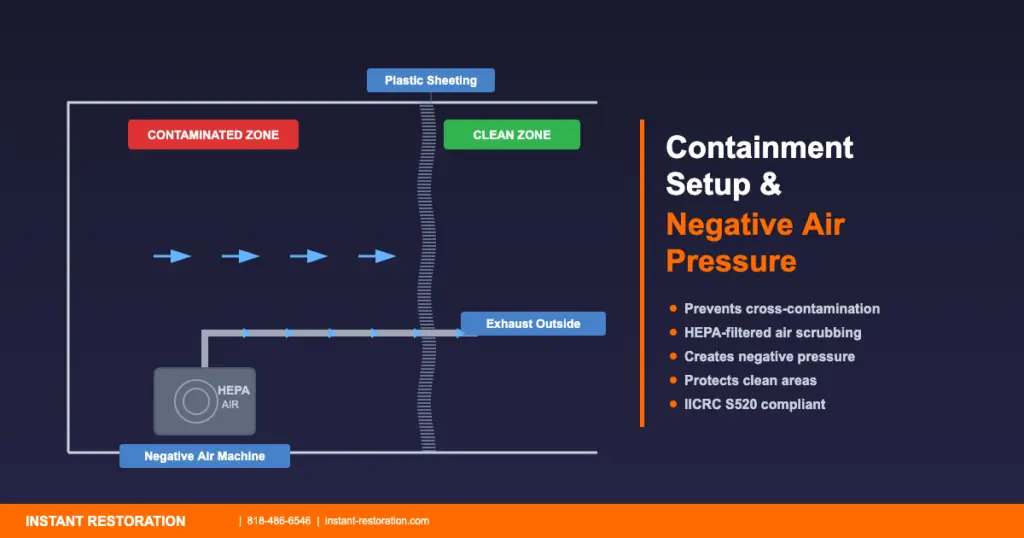
Before any mold removal work begins, the affected area must be controlled. Containment setup and negative air pressure are used to prevent mold spores and dust from spreading to other parts of the property during remediation.
This step comes before demolition or cleaning and plays a critical role in keeping unaffected areas safe.
Share:
What Is the Difference Between Mold Removal and Mold Remediation? The terms mold removal and mold remediation are often used interchangeably, but they do not
HEPA Air Filtration and Environmental Cleaning in Mold Remediation When mold is disturbed, microscopic spores become airborne and migrate beyond the visible work area. Effective
Removal and Replacement of Damaged Drywall, Flooring, and Framing When mold affects a property, it often spreads into building materials that absorb moisture and trap
Containment setup involves isolating the affected area using physical barriers. These barriers are typically made from heavy-duty plastic and are installed from floor to ceiling.
Containment helps:
Separate contaminated areas from clean spaces
Control airflow inside the work zone
Reduce the risk of mold spreading during removal
Openings such as doors, vents, and pathways are sealed so air movement can be controlled throughout the process.
According to the EPA, containment setup and negative air pressure are critical during mold remediation to prevent the spread of airborne contaminants into unaffected areas.
Negative air pressure works together with containment. Specialized equipment pulls air into the contained area instead of allowing it to escape.
This air is filtered through HEPA filters before being released, which helps:
Capture airborne mold spores
Reduce dust during demolition
Maintain better air quality during remediation
Without negative air pressure, even a well-built containment can allow contaminants to escape.
During mold remediation, materials like drywall, insulation, and flooring are often disturbed. When this happens, mold spores can become airborne.
If containment and negative air pressure are not in place first:
Mold spores can spread to clean rooms
HVAC systems can become contaminated
The scope of damage can increase
Additional cleanup may be required
This is why professional remediation always starts with environmental control before removal begins.
Containment and negative air pressure help protect:
Nearby rooms and hallways
Furniture and personal belongings
Heating and cooling systems
Occupants and workers
By keeping contaminants confined, remediation can be performed safely without creating new problems elsewhere in the building.
This level of control is critical when:
Mold is located inside walls or ceilings
Large areas are affected
The property is commercial or multi-unit
Occupants are sensitive to air quality
Mold growth has been present for an extended time
In these situations, skipping containment can lead to widespread contamination.
Containment setup and negative air pressure are installed after inspection and before any removal or environmental cleaning.
They remain in place until:
Contaminated materials are removed
Cleaning and air filtration are completed
The area is stable and controlled
Only then is it safe to move forward with the next stages of remediation.
Proper mold remediation begins with containment setup and negative air pressure to prevent mold from spreading during removal.
Containment setup and negative air pressure are not optional steps. They are essential controls that protect the property, limit contamination, and allow mold remediation to be performed safely.
Understanding this step explains why professional mold remediation follows a structured process instead of rushing directly into removal.
What Is the Difference Between Mold Removal and Mold Remediation? The terms mold removal and mold remediation are often used
HEPA Air Filtration and Environmental Cleaning in Mold Remediation When mold is disturbed, microscopic spores become airborne and migrate beyond