OPERATIONS · LIVE LOS ANGELES · VENTURA · ORANGE 3 COUNTIES · 24/7
24/7 · (818) 486-6546
CSLB #1078518 · IICRC S500/S540 · CLASS B GENERAL

Water damage stops the second our truck arrives.

Every hour water sits in your property, the cost of water damage restoration roughly doubles. Emergency water damage Los Angeles, Ventura, Orange County, and San Fernando Valley homeowners and businesses count on — local crews, 30-minute dispatch, 24/7. Full water damage services across Southern California: extraction, drying, sanitization, and rebuild. Licensed, insured, bonded. IICRC-certified water damage company. CSLB Class B general contractor. Direct insurance billing for residential and commercial water damage.

● Dispatch ConsoleLIVE
Active Crews7 deployed
Avg. Arrival (LA)29 min
Today's Calls14
IICRC CertsS500 · S520 · S540 · S700
Insurance BillingDirect (all carriers)
CSLB License#1078518 · Class B
Serving SoCal Since2007
The First 60 Minutes

Water Damage Restoration Services — Engineered for Speed

Most water damage doubles in restoration cost every 24 hours it sits. Standing water saturates structural materials within minutes, so our first hour is engineered around fast water removal — extracting water out of the property and starting the drying process before secondary damage takes hold.

MIN 0–5
📞
Call Triage
Live dispatcher (no menu). Source identified — burst pipe, slab leak, ceiling leak, sewage backup, or flood damage. Crew + truck assigned to your ZIP. ETA committed.
MIN 5–30
🚛
Truck Rolls
IICRC-certified tech + extraction unit + dehumidifiers + thermal cam onboard. Most ZIPs reached in under 30 min.
MIN 30–45
🔍
On-Site Assessment
Moisture mapping, thermal imaging, leak detection, water category test, scope written. Insurance carrier notified if applicable.
MIN 45–60
Mitigation Live
Standing water out. Affected areas and structural materials documented + removed. Drying equipment placed. Insurance claims process initiated with your insurance provider.
IICRC S500 · Standard Of Care

The Six-Phase Water Damage Restoration Process

IICRC S500 is the federal standard for water damage restoration. Insurance carriers, insurance providers, and adjusters expect it on every claim. We document each phase of the restoration process end-to-end — from water extraction, through removing standing water and structural drying, to mold growth prevention and final repair — so claims close clean. Every water damage restoration job we run follows this six-step restoration process to restore your property to pre-loss condition. The result: a faster path to a clean insurance claim and a property that's not just dry, but fully restored.

01
S500 · INSPECTION

Inspection & Moisture Mapping

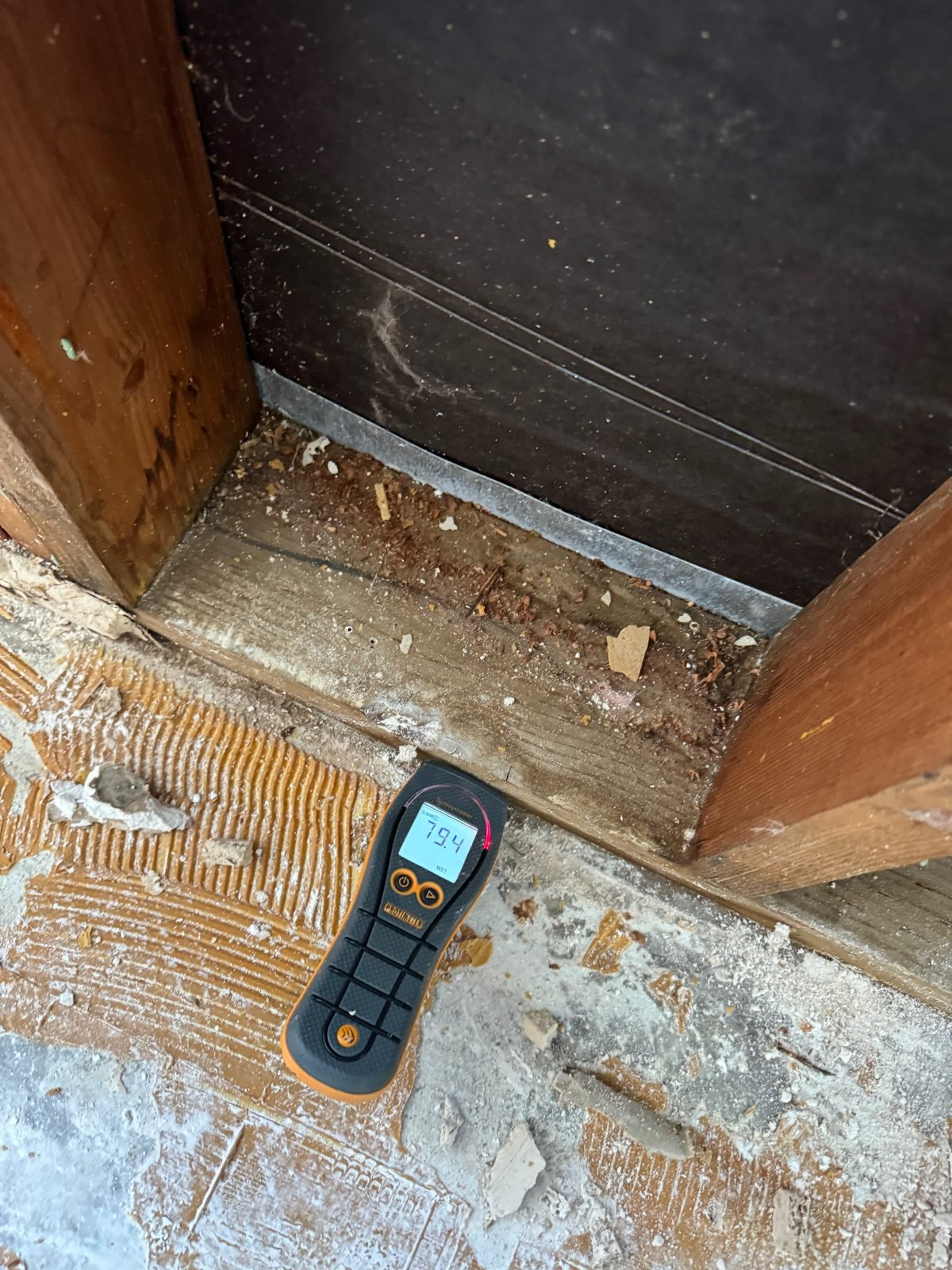
Thermal imaging cameras + pinless moisture meters identify wet zones — including behind walls and under floors where the eye misses it. Every reading documented with timestamp + location.

02
S500 · EXTRACTION

Water Extraction & Pump-Out

Truck-mounted and portable extractors remove up to 99% of standing water within hours. Fast water removal is the largest single driver of final invoice — every hour we shave off extracting water means fewer building materials need to be cut and replaced.

03
S500 · STABILIZATION

Material Removal & Containment

Unsalvageable building materials (saturated drywall, padding, insulation, baseboards) are documented and removed. Containment walls go up if cross-contamination is a risk. Cat 2/3 water with contaminated water content triggers full PPE protocols and IICRC S540 procedures to protect from microbial growth.

04
S500 · DRYING

Structural Drying & Dehumidification

Air movers + commercial dehumidifiers run 24/7 with daily moisture checks. The drying process targets are calculated from S500 psychrometric standards using advanced tools — not guessed. Removing moisture from structural materials is what restores the property to pre-loss condition. Most water damage restoration projects hit dry standard in 3–5 days.

05
S500 · ANTIMICROBIAL

Sanitization & Mold Growth Prevention

EPA-registered antimicrobials applied to every affected surface. Mold growth can begin within 72 hours; this step is non-negotiable for Cat 2/3 water and prevents secondary damage. Mold remediation protocols and air-quality verification available on request.

06
CSLB · CLASS B REBUILD

Reconstruction & Build-Back

Drywall, paint, flooring, cabinetry, MEP — handled in-house under our CSLB Class B general contractor license. Same project manager from extraction to final walkthrough. Most competitors stop at Phase 5 and hand you a job site.

IICRC S500 Water Categories

Not all water is the same water. Category determines protocol — and cost.

The IICRC S500 standard splits water damage into three categories by contamination level. Each carries different health risks, water removal timelines, drying processes, and water damage restoration pricing. Knowing your category before our truck arrives helps property owners understand what's coming and prevents further damage.

Category 1
Clean Water

Source is sanitary: supply lines, sink overflows, rainwater (initial). No substantial health risk if addressed within 24–48 hours.

SourcesBurst pipe, slab leak, supply line, tub overflow
Health RiskLow
Time Until Cat 248 hours
Typical Cost$1,500–$4,500
Category 2
Grey Water

Significant contamination — bacterial, chemical, or biological — that can cause illness if ingested. Requires antimicrobial protocols.

SourcesDishwasher leak, washing machine overflow, toilet (urine only), HVAC overflow
Health RiskModerate
Time Until Cat 348 hours
Typical Cost$3,000–$8,000
Category 3
Black Water

Grossly contaminated — sewage, flooding, ground surface water. Pathogens, bacteria, viruses. Full PPE + containment required.

SourcesSewer backup, sewage backup, flood damage, river/storm water
Health RiskHigh
StandardIICRC S540 + S500
Typical Cost$6,000–$20,000+
Common Sources of Water Damage

Most Common Causes of Water Damage in LA Homes & Businesses

Every emergency water damage call gets the same first question: where is the water coming from? Identifying the source determines the water damage restoration protocol, IICRC category, and final water damage repair cost. Here's what property owners across Los Angeles, Ventura, and Orange County see most often — and how our water damage restoration company handles each one. Whether the issue is a burst pipe, a slow leak, or a flood event, the restoration process starts with removing standing water, then drying structural materials, then sanitization to prevent mold growth, then repair. Every step is engineered to restore the property to pre-loss condition fast — so insurance claims close clean and property owners aren't left with a job site.

01 · Cat 1

Burst Pipe / Pipe Leak

Aging copper, frozen pipes, pressure failures, hose connections. The most common source of residential water damage in older LA homes — and usually fully insured under standard homeowner policies.

02 · Cat 1

Slab Leak

Pinhole leaks in pressurized water lines under the foundation. Often goes undetected for weeks. Telltale signs: warm spots on the floor, unexplained water bills, mildew odor. Requires leak detection + slab work.

03 · Cat 2

Toilet Overflow

Wax ring failure, clogged drain, supply valve burst. Water carrying urine is Cat 2 — full sewage backflow is Cat 3. Different protocols, different pricing. We test on-site to categorize properly.

04 · Cat 2

Dishwasher / Washing Machine Leak

Supply line burst, drain hose failure, door seal compromise. Often runs unattended for hours overnight or while owner is at work. Hidden saturation under cabinets and behind kick plates is the real damage.

05 · Cat 1–2

Ceiling Leak

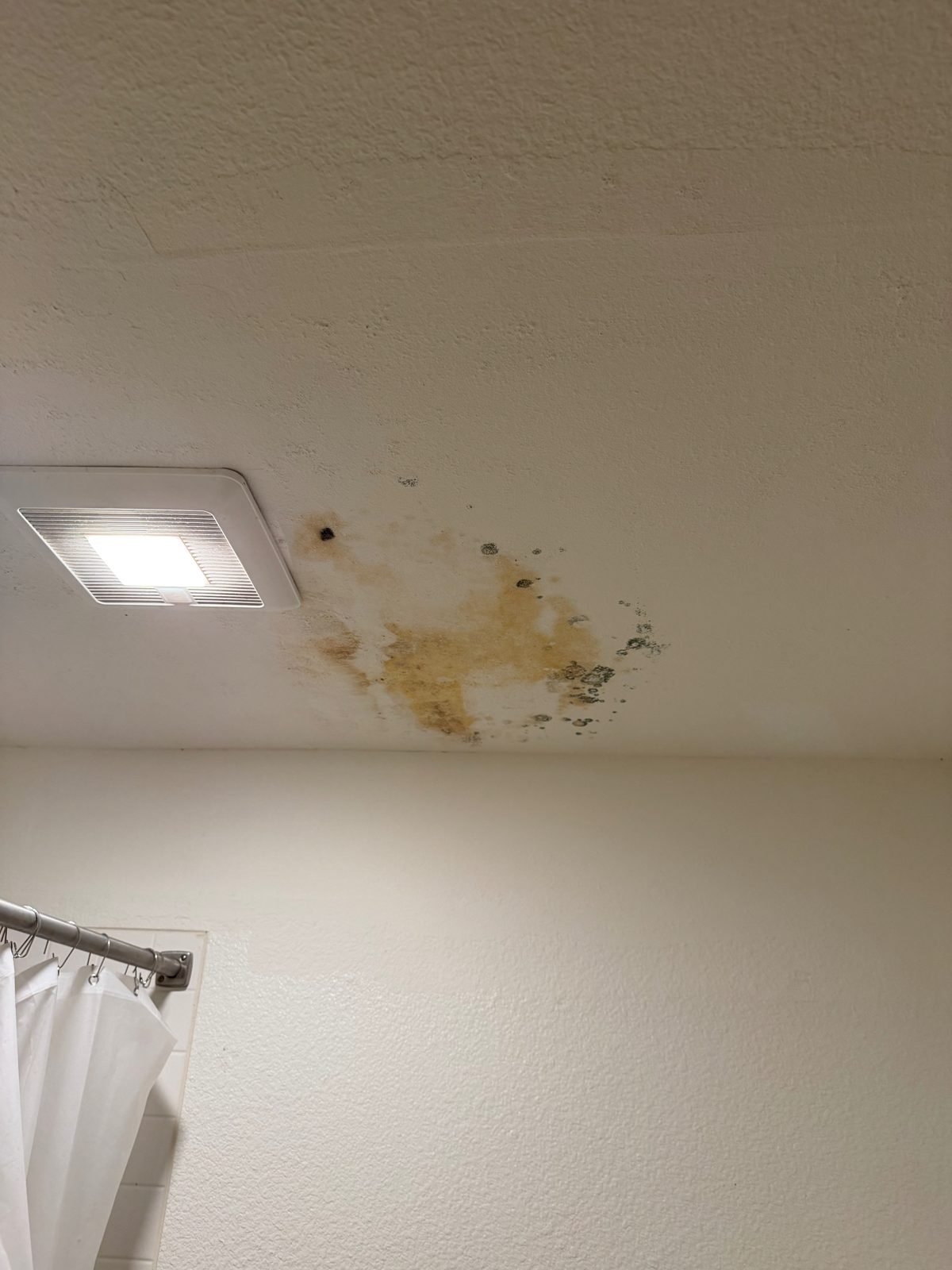
Roof failure, second-floor plumbing, condensation in attics, HVAC overflow. Drywall sagging or staining means water has been sitting for hours. Mold typically begins within 48–72 hours of ceiling saturation.

06 · Cat 3

Sewer Backup / Flood Damage

Main line clog, storm overflow, ground-surface flooding. Requires full IICRC S540 biohazard protocol. PPE, containment, removal of all porous materials. Insurance coverage varies — often requires a flood policy rider.

Drying-Time Reality Check

What it actually takes to hit "dry standard" on a water damage job.

IICRC S500 defines drying targets in terms of equilibrium moisture content. The drying process pulls excess water and remove moisture from structural materials until the property is restored to pre-loss condition. Below are realistic water damage remediation timelines by damage class — what we tell clients, and what we deliver against.

Class Description Typical Sq Ft Drying Days Equipment On Site
CLASS 1 Minimal moisture absorption — single room, partial perimeter wet 0–500 2–3 days 3–5 air movers · 1 dehumidifier
CLASS 2 Entire room or larger area, carpet + cushion saturated, walls wet up to 24" 500–1,500 3–5 days 10–20 air movers · 2–3 dehumidifiers
CLASS 3 Greatest amount of water — ceilings, walls, insulation, floors all affected 1,500+ 5–10 days 30+ air movers · 4–6 dehumidifiers
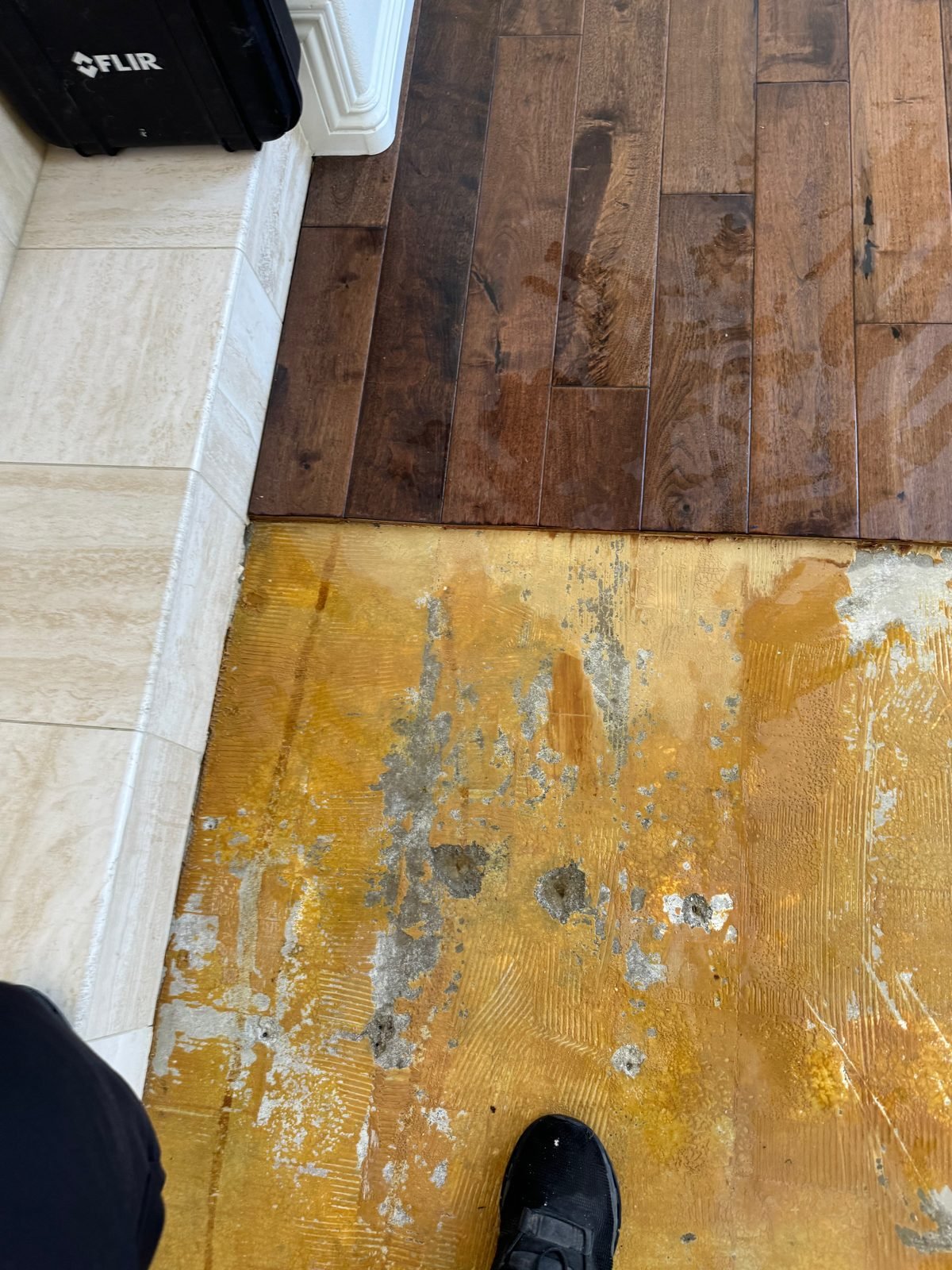
CLASS 4 Specialty drying — hardwood, concrete, plaster, low-evaporation materials Varies 10–21 days Specialty drying mats + desiccants
Project Timeline

What every day looks like — from the call to keys back.

No black-box. Fast response start, daily moisture readings, photo documentation, and insurance updates sent to you, your insurance company, and your adjuster. Every milestone of the water damage restoration process documented for the insurance claims process.

DAY 1

Call · Arrive · Stop

Truck on-site within ~30 min. Standing water extracted. Damage scoped + photographed. Equipment placed. Carrier notified.

DAY 2

Drying Begins

Equipment running 24/7. First moisture re-check. Affected materials removed. Containment built where needed. Insurance pre-approval submitted.

DAY 3–5

Dry to Standard

Daily moisture readings. Equipment adjusted. Antimicrobial applied. Documented "dry standard" achieved per S500. Equipment removed.

DAY 6+

Rebuild & Restore

CSLB Class B build-back: drywall, paint, flooring, cabinetry, MEP. Same PM. Final walkthrough. Insurance closeout. Keys back.

Insurance · Direct Billing

Insurance Claims Process — We Handle It Direct

Most property owners pay only their deductible, never the full invoice. Our insurance claims process is engineered for insurance professionals: line-item Xactimate scopes priced to pre-loss condition, photo log of affected areas, daily moisture readings, before/after documentation. Insurance providers and adjusters get an audit-proof paper trail. Claims close cleaner. Approvals come back faster.

01
Call Filed
We notify your carrier the day work starts. Claim # logged in our system.
02
Adjuster Aligned
Direct adjuster contact. Scope of work shared in carrier-preferred format (Xactimate).
03
Daily Documentation
Moisture logs, photo updates, technician notes uploaded daily. Audit-proof record.
04
Approval Pushed
Pre-approval submitted before drywall work begins. Supplements handled in-house.
05
Final Closeout
Carrier paid direct. You pay deductible only. Closeout package delivered with warranty.
Most Restoration Companies Aren't General Contractors

Commercial Water Damage & Residential Restoration — One Call

Most companies stop at Phase 5 — they extract, dry, sanitize, and walk away with a "scope of repairs" handoff. You then hire a separate water restoration company or contractor for drywall, paint, flooring. Two companies. Two timelines. Two coordination problems. We do the full water damage repair and restoration services under one roof — a CSLB Class B water damage restoration company serving residential homes, multi-unit apartments, commercial properties, offices, retail, restaurants, hotels, and warehouse properties.

Instant Restoration

One company. Start to keys-back.

  • CSLB Class B General Contractor License #1078518
  • Same project manager from dispatch to final walkthrough
  • Drywall, paint, flooring, cabinetry, MEP — all in-house
  • Single insurance claim, single set of paperwork
  • One contract. One invoice. One warranty.
  • Local crews across 3 counties — not franchise contractors
Most Competitors

Two companies. Two coordination headaches.

  • Restoration license only — not a general contractor
  • Different PM for mitigation vs. rebuild (or none)
  • Hand off rebuild to a sub or "trusted partner"
  • You manage two claim conversations with adjusters
  • Multiple contracts, invoices, warranties
  • Franchise model — crew is whoever they had available
Service Areas · Within Our 30-Min Dispatch

Local crews in every neighborhood we serve.

Local water damage restoration services for property owners across LA, Ventura, and Orange County — we know the building stock, the plumbing patterns, the burst pipes that come with each housing era, and the insurance company carriers in each ZIP. Fast response on every call. No franchise transfers. No "we'll get someone out in 2–3 days."

Frequently Asked Questions

Real answers to the questions clients ask in the first 10 minutes.

How fast can you actually be on-site?
For most of LA, Ventura, and Orange County, our average arrival from dispatch is 29 minutes. We commit to an exact ETA on the call so you can plan around it. We are not a franchise that pulls subs from a list — every truck is staffed by IR technicians.
Will my insurance cover this?
Sudden and accidental water damage (burst pipes, supply line failures, appliance overflows) is covered by virtually all standard homeowner policies. Gradual leaks and flood-source water are typically not. We bill your carrier directly and most clients pay only their deductible. We work with all major carriers.
What does water damage restoration cost in Los Angeles?
Cat 1 (clean water) jobs typically run $1,500–$4,500. Cat 2 (grey water) jobs run $3,000–$8,000. Cat 3 (black water) jobs start at $6,000 and can exceed $20,000 depending on square footage and damage class. The biggest price driver is hidden damage in subfloors, walls, and HVAC — which is why we use thermal imaging on every job.
Do I need to be home when you arrive?
Ideally yes for the initial assessment so we can walk the property together. After that, we can work via lockbox, smart lock, or property manager once a scope of work is signed. Many of our clients are out of state owners or PM-managed properties.
How long until my home is dry and safe?
Class 1 jobs (small areas): 2–3 days drying. Class 2 (room-scale): 3–5 days. Class 3 (multiple rooms, ceiling involvement): 5–10 days. Specialty drying (hardwood, concrete) can extend up to 21 days. We hit S500 dry standard before equipment leaves — measured, not guessed.
Do you handle the rebuild after drying?
Yes. We hold a CSLB Class B General Contractor license (#1078518), which means drywall, paint, flooring, cabinetry, and MEP all stay in-house. Same project manager from dispatch to final walkthrough. Most restoration companies stop at drying and hand you a job site — we hand you back a finished home.
What's the difference between Cat 1, 2, and 3 water?
Cat 1 is sanitary at the source (broken supply line, tub overflow). Cat 2 carries significant contamination (dishwasher, washer overflow). Cat 3 is grossly contaminated (sewer backup, flood water, river/groundwater). Each category triggers different protocols, PPE, antimicrobial treatments, and pricing — defined in IICRC S500 and S540.
Will mold grow if water sits too long?
Mold can begin colonizing wet materials within 24–72 hours. After 72 hours, virtually all Cat 2/3 water events have measurable mold growth somewhere in the affected area. This is why drying speed is critical — and why we apply EPA-registered antimicrobials as standard protocol on every Cat 2/3 job.
Can I do this myself with a wet-vac?
For a small Cat 1 spill (under 50 sq ft, surface only), maybe. For anything beyond that — water has already wicked into drywall, padding, subfloor, insulation, and possibly HVAC. DIY drying without commercial dehumidifiers and moisture verification is the #1 cause of post-event mold remediation jobs we see.
Do you offer a warranty?
Yes. All mitigation work is warranted to IICRC S500 dry standard at the time of equipment removal. All reconstruction work carries a 1-year workmanship warranty under our CSLB Class B license. Manufacturer warranties on materials pass through directly.
How much does water damage cleanup cost in Los Angeles?
Emergency water damage cleanup in Los Angeles typically falls in three tiers based on IICRC category. Cat 1 (clean water) jobs run $1,500–$4,500. Cat 2 (grey water — dishwasher, washer, toilet) runs $3,000–$8,000. Cat 3 (sewage backup, flood damage) starts at $6,000 and can exceed $20,000. Square footage, hidden damage in subfloors and walls, and how long water sat are the biggest cost drivers. We document everything in Xactimate format for your insurance carrier so the price you pay matches what's covered.
Can you handle commercial water damage too?
Yes. We restore commercial properties — offices, retail, restaurants, hotels, multi-tenant buildings, warehouses, and industrial facilities — across LA, Ventura, and Orange County. Commercial water damage runs on the same IICRC S500 protocol as residential, but with after-hours response and phased work to keep your operation running. Insurance carriers receive Xactimate-formatted scopes for fast adjuster approval.
Are you licensed, insured, and bonded?
Yes — fully licensed, insured, and bonded. CSLB License #1078518 (Class B General Contractor). IICRC certified across S500 (water damage), S520 (mold), S540 (biohazard), and S700 (fire/smoke). General liability and workers' comp insurance verified annually. We carry the full credentialing your insurance adjuster expects to see before a claim closes.
What's the difference between water damage repair and water mitigation?
Water mitigation is the emergency phase — extraction, drying, sanitization, preventing additional damage. Water damage repair (or restoration) is what happens after: drywall, paint, flooring, cabinetry, MEP rebuild. Most companies do mitigation only and refer the repair out. Because we're a CSLB Class B general contractor, we handle both phases under one roof, one project manager, one warranty.

Water doesn't wait. Neither do we.

Emergency water damage response · Live dispatcher · Truck rolling within 30 minutes · CSLB Class B · IICRC certified · Licensed, insured, bonded · Direct insurance billing for residential and commercial

📞 (818) 486-6546