Mold doesn't have to be scary.
If you found mold in your home — whether it's on a bathroom wall, in your kid's room, or just a musty smell that won't go away — we'll come look at it for free. No pressure, no salesy quote. Just a real IICRC-certified mold tech who'll tell you what you're dealing with, what it'll take to fix it, and what your insurance will probably cover.
Mold can affect your family's health. That's why we treat it seriously.
Mold spore exposure varies by species, concentration, and time. Some people have no reaction. Others — especially kids, elderly, asthmatics, and anyone immunocompromised — can be sensitive. Our IICRC S520 protocol includes containment, HEPA filtration, and post-clearance air testing so we can prove the mold is gone before we hand the property back.
Respiratory
Cough, wheezing, sinus congestion, asthma triggers. The most common reaction. Usually resolves quickly once the mold is removed.
Allergic
Sneezing, runny nose, itchy eyes, skin rash. Most often in people with existing allergies, eczema, or sinus issues.
Kids & Elderly
Higher sensitivity. Prolonged exposure can increase asthma risk in children. Always treat mold quickly when family includes infants, toddlers, or seniors.
Immunocompromised
HIV+, chemo patients, transplant recipients, autoimmune. Some Aspergillus species can cause serious infections. Special caution and faster remediation timelines recommended.
Removing the mold removes the risk. There's no documented safe long-term exposure level for most species — which is exactly why we don't cut corners on protocol. Source: CDC, EPA, Los Angeles County Department of Public Health.
Mold is a symptom of moisture. We find the source — and fix it.
Most LA mold remediation companies kill the mold and walk. The problem comes back within 6–12 months because the moisture source was never fixed. We're a CSLB Class B general contractor, so we trace the leak — slab, ceiling, plumbing, condensation — and fix it as part of the same project. Permanent solution, not a temporary one.
Slab Leak
Pinhole leak in pressurized water lines under the foundation. Slow saturation under flooring causes mold growth in subfloor and wall cavities for weeks before visible signs appear. Requires leak detection + slab work.
Ceiling Leak / Roof Failure
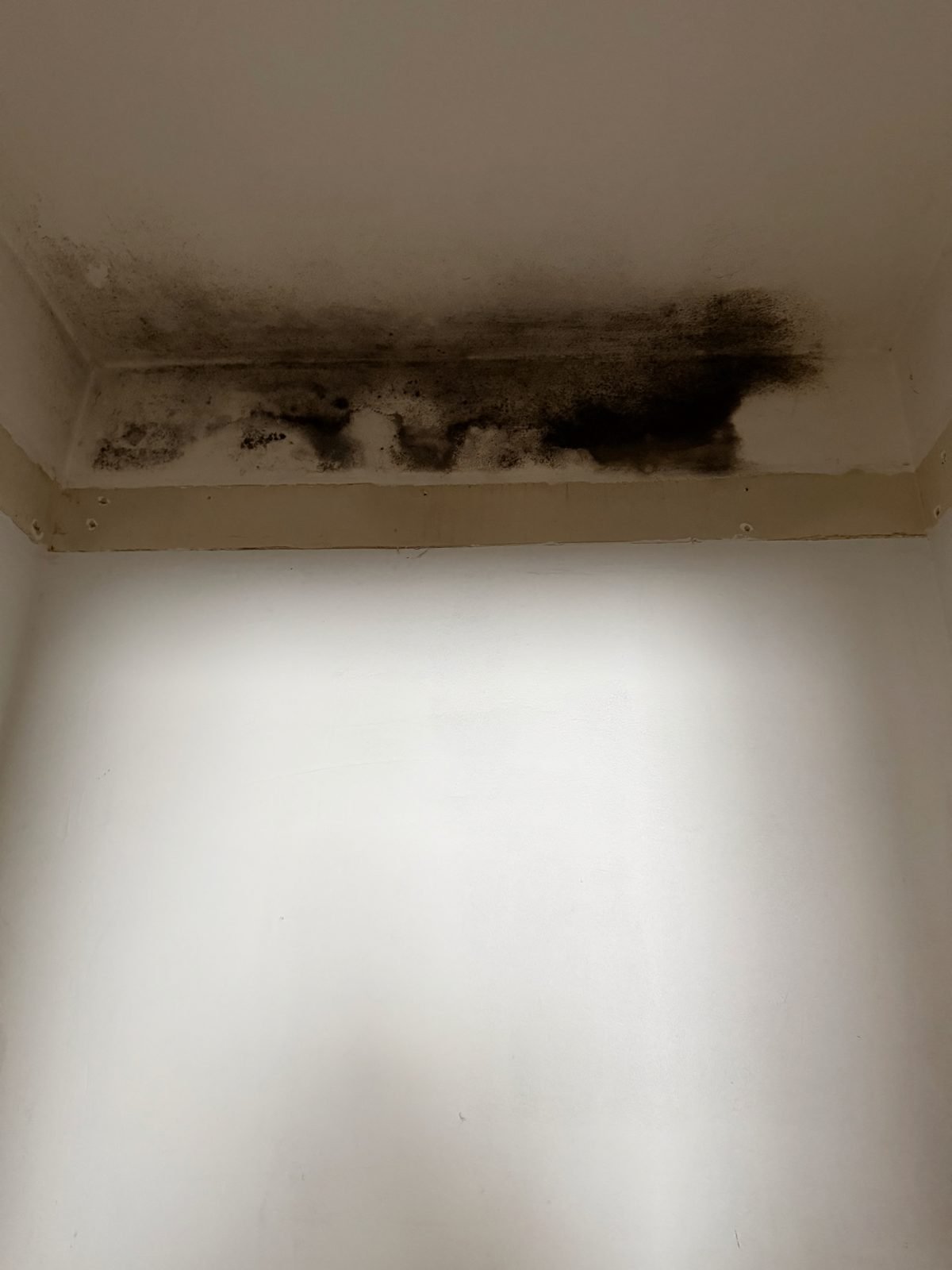
Minor roof penetration or HVAC condensation drip soaks attic insulation and drywall. Mold growth begins in dark cavities within 48–72 hours. Spores spread through HVAC into living spaces.
Hidden Plumbing Leak
Pipe joint failure inside a wall. Drywall absorbs water, mold colonizes, surface remains dry until staining appears. By then mold has spread 4–10× the visible area.
Bathroom / Kitchen Condensation
Inadequate ventilation, repeated steam exposure, caulking failure. Mold grows behind tile, under sinks, around windows. Most common bathroom mold and kitchen mold pattern in LA homes.
Post-Water-Event Saturation
Burst pipe, flood damage, sewage backup that wasn't fully dried. Class 2/3 water events have measurable mold colonies within 72 hours if drying isn't completed to IICRC S500 standards.
Crawl Space / Basement / Attic
High-moisture, low-ventilation areas with organic material. Crawl space mold and attic mold are common in LA hillside homes — often invisible until air-quality issues surface.
The seven-step process. The federal standard.
IICRC S520 is the federal standard for professional mold remediation. Insurance carriers, indoor air-quality professionals, and regulators all use it as the baseline for what counts as "done right." Each step produces documented evidence — air samples, photo logs, post-clearance testing — that the mold is actually gone.
Visible mold is roughly 10% of the total. The other 90% is hidden.
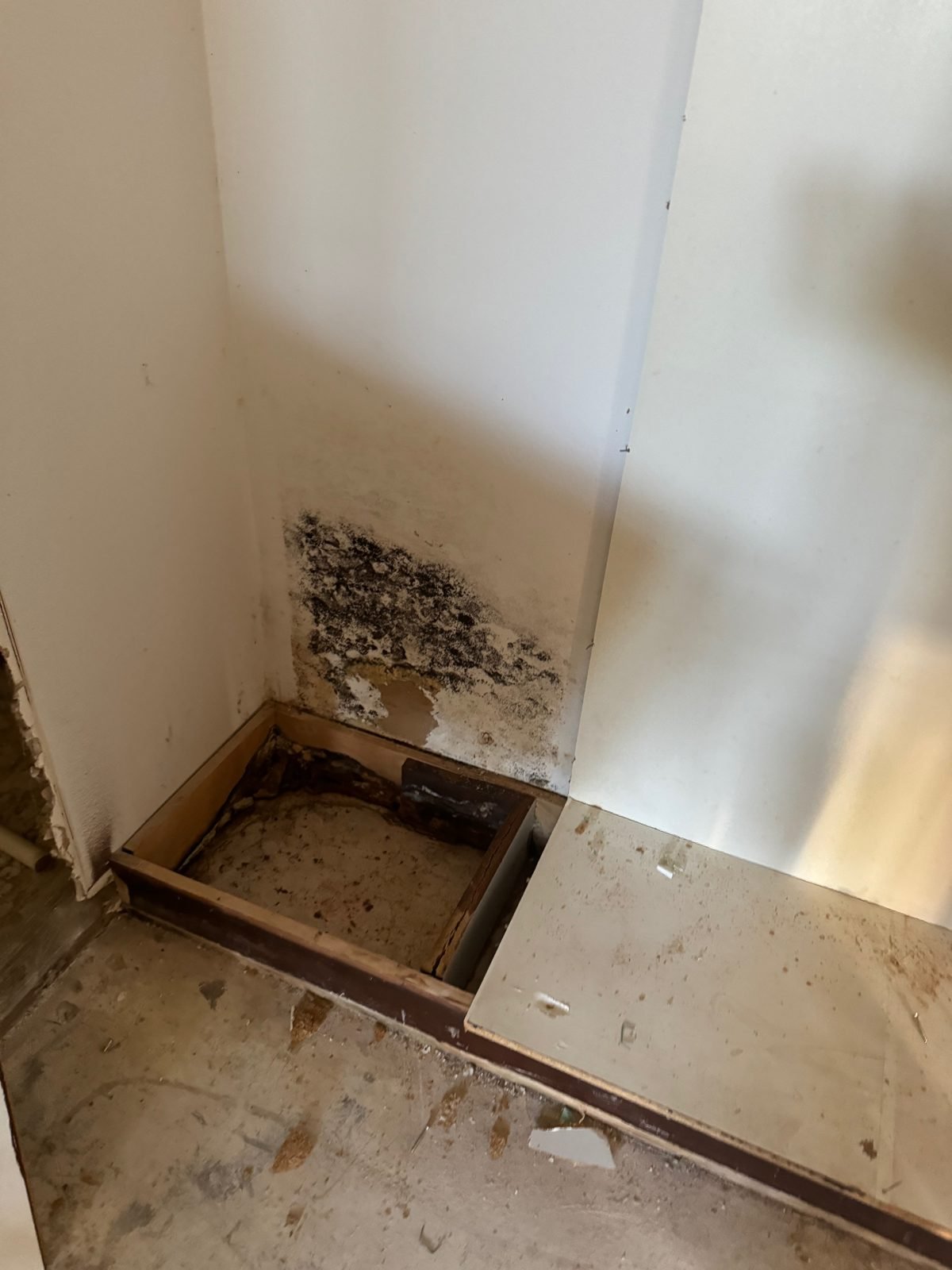
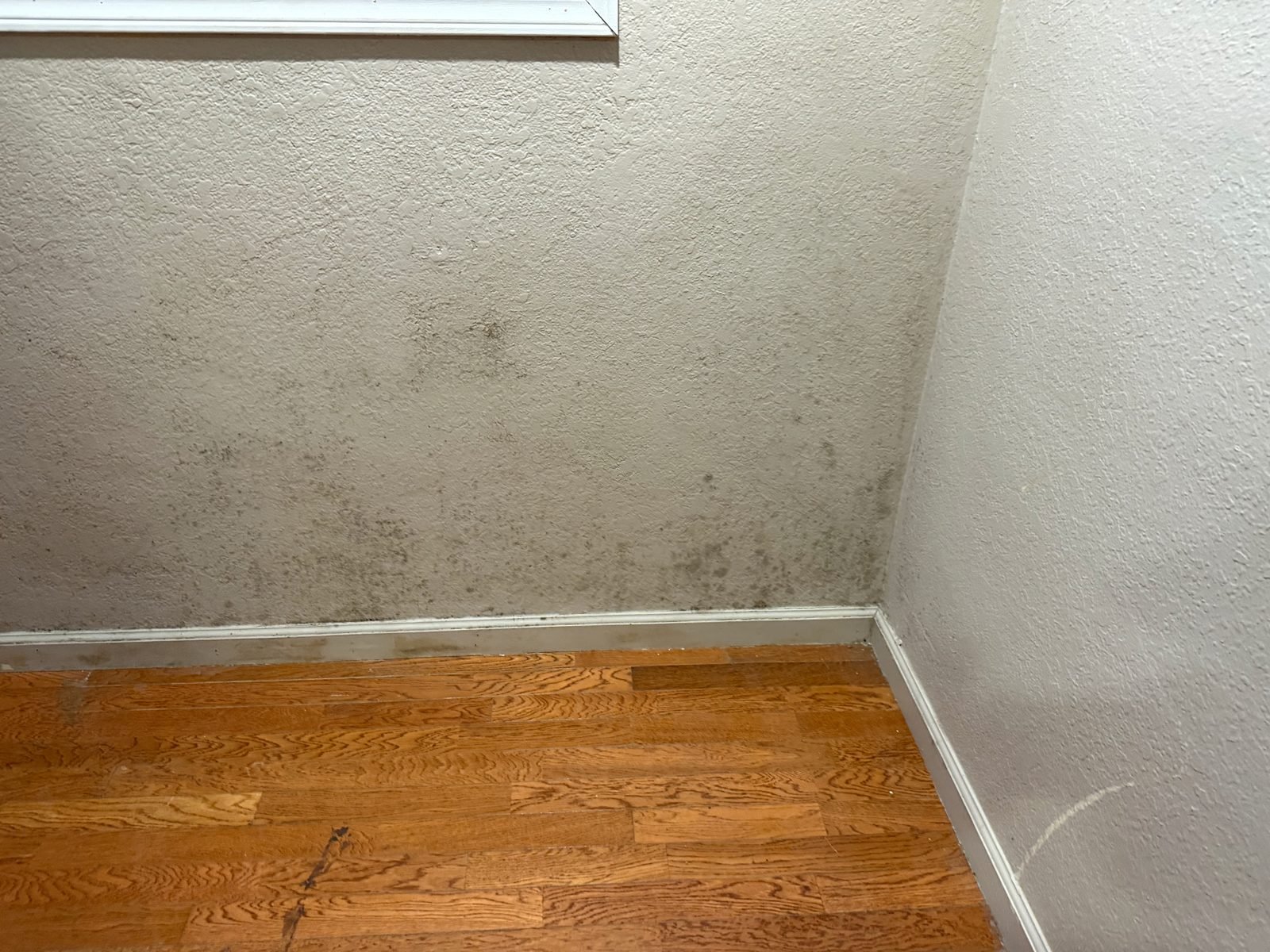
Most homeowners scrub the visible spot with bleach, paint over it, and hope. It comes back within months. The reason: 80–90% of mold growth lives in cavities — behind drywall, under flooring, in HVAC, inside insulation. Surface treatment alone is why DIY mold removal fails 80% of the time.
Behind Drywall
Mold grows on the back side of drywall (cellulose paper) within 48 hours of saturation. Surface looks fine. Tap test, moisture meter, or borescope reveals colonies.
Under Carpet & Pad
Wall-to-wall carpet over slab traps moisture in the pad. Mold grows on the underside of the pad and the slab itself. Smell hits before visible damage. Always replace the pad after a Cat 2/3 water event.
HVAC & Air Ducts
Spores from a single cavity get distributed through every room via the air handler. HVAC mold remediation requires duct cleaning + UV-C treatment + filter replacement.
Subfloor & Joist Bay
Engineered hardwood looks dry on top. The plywood subfloor and joist bay underneath holds water for 5–10 days, breeding mold inside the structural cavity for months.
Insulation
Wet fiberglass insulation collapses, loses R-value, and becomes a permanent mold habitat. Always replaced after Cat 2/3 water exposure. Cellulose insulation is even more susceptible.
Cabinet Toe-Kick & Vanity
Kitchens and bathrooms hide moisture under cabinets for weeks. Particle board swells, MDF crumbles, mold grows in the dark space behind. Most often missed by surface-only DIY mold removal.
Color isn't the right indicator. Moisture and species are.
Most homeowners think "black mold = toxic, everything else = not a big deal." Reality is more nuanced. Several common LA mold species cause health effects regardless of color. The remediation protocol is the same; the urgency varies. Lab testing is the only way to confirm species — but every mold growth on the property gets removed under IICRC S520 regardless.
Greenish-black, slimy. Grows on wet drywall, paper, fabric. Produces mycotoxins — the species behind most "toxic mold" headlines, but rarer than people think.
Where: Wet drywall, paper backing. Health risk: High.
Most common species in LA homes. Olive-green, gray, or brown. Triggers allergies and asthma. Found on damp surfaces, AC drip pans, and bathroom grout.
Where: HVAC, bathrooms, fabric. Health risk: Moderate (allergens).
Often appear together. White, gray, or green-blue. Found in HVAC, water-damaged wood, food. Some Aspergillus species cause aspergillosis — serious in immunocompromised patients.
Where: HVAC, wood, basements. Health risk: Moderate to High.
Most clients pay only their deductible. Here's how that works.
Mold coverage is the most confusing part of any restoration claim. Most standard homeowner's policies cover mold ONLY if it's a direct result of a covered water event — burst pipe, sudden leak. Long-term moisture damage from a slow leak or maintenance issue is typically excluded. We document every aspect of your case for the insurance claims process so the adjuster has everything needed for the broadest coverage.
Sudden water event mold
- Burst pipe causing immediate mold (within 14 days)
- Supply line failure, washer/dishwasher overflow
- Storm-driven roof leak (with maintenance documented)
- HVAC line burst
- Toilet supply line, valve failure
Long-term / maintenance mold
- Slow leak the homeowner "should have known about"
- Bathroom/kitchen condensation from poor ventilation
- Crawl space mold from chronic humidity
- Flood damage (requires separate flood policy)
- Mold from missed maintenance (caulking, gutters)
Some policies have a mold sub-limit ($1k–$10k typical). California policies vary by carrier. We work with your insurance company directly to maximize coverage on every mold remediation claim — most clients pay only their deductible, never the full invoice.
Three project sizes. Three realistic timelines.
Project timeline is driven by square footage of affected area, mold species, and rebuild scope. Below: realistic timelines we deliver against on residential and commercial mold remediation jobs.
Spot Mold Job
Containment + removal + sanitization in 1–2 days. Common scope: bathroom mold, attic spot, single closet. Source repair adds 1–2 days.
Standard Remediation
Full S520 protocol with containment, multi-day HEPA filtration, post-clearance air testing. Source repair (slab leak, roof, plumbing) typically runs in parallel.
Major Remediation
Multiple containment zones, structural material removal, HVAC mold remediation, full post-clearance protocol, then complete rebuild under our Class B GC license.
Most LA mold companies remove mold. We remove the reason it grew.
A mold-only specialist can run the IICRC S520 protocol — every certified remediator can. But most can't fix the slab leak, replace the roof drain, or rebuild the kitchen they just gutted. We're a CSLB Class B General Contractor. That changes everything about how a mold remediation project closes out.
One company. Source diagnosis to keys back.
- CSLB Class B General Contractor #1078518
- IICRC S520 (mold) + S500 (water) + S540 (biohazard) certified
- We trace AND fix the moisture source — slab, roof, plumbing
- Same project manager from inspection to final rebuild
- Drywall, paint, flooring, cabinetry rebuilt in-house
- Post-clearance air-quality testing available
- Direct insurance billing — Xactimate-formatted scopes
Mold-only license. Source becomes your problem.
- Mold remediation license only — not a general contractor
- Can't fix the slab leak, roof, or plumbing that caused it
- Different PM (or none) for source repair
- You hire 2–3 separate contractors after remediation
- Multiple insurance conversations with the adjuster
- Mold often returns within 6–12 months when source isn't fixed
- "We'll send you a referral" handoff for rebuild
Mold Remediation Los Angeles, Ventura & Orange County.
Each city we cover has its own dedicated mold remediation page with neighborhood-level building stock notes and common moisture sources. Tap a city to go deeper.
What we hear most often. In the first ten minutes.
Built on the standards. Cited in the field.
Found mold in your home? Let's take a look.
Free inspection · 30-min average dispatch · CSLB Class B · IICRC S520 · Most jobs covered by insurance · Licensed, insured, bonded · Direct billing for residential and commercial.
📞 Call (818) 486-6546