
Water damage
Comes from inside the building — burst pipe, appliance failure, roof leak. Usually starts clean (Category 1) and degrades over time. Fast extraction prevents most secondary damage.
Storm flooding, mudslides, ground-water intrusion. Category 3 contamination protocols, full PPE on every dispatch. Call (818) 486-6546 — we answer 24/7.
People use “flood” and “water damage” interchangeably — but for restoration, they’re completely different jobs, with different protocols, insurance, and risk.
Comes from inside the building — burst pipe, appliance failure, roof leak. Usually starts clean (Category 1) and degrades over time. Fast extraction prevents most secondary damage.
Comes from outside the building — storm runoff, ground water, river overflow, mudslide. Carries soil, debris, sewage, and road chemicals. Always Category 3 (black water) per IICRC S500 — even when it looks like rainwater.
Cat 3 requires full PPE, antimicrobial treatment, and mandatory disposal of porous materials.
Standard homeowner’s often covers sudden interior water but does not cover flood damage from external sources — coverage depends on your policy. Flood is a separate NFIP policy.
Floodwater carries pathogens, chemicals, and biological hazards that interior water damage doesn’t.
FEMA assistance for declared disasters requires specific documentation that standard insurance claims don’t.
The S500 standard defines three water categories. Flood damage from external sources is always Category 3 — regardless of how clean the water looks.
Carries: Oils and chemicals from streets, fertilizers and pesticides from yards, sediment, decomposed plant matter, animal waste.
Carries: Soil bacteria, fungal spores, septic-system contamination, agricultural runoff.
Carries: Sewage from upstream treatment plants, industrial runoff, agricultural chemicals, biological contamination.
Carries: Everything above, plus soil, vegetation, stones, and sometimes structural debris from upstream properties.
Respirators, Tyvek suits, gloves, and eye protection for every worker — no exceptions, regardless of how clean the water looks.
Carpet, padding, insulation, drywall below the waterline, particle board, and fabric that contacted floodwater can’t be cleaned to safe condition — they’re removed and disposed of per Cat 3 protocols.
EPA-registered antimicrobials applied to all remaining surfaces.
Negative-air-pressure containment to prevent cross-contamination to clean areas of the property.
Third-party hygienist testing may be required for occupancy clearance, especially for severe contamination.
What doesn’t need disposal: non-porous materials that can be cleaned and disinfected — studs and framing (if cleaned within 48 hours), hard flooring (tile, sealed concrete), metal fixtures, hard surfaces. Drying and antimicrobial treatment can restore these.
Eight situations cover most flood work. The protocol stays IICRC S500 Cat 3 — the source and debris change the scope.
California’s atmospheric-river events overwhelm storm drains and send runoff into properties. Common in Pacific Palisades, Topanga Canyon, and foothill neighborhoods — often paired with mudslide risk.
A SoCal-specific risk. Heavy rain on burned hillsides (post-wildfire) triggers debris flows carrying mud, vegetation, and sometimes structural debris into properties. Contaminated debris is removed before water restoration begins.
Properties on slopes receive uphill runoff during storms. Common in canyon neighborhoods where drainage systems are overwhelmed.
A city water-main rupture sends water toward properties. The source is clean, but it picks up street contamination, oils, and debris before entering — treated as Cat 3.
Interior flooding because the pump preventing ground-water intrusion failed. Ground water in the basement is Cat 3.
Properties near the Los Angeles River tributaries, Ballona Creek, Calleguas Creek, or the Ventura River. Less common but severe when it happens.
A storm causes catastrophic roof damage, letting rain in over hours. Rain through a damaged roof on its own is water damage; when storm runoff or debris comes in with it, the flood protocol applies.
A storm-related vehicle accident damages the building envelope, letting exterior water in. A dual scope — structural plus flood.
If your water came from outside the property and you don’t see your scenario, it’s still Cat 3 and we still respond. Call (818) 486-6546 or book a free assessment.
Every flood job follows the same path, same licensed crew start to finish — full PPE through documented verification and rebuild.
24/7 — we answer any hour. Critical first questions: is the flood ongoing or contained? Anyone inside? Utilities shut off? Is the structure safe to enter?
For confirmed flood damage, the team arrives with full Cat 3 PPE — respirators, Tyvek suits, gloves, boots. We don’t shortcut PPE regardless of how clean the water looks.
Before cleanup begins, structural assessment. Mudslides can compromise foundations; catastrophic flooding can damage load-bearing structures. We coordinate engineers when needed.
Detailed documentation before any material removal — timestamped photos, water-level markers, debris evidence. Critical for both insurance and FEMA assistance.
Negative-air-pressure containment to prevent cross-contamination to clean areas. Critical for mold prevention.
Manual removal of mud, silt, vegetation, and debris before water extraction. Disposal per local regulations.
Industrial pumps for standing water. Truck-mounted extraction for carpet and saturated materials.
Affected porous materials bagged and removed — carpet, padding, drywall below the waterline plus 12″, insulation, soft furnishings. Disposed per Cat 3 protocols.
EPA-registered antimicrobials applied to all remaining surfaces — studs, framing, hard floors, subfloor. Multiple passes for severe contamination.
Air movers and dehumidifiers run continuously. Daily moisture readings until wood is below 16% MC and drywall returns to baseline.
Final moisture readings and visual assessment, all documented. For severe contamination, clearance testing is done by an independent third-party hygienist, not by us.
Drywall, flooring, paint, cabinetry — whatever was removed gets rebuilt. Same licensed B-General team. No handoff.
Understanding what’s in floodwater explains why disposal protocols matter — and why “drying it out” isn’t enough.
Why “drying out” isn’t enough: even after floodwater is removed and materials appear dry, contamination stays embedded in porous materials. Carpet that “looks clean” after extraction still carries pathogens; dried drywall still holds chemical and biological residue.
This is why Cat 3 protocols require disposal of porous materials — not because they’re physically destroyed, but because they can’t be cleaned to safe occupancy levels. Restoring contaminated porous materials to occupancy is a public-health risk. Reputable companies don’t shortcut this.
When a flood involves a confirmed sewage backup, it gets our full sewage cleanup & sanitization protocol on top of Cat 3 flood handling.
The hardest conversation about flood cleanup: standard homeowner’s insurance in California typically does not cover flood damage. Coverage depends on your policy.
NFIP policies typically wait 30 days before coverage activates. You can’t buy flood insurance during or right before a storm.
Properties in FEMA Special Flood Hazard Areas (SFHA) with federally-backed mortgages must carry flood insurance.
Most California properties outside SFHA zones don’t carry it — many homeowners don’t realize they’re uncovered until they file a claim.
NFIP maxes out at $250K dwelling / $100K contents for residential. High-value properties may need supplemental private flood insurance.
What this means for cleanup: without flood insurance, cleanup is typically out-of-pocket or funded through FEMA assistance (if a disaster declaration applies). We document everything per FEMA requirements regardless of insurance status — so if assistance becomes available, the documentation is ready.
For major flooding, the President can declare a federal disaster — opening FEMA Individual Assistance. SoCal has seen declarations for multiple storm and wildfire-debris events.
FEMA assistance is limited and requires documentation — it does not cover everything. Here’s what it can cover, and the steps if a disaster is declared.
Our role: we document everything to FEMA standards from day one — water-level markers, room-by-room photos, debris inventory, material-removal logs. If a declaration is issued (sometimes weeks after the event), your documentation is ready for the FEMA inspection. We can also provide our documentation to your public adjuster or disaster-recovery specialist for major events.
Photos from our own jobs — city only, no addresses or names.
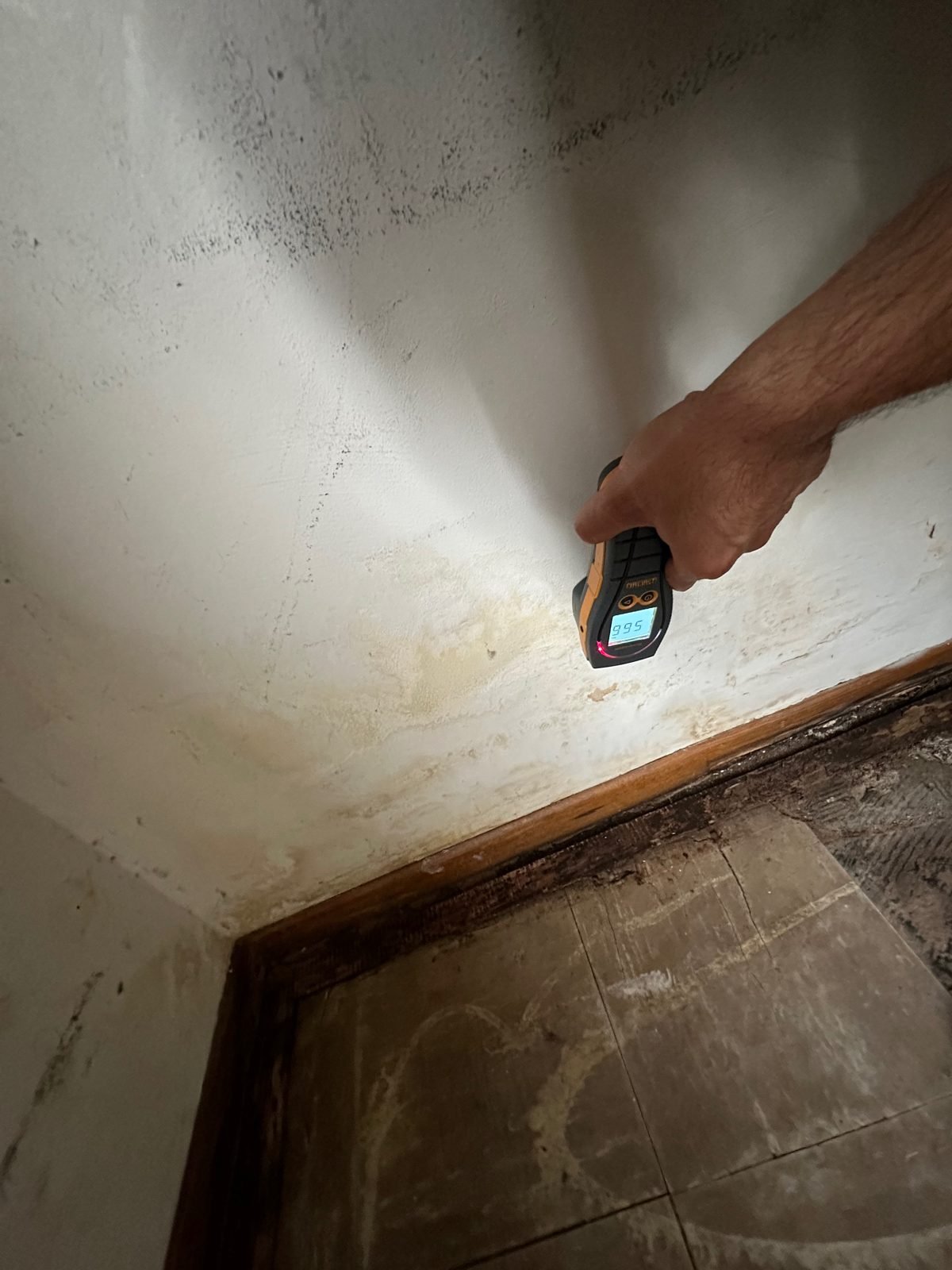
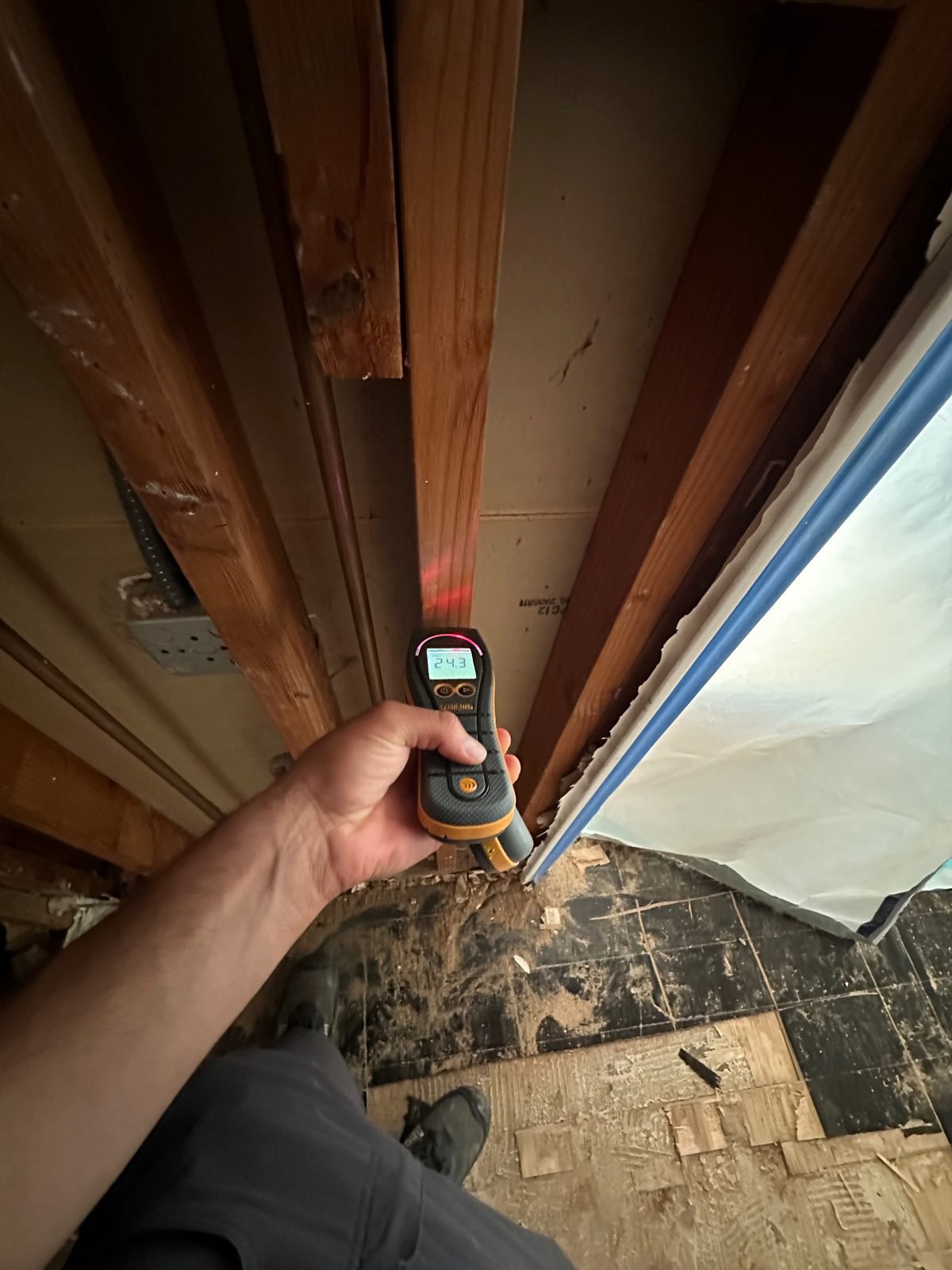
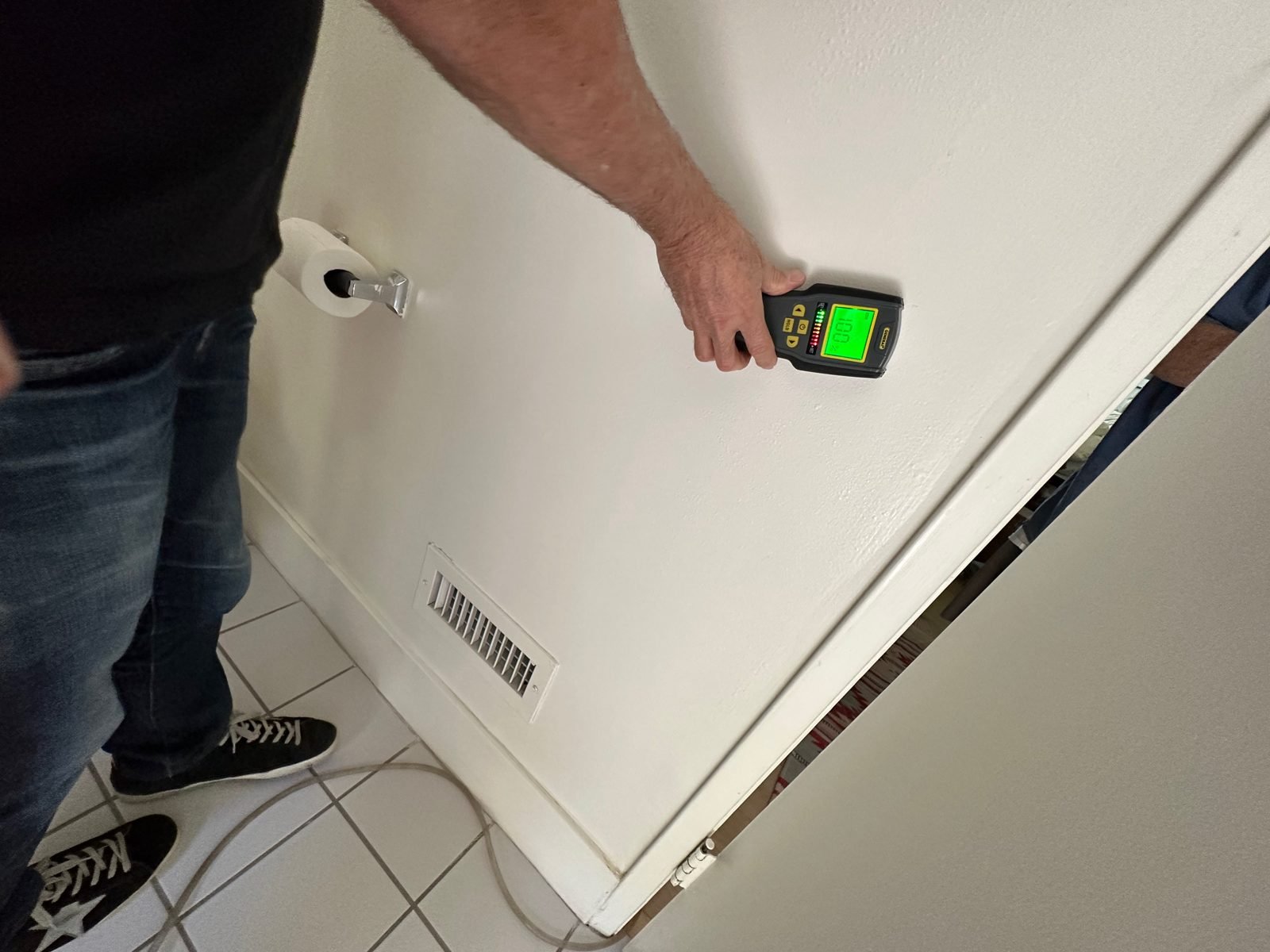
More photos are added as jobs are documented. Call (818) 486-6546 to discuss your situation.
We dispatch from Woodland Hills across LA, Ventura, and Orange Counties — including foothill and canyon neighborhoods with mudslide and storm-runoff risk. Full coverage in all three (130+ cities).
Woodland Hills · Tarzana · Encino · Calabasas · Hidden Hills · West Hills · Chatsworth · Sherman Oaks · Studio City · Beverly Hills · Brentwood · Pacific Palisades · Malibu · Topanga · Santa Monica · Pasadena · Altadena · Glendale · Burbank · Sylmar · Santa Clarita · Stevenson Ranch · Castaic
Thousand Oaks · Westlake Village · Bell Canyon · Newbury Park · Camarillo · Oxnard · Ventura · Ojai · Santa Paula · Fillmore · Simi Valley · Moorpark
Anaheim · Irvine · Newport Beach · Costa Mesa · Huntington Beach · Santa Ana · Yorba Linda
Seven questions we hear most. For more, see the full FAQ.
24/7 dispatch across LA, Ventura, and Orange Counties with full Cat 3 PPE.
(818) 486-6546Free on-site assessment with a written scope and Cat 3 documentation.
We use third-party cookies to analyze how the site is used and, when our ad campaigns are active, to measure and personalize advertising. Check the box below and save to opt out of the sale or sharing of your personal information for this browser. We also honor Global Privacy Control signals automatically. Strictly necessary cookies always remain active.