

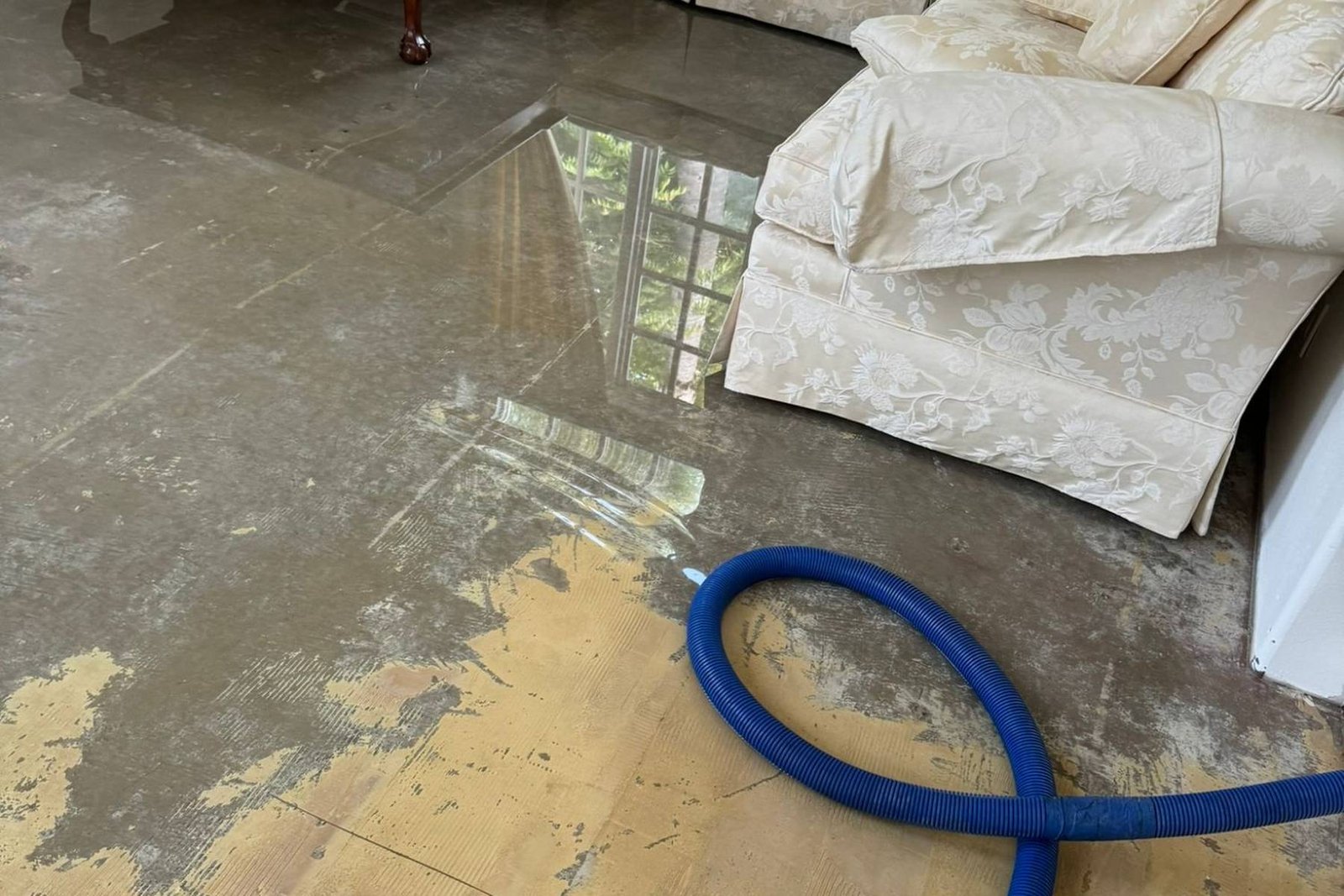
It’s usually not a flood that gets you. It’s a supply line under the kitchen sink, a water heater that let go overnight, or a washing machine hose that split while you were out. You walk in, the floor is wet, and the clock is already running. What you do in the first 24 hours after water damage decides more about the final cost than anything a contractor does afterward.
Here’s the sequence, in order, from someone who gets these calls every week across LA, Ventura, and Orange County.
First 15 Minutes: Stop the Water, Stay Safe
Find the source and shut it off. For a fixture or appliance, close the local valve behind or under it. Can’t find one, or the water keeps coming? Shut the main — in most LA-area homes it’s at the front of the house near a hose bib, or at the meter box by the street. If you don’t know where your main shutoff is, go find it today, before you ever need it. Turning it in an emergency should take you thirty seconds, not thirty minutes.
Respect electricity. If water is anywhere near outlets, cords, or your panel, don’t wade in. Kill power to the affected rooms at the breaker — only if you can reach the panel without stepping through water. If you can’t do that safely, stay out and call for help. No floor is worth electrocution.
If it’s sewage or outdoor storm runoff, stop and keep everyone out. Water from a sewer backup, a flooded street, or anything that traveled across the ground is contaminated — the industry calls it Category 3. It carries bacteria and pathogens, and it changes the entire cleanup approach. Kids and pets away, shoes off at the line, and skip straight to the “call a professional” section below.
Next Hour: Document Everything Before You Touch Anything
This step feels wrong when your floor is soaking, but it’s the one people skip and regret. Your insurance claim will live or die on documentation.
Take photos and video of every affected room, wide shots and close-ups: the water source, the standing water, the waterline on walls and furniture, damaged belongings where they sit. Capture the source itself — the burst pipe, the failed hose — before anyone repairs it. Then note the time you discovered the damage and the time you stopped the source. Insurers distinguish sharply between sudden accidental damage and long-term slow leaks, and your timeline is evidence.
Only after you’ve documented should you start moving things.
Hours 1–4: Get the Water Out and Belongings Up
Extract what you can. Towels, mops, and a wet/dry vacuum handle clean-water spills on hard floors. Move fast on rugs and furniture — get them off wet flooring and onto blocks or foil so the legs don’t stain or wick water back up.
Move what matters. Electronics, documents, photos, anything on the floor of a closet. Wet carpet under a stack of stored boxes turns to a loss claim by morning.
Start air moving. Open windows if the outside air is dry, run fans across wet surfaces, and run the AC — in a typical LA summer it’s the best dehumidifier most homes own. The goal is simple: wet surfaces need to become dry surfaces, fast.
One warning: do not run a household vacuum on standing water, and do not aim fans at contaminated water — blowing air across Category 3 water spreads what’s in it through your house.
The Clock You’re Really Racing: 24 to 72 Hours
Here’s why the first day matters so much. Per the EPA, mold can begin growing on damp materials within 24 to 72 hours. Drywall, baseboards, carpet pad, and the framing behind your walls all hold moisture long after the surface looks dry. Water also travels: it wicks up drywall, slips under flooring, and follows the path of least resistance into rooms that look untouched.
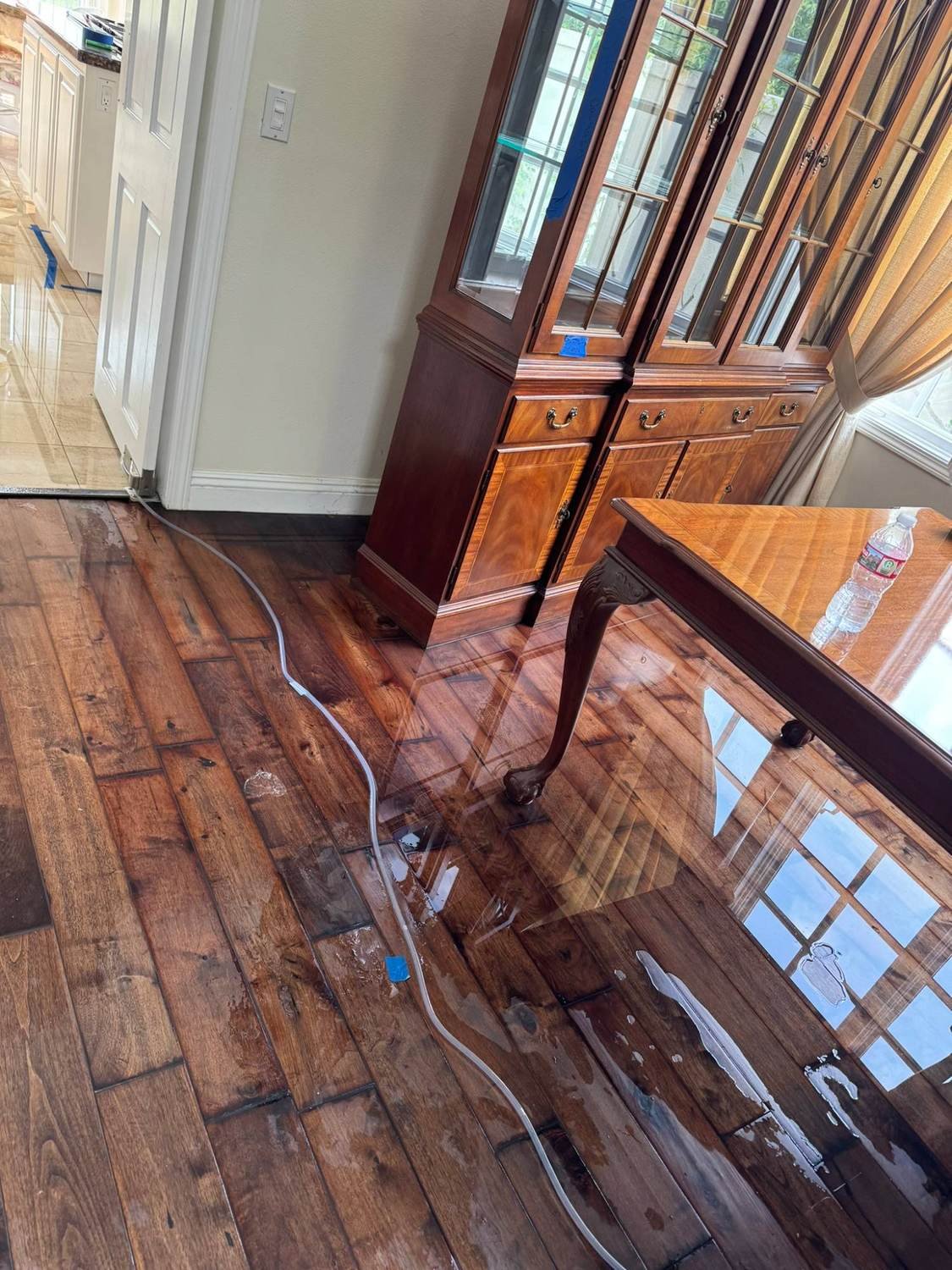
This is where homeowners get burned. The floor dries, everything looks fine, and three weeks later there’s a musty smell and a mold problem inside the wall cavity that costs multiples of what the original extraction would have. Surface-dry is not dry.
When You Can Handle It Yourself — and When You Can’t
Be honest about the size of the problem. A few gallons of clean water on tile, caught immediately, extracted and dried with good airflow within hours? Reasonable DIY territory. Keep watching the area for a week and trust your nose.
Call a professional when any of these are true: the water is Category 3 (sewage, storm runoff, anything contaminated); water sat for hours before you found it; it reached drywall, baseboards, wood flooring, or carpet with pad; it traveled into more than one room; or it came from above through a ceiling. Those situations need moisture metering, controlled demolition where necessary, and commercial drying equipment — because the water you can see is never the whole story.
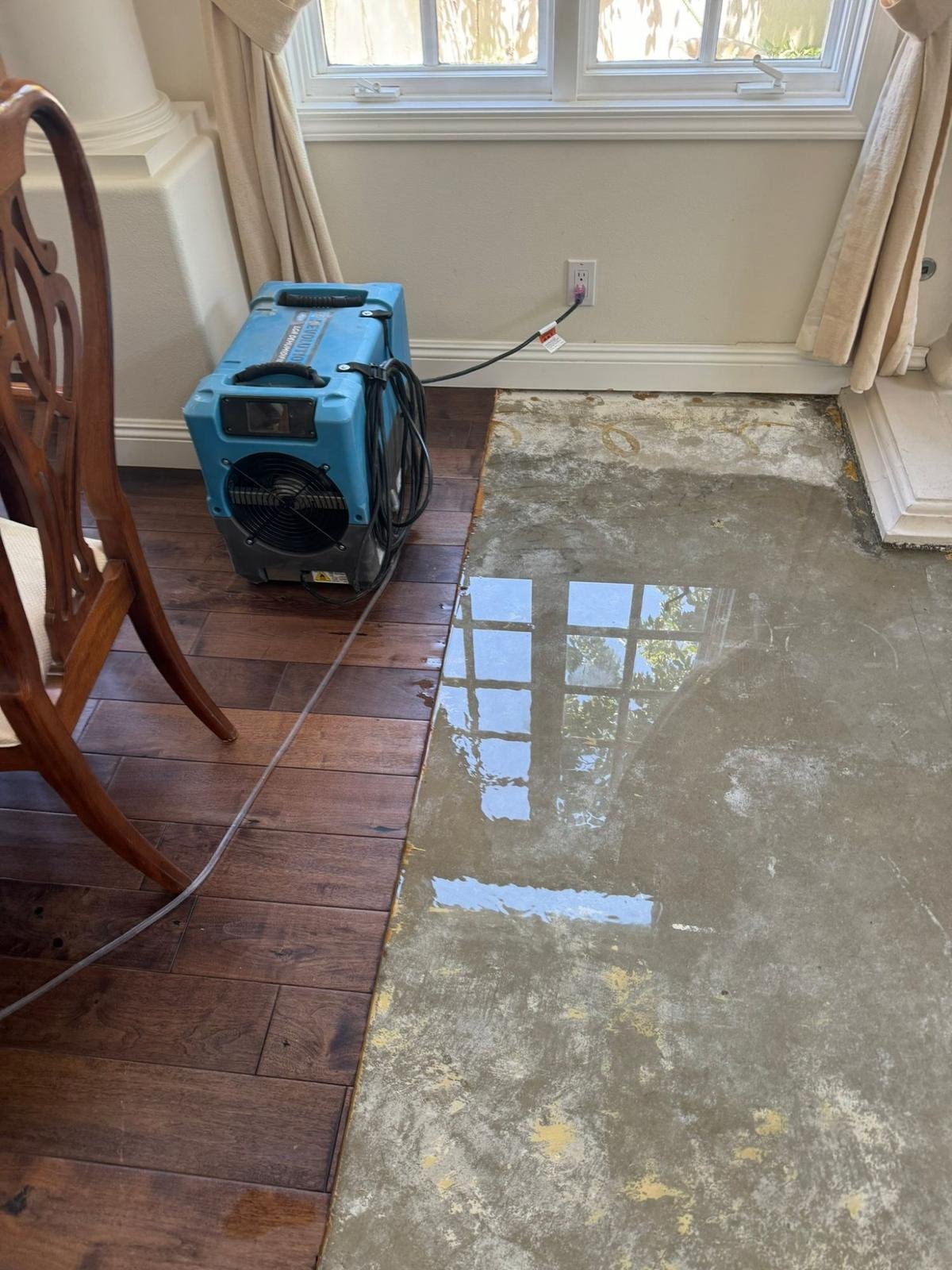
Restoration companies also work directly with your documentation for the insurance claim, which is why those photos from hour one matter.
Here’s what professional extraction actually looks like — fifty seconds from the same Calabasas job as the photos above:
If a Storm Did This, Get Ahead of the Next One
Half the water calls we take each winter were preventable with an afternoon of prep. With a very strong El Niño forecast for this winter, that afternoon is worth more than usual — our El Niño 2026-27 preparation guide walks through the exact checklist for LA, Ventura, and Orange County homes.
And when the water has already won, that’s our job: water damage restoration — extraction, structural drying, and rebuild — across all three counties, around the clock.
FAQ: The First 24 Hours After Water Damage
How fast does mold really start after water damage?
Mold can begin growing on damp materials within 24 to 72 hours, per the EPA. That’s why drying can’t wait for the weekend — the window is the first day or two, not the first week.
Will homeowners insurance cover my water damage?
Sudden, accidental damage — a burst pipe, a failed appliance hose — is commonly covered; gradual leaks and poor maintenance commonly are not, and flood water from outside usually requires separate flood coverage. Your documentation and timeline are what make the difference, so photograph everything before cleanup and check your specific policy language.
Can I just dry it myself with fans?
For a small, clean-water spill caught immediately on hard surfaces — often yes. For anything that reached drywall, flooring layers, multiple rooms, or sat unnoticed, fans alone dry the surface while moisture stays trapped inside materials. That trapped moisture is where mold starts.
Should I turn off my electricity?
If water is near outlets, cords, or the panel: yes, kill the breakers for affected areas — but only if you can reach the panel without standing in water. If you can’t, leave it and keep everyone out of the wet area.
Water in Your Home Right Now?
Every hour counts, and you don’t have to figure this out alone. Instant Restoration responds to water damage emergencies across Los Angeles, Ventura, and Orange County, day or night. Call (818) 486-6546.
Oren Gedalia, Owner — CSLB #1078518