Skip to content
WOODLAND HILLS HQ OPEN 24/7 IICRC S500 · S520 · S700 STANDARDS CSLB LICENSED ★ 5.0 122 REVIEWS WATER FIRE SMOKE MOLD SERVING LA VENTURA ORANGE COUNTY
Woodland Hills HQ Simi Valley Fire damage restoration · Ventura County About 38 min drive from our HQ [ Service area · Ventura County ] Instant Restoration · 24/7 · CSLB #1078518
Simi Valley, CA · Fire Damage · IICRC S700

Fire Damage Restoration in Simi Valley, CA

Northern hillside toward the Santa Susana Mountains and southern hillside toward the Simi Hills sit within the Very High Fire Hazard Severity Zone (VHFHSZ), and Santa Ana winds bring Red Flag fire weather in the fall. Fire damage scope here can run from wildfire damage on hillside homes to smoke and ash from a nearby fire, standard structural fires in residential across the valley floor, and commercial fire response along the Simi Valley Town Center and Cochran Street corridors. We do the full lifecycle in-house on our CSLB #1078518 B-General license. IICRC S500/S520/S700 standards. Est. 2021.

⚡ Call (818) 486-6546
38min
Drive from Woodland Hills HQ
S700
IICRC fire & smoke standard
24/7
Live dispatch
5.0★
122+ Google reviews
★ 5.0 from 122+ reviews ·CSLB #1078518 · B-General Building ·IICRC S500/S520/S700 standards ·Local Woodland Hills HQ
Section 01 · First 15 minutes

First 15 minutes — what to do before we arrive.

While we’re en route, this is what protects your property and your insurance claim.

Don’t enter until the fire department clears the property.

Hot spots can reignite, structural damage may not be visible, and smoke is still toxic.

Don’t wipe soot off surfaces.

Soot is acidic. Wiping it spreads and embeds the acid deeper into the surface, making professional cleaning harder.

Don’t run the HVAC system.

It distributes smoke and soot throughout the rest of the house, including areas that weren’t directly affected.

Don’t try to wash smoke-damaged clothing in your home washer.

Specialty cleaning is required — home washing sets the smoke and odor permanently.

Photograph the exterior and any accessible damage from outside.

Insurance documentation starts now. We’ll handle the interior documentation when we arrive.

Contact your carrier or FAIR Plan.

Coverage depends on your policy. Start the claim while we’re dispatching — FAIR Plan and wrap policies included.

Section 02 · Three losses at once

A fire is really three losses at once.

Fire damage isn’t just flame damage. By the time the fire department leaves — or, in a wildfire, while the fire is still active — your property typically has three overlapping damage types.

Direct flame & structural damage.

Burned framing, charred drywall, destroyed contents — and, when a wildfire reaches a house, partial or total structural loss. The visible damage everyone sees.

Smoke, ash & acidic soot.

Wildfire smoke composite penetrates everywhere — HVAC, attic insulation, window seals, fabric, drywall — and its chemistry is more aggressive than wildland-only smoke. Ash deposits on soft goods, hard surfaces, and exterior, and residual residue keeps off-gassing until professionally cleaned. Smoke damage often outlasts the fire itself by months.

Water damage from extinguishment & post-fire storms.

Suppression water soaks into floors, walls, and structure, and fire-compromised roofs, attic vents, and siding can take winter storm water in the seasons after a fire. Combined fire and water damage creates secondary structural issues and high mold risk.

We handle all three under one project — IICRC S500 for water damage from extinguishment and post-fire storms, IICRC S520 for resulting mold risk, and IICRC S700 for fire and smoke restoration throughout.

Fire damage patterns in Simi Valley:

Wildfire damage on hillside homes (Big Sky, Wood Ranch, and the VHFHSZ).

When a wildfire reaches a hillside neighborhood, damage runs from scorched decks, fencing, and siding to partial or total structural loss. FAIR Plan, standard carrier, and wrap policy documentation, with long-timeline rebuilds through permit and adjuster review cycles.

Adjacent-property smoke and ash (when a fire burns nearby).

Heavy smoke penetration through HVAC, attic vents, and window seals, and ash deposition on soft goods, hard surfaces, and exterior. Wildfire smoke composite chemistry is more aggressive than wildland-only, with ongoing off-gassing from residual smoke residue.

Standard structural fires (residential across the valley floor).

Kitchen fires (range, oven, appliance), electrical fires in older wiring, wood-burning fireplace and chimney fires, and garage and workshop fires across Simi Valley homes.

Wildfire zone ongoing seasonal exposure (northern and southern hillside).

Northern hillside and southern Simi Hills-adjacent VHFHSZ properties face Santa Ana and Red Flag conditions each fire season, when embers, smoke, and ash from regional fires can reach homes well away from the flames.

Estate residential fires (Wood Ranch, Big Sky).

Higher-value contents require specialty pack-out and cleaning, and rebuild on custom estate finishes.

Commercial fires.

Restaurant kitchen fires, retail and professional office fires along the Simi Valley Town Center, Cochran Street, and Los Angeles Avenue corridors.

Section 03 · What it includes

Our IICRC S700 process and post-wildfire response.

A complete fire damage restoration project typically runs through these phases — from adjacent-property smoke and ash to total-loss rebuilds.

Emergency response

  • Board-up of broken windows, doors, and roof penetrations
  • Tarp damaged roofing
  • Secure the property against further loss

Assessment

  • Identify all smoke- and soot-affected areas — often far beyond the fire origin
  • Categorize soot type (wet smoke, dry smoke, protein, fuel oil, wildfire ash composite)
  • Plan contents handling — in-place cleaning vs. pack-out
  • Document damage for the carrier or FAIR Plan

Mitigation

  • Soot removal — composite-specific for wildfire ash
  • Surface cleaning of walls, ceilings, floors, and framing
  • Structural drying if there is water damage from suppression or post-fire storm
  • Odor neutralization
  • HVAC cleaning and decontamination

Contents

  • Pack-out to a controlled environment
  • Inventory and photograph everything
  • Clean what is salvageable
  • Document total-loss items for the carrier

Reconstruction

  • Demo affected materials
  • Frame, drywall, electrical, and plumbing as needed
  • Cabinetry, flooring, and paint — finishes matched as closely as practical (exact matching isn’t guaranteed)
  • Full structural rebuild on CSLB B-General, final walkthrough, and contents return

Post-wildfire response in Simi Valley: a total-loss rebuild on a hillside home coordinates around certified debris hauler clearing, then design, permitting, and rebuild on our CSLB #1078518 B-General license across a multi-month timeline. Partial-loss structural fire runs emergency board-up, layered assessment across fire, smoke, suppression water, and post-fire intrusion, and S700 mitigation throughout. Adjacent-property smoke and ash runs the wildfire smoke composite protocol — full HVAC decontamination, attic insulation removal and replacement, soft-good pack-out, hard-surface cleaning, odor neutralization, and contents return. Typical timeline: 12–24+ months for total-loss rebuild, 3–9 months for partial-loss structural fire, 4–16 weeks for adjacent-property smoke and ash.

Section 04 · FAIR Plan & insurance

FAIR Plan and insurance documentation — one accountable team.

No second contractor, no scope handoff, no scheduling gap between mitigation and rebuild.

FAIR Plan and post-wildfire claim documentation.

Simi Valley insurance runs across standard homeowner carriers, California FAIR Plan — the state-backed insurer of last resort, common on Wood Ranch, Big Sky, and hillside VHFHSZ properties — wrap policies, and post-wildfire hybrid arrangements. FAIR Plan covers fire and limited perils and is paired with a wrap policy for what it excludes, with documentation requirements that differ from standard carriers. Post-wildfire claims add Additional Living Expense (ALE) for displaced residents, depreciation and replacement cost documentation, code upgrade coverage where applicable, contents inventories on total losses, and long-timeline claim files. Because we hold a CSLB #1078518 B-General Building license, we take the job from emergency board-up through final paint and contents return without subbing out the reconstruction — documenting the loss for your adjuster.

Section 05 · Wildfire context

Wildfire context for Simi Valley.

Northern and southern Simi Valley hillsides sit in the VHFHSZ — and on Santa Ana wind days, a fire here can move fast.

Northern Simi Valley hillside toward the Santa Susana Mountains and southern hillside toward the Simi Hills are classified as Very High Fire Hazard Severity Zone (VHFHSZ). Central valley-floor residential is not in VHFHSZ. The October 2019 Easy Fire shows how fast a fire moves here: it started early on October 30 near Easy Street and Madera Road at the west end of the valley and ran west toward Moorpark and the Reagan Library on Santa Ana winds. It burned about 1,800 acres and forced evacuations; firefighters saved the library, and only a few structures were lost.

The VHFHSZ classification stands and seasonal fire risk continues. We respond to wildfire smoke damage and fire-zone restoration across Simi Valley and the broader Ventura County VHFHSZ — S700 mitigation through full rebuild on our B-General license, documenting for FAIR Plan and standard carriers throughout.

Section 06 · Why Simi Valley calls us

Why Simi Valley homeowners call us for fire damage.

One local, licensed team from the emergency call through the rebuild.

The full IICRC S700 process.

Emergency board-up, soot categorization and removal, structural cleaning, odor neutralization, and HVAC decontamination — documented to the S700 standard adjusters and FAIR Plan require, including wildfire smoke composite protocol.

One license — mitigation through rebuild.

CSLB #1078518 B-General Building Contractor. We take the job from emergency board-up through total-loss rebuild — no subbing out the reconstruction.

Contents pack-out and return.

We inventory and photograph everything, move salvageable items to controlled cleaning, document total-loss items for the carrier, and return restored contents at job completion.

Older homes: asbestos stops the job.

Fire damage can expose asbestos in older drywall, insulation, or pipe wrap on older central and eastern Simi Valley residential — if asbestos is suspected, we stop and bring in a licensed abatement firm before the work continues.

Post-wildfire restoration & FAIR Plan documentation.

After a wildfire, hillside homes in Big Sky, Wood Ranch, and the fire hazard zone may need smoke and ash cleanup, storm-water repairs through a damaged roof or vent, or a full rebuild. FAIR Plan coverage is common on Wood Ranch, Big Sky, and hillside VHFHSZ properties — we document to FAIR Plan standards and for wrap policies, and we handle restaurant, retail, and office fire restoration along the Town Center and Cochran Street.

Emergency board-up from Woodland Hills HQ.

We dispatch from our Woodland Hills headquarters into Simi Valley via the 118 corridor. Emergency board-up is available 24/7 — after-hours and weekends included.

Section 07 · Cost transparency

What fire restoration costs in Simi Valley.

Fire damage costs vary enormously by scope. Typical ranges, not quotes — every job is scoped in writing after a free assessment.

$18,000–75,000+

Adjacent-property smoke and ash remediation — structure did not burn.

$30,000–150,000+

Post-fire combined smoke + water + mold.

$75,000–500,000+

Partial-loss structural fire — mitigation plus partial rebuild.

Total-loss rebuild

Structure destroyed — scope-dependent, typically several hundred thousand and up.

Wood Ranch / Big Sky estate rebuild

Estate-finish rebuild, matched as closely as practical — premium on the above ranges.

Commercial fire

Town Center, Cochran, or Los Angeles Avenue — scope-dependent.

Insurance documentation matters on fire claims. We document thoroughly to support your claim.

Section 08 · Recent work

What a Simi Valley fire job looks like.

Real photos from our own jobs — and what a fire and smoke damage call in Simi Valley involves.

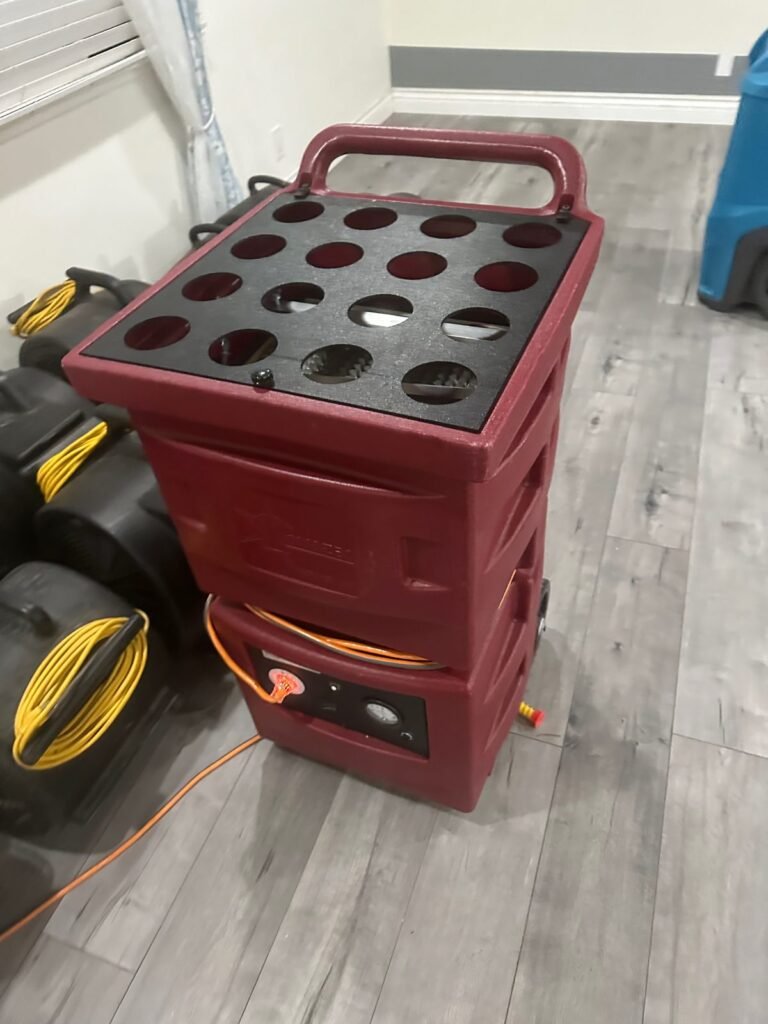
Instant Restoration job (structural drying stage) in Oxnard, CA

Fire damage restoration: what the work looks like.

The photo is from an Instant Restoration job (structural drying stage) in Oxnard, Ventura County. On a typical fire and smoke damage call in Simi Valley the same licensed crew will secure the structure after the fire department clears it, remove debris and charred materials, clean soot and smoke residue from every surface, address odor at the source, document the loss for the insurance file, and rebuild with the same crew. We are a California-licensed general building contractor (CSLB #1078518), bonded and insured, and we answer 24/7.

Fire is three losses at once — flame, smoke, and water. We handle all three under one team.

Section 09 · Common questions

Frequently asked questions.

The questions we hear most about fire damage in Simi Valley. For the full process, see our fire damage restoration page.

If a wildfire damages my Big Sky or hillside home, can you handle the rebuild?
Yes. CSLB #1078518 B-General Building covers full structural post-fire reconstruction. We work with homeowners through the full multi-month rebuild timeline, including permit coordination, and document the loss for FAIR Plan or standard carriers.
My house did not burn but I have smoke and ash exposure. Do I need remediation?
Possibly — a free assessment will tell you. When a wildfire burns nearby, smoke, ash, and embers reach homes well outside the burn area. HVAC decontamination, attic insulation replacement, contents cleaning, and structural surface cleaning are standard.
I am on the California FAIR Plan. Do you work with FAIR Plan fire claims?
Yes. FAIR Plan coverage is common on Simi Valley Wood Ranch, Big Sky, and hillside VHFHSZ properties. Claims often run alongside a wrap policy — we document for both.
How long does a total-loss rebuild take?
Typically 12–24+ months from initial assessment through certificate of occupancy — depending on permit timelines, insurance approval cycles, and material availability.
Do you handle ash and debris removal?
Structural ash and debris on the property is part of our scope. Post-fire lot clearing on total losses is typically handled through a certified debris hauler or the Army Corps of Engineers program — we coordinate around that process.
Will the rebuild match my existing finishes?
As closely as practical — exact matching isn’t guaranteed. Wood Ranch and Big Sky estate rebuilds commonly involve hardwood, custom millwork, and specialty materials. We source comparable materials where available and coordinate specialty rebuild on our B-General license.
A fire damaged my roof and now a winter storm has let water in. Can you fix both?
Yes. Fire-damaged roofing, attic vents, and siding can fail in the next storm. We dry out the water, repair the fire damage, and document both for your carrier and adjuster — how they are covered depends on your policy.
What happens to my belongings after a fire?
Contents pack-out is standard. We inventory and photograph everything, move salvageable items to controlled cleaning, document total-loss items for the carrier, and return restored contents at job completion.
Is Simi Valley in a fire hazard zone?
Northern Simi Valley hillside toward the Santa Susana Mountains and southern hillside toward the Simi Hills are classified as Very High Fire Hazard Severity Zone (VHFHSZ). Central valley-floor residential is not in VHFHSZ. The October 2019 Easy Fire started near Easy Street and Madera Road at the west end of the valley and ran west toward Moorpark on Santa Ana winds. It burned about 1,800 acres and forced evacuations, but only a few structures were lost.
Can you do commercial fire restoration on Simi Valley Town Center, Cochran Street, or Los Angeles Avenue?
Yes — restaurants, retail, hospitality, professional office. We coordinate with property managers and tenants to minimize business interruption, and document the loss for the carrier.
Do you handle the smoke odor?
Yes — odor neutralization is part of S700 protocol. Wildfire smoke composite requires a specific approach: full HVAC decontamination + attic insulation replacement + hydroxyl or ozone + contents cleaning.

See all questions →

Nearby cities

Fire damage restoration in nearby cities.

We run fire damage restoration across the region under one license — mitigation through rebuild. Click into a nearby city for its fast local response.

Section 10 · Get help now

Fire damage at your Simi Valley property?

24/7 fire damage emergency dispatch and post-wildfire rebuild from our Woodland Hills HQ via the 118 corridor. Call Instant Restoration for emergency board-up, full mitigation, and complete reconstruction under one license — we mitigate and rebuild from the first board-up through final paint and contents return. Free on-site assessment. CSLB #1078518 · IICRC S700 · Est. 2021.

(818) 486-6546 ⚡ Call now Free on-site assessment · written scope · no obligation