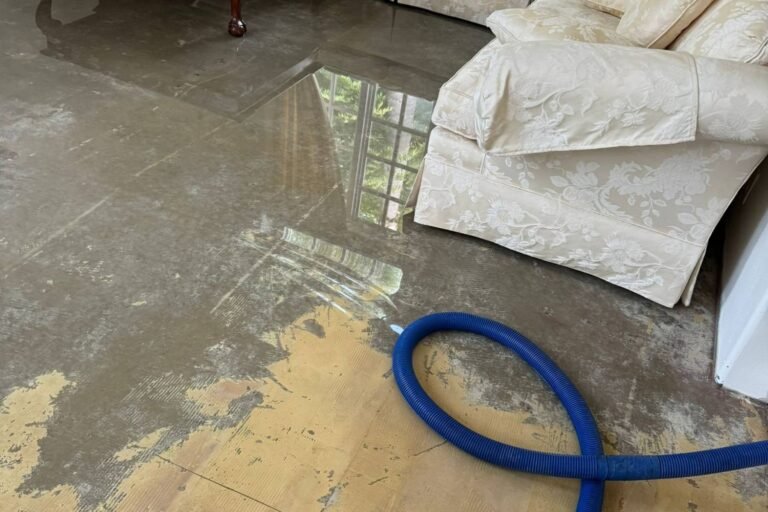


Reconstruction after water damage is the rebuild phase: putting back everything that had to come out so the house could dry. It runs in a fixed order. Wet materials are removed in controlled cuts, the framing and subfloor are dried, moisture readings confirm the structure is dry, and only then do insulation, drywall, texture, paint, flooring, cabinets, and trim go back in. The job ends with a walkthrough, room by room. Two things decide how well it goes: whether the structure was verified dry before anything was closed up, and whether one contractor owns the whole job from the first cut to the last coat of paint.
What is reconstruction after water damage, and when does it start?
A water damage job has two halves. The first is mitigation: stopping the damage, extracting water, removing what can’t be saved, and drying the structure. The second is reconstruction, which some contractors call build-back or repairs. That’s the carpentry, drywall, paint, and flooring that return the house to the way it was.
The line between the two is a moisture reading, not a date on a calendar. Reconstruction starts when the framing, subfloor, and any remaining drywall read dry on a meter. Until then, the walls stay open on purpose. An open wall with a fan on it looks like nothing is happening. It’s the most important stretch of the job.
If you’re still in the emergency stage, start with our first 24 hours after water damage guide. This article picks up after the water is out.
Why do drywall and flooring have to come out before anything goes back?
Because water doesn’t stay where you can see it. It wicks up drywall from the bottom, soaks the insulation behind it, runs under baseboards, and spreads beneath flooring. Materials come out for one of three reasons:
- They can’t be dried in place. Wet insulation, swollen particleboard, laminate flooring, and carpet pad are the usual examples.
- They’re blocking the drying. A wall cavity dries far faster with the bottom of the drywall cut away than it does sealed. Cabinets sometimes come off the wall for the same reason.
- The water was contaminated. After a sewage backup or outside floodwater, porous materials that touched the water are removed, not dried.
Good demolition is neat. Drywall is cut in a straight, level line at a consistent height so the new sheet has a clean seam to tie into. Baseboards and cabinets that can be reused are pulled carefully, labeled, and set aside. A clean cut during demo is what makes an invisible repair possible later.
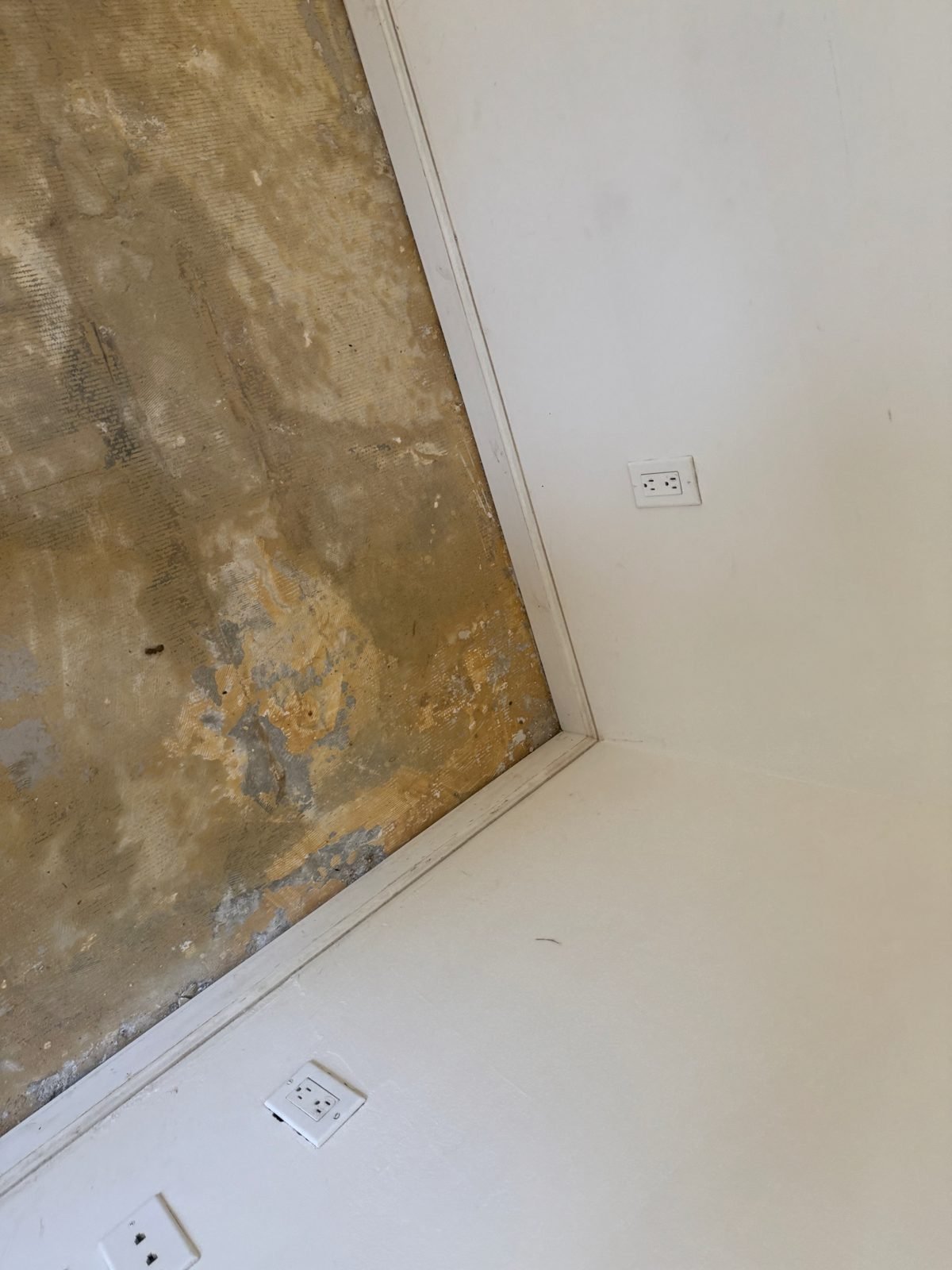
What “everything out” actually looks like: a Malibu job with the flooring pulled to the water-stained slab. This is the surface that has to read dry before anything goes back.
How do you know the house is dry enough to rebuild?
You measure it. Our water damage restoration crew sets air movers and dehumidifiers, then takes moisture readings of the wet framing and subfloor every day and compares them to a dry reference: the same material in a part of the house the water never reached. When the wet area reads the same as the dry area, the structure is ready.
The reason this can’t be skipped is mold. The EPA’s mold and moisture guide says to dry water-damaged areas and items within 24 to 48 hours to prevent mold growth. Wood that goes behind new drywall while it’s still damp has no airflow and no way to finish drying. Months later the paint looks fine and the wall smells musty.
If mold is found once the walls are open, the rebuild waits. That work becomes mold remediation under containment, with clearance by an independent third party before reconstruction starts. We do the remediation. We don’t do the testing, and that separation is deliberate.
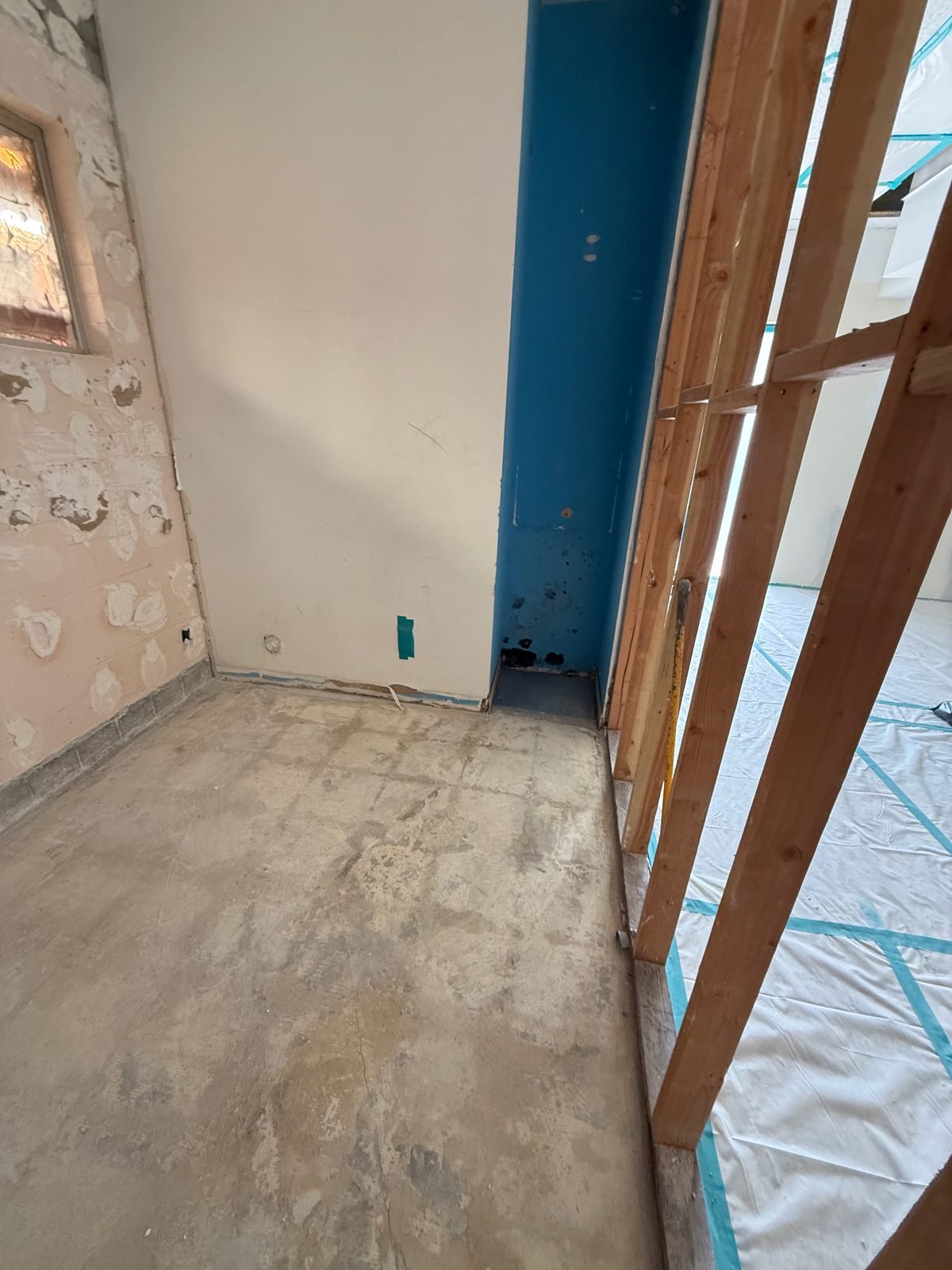
Same Malibu job at the turn-around point: studs open, slab bare, floor protection down — the moment demolition ends and reconstruction starts.
What happens during the rebuild, step by step?
- Scope and selections. A written, line-item scope lists what’s being rebuilt, room by room. If flooring, cabinets, or countertops are being replaced, you choose materials now, because lead times on those items drive the schedule.
- Rough repairs. Anything inside the wall gets fixed while it’s open: the plumbing that failed, damaged framing, wiring or outlets that got wet. Where a permit is required, inspections happen before the wall is closed.
- Insulation. New insulation goes into the open cavities, matched to what was there.
- Drywall. New sheets are hung, taped, and finished with joint compound in several coats, each one drying before the next. This step sets the pace more than people expect.
- Texture. The new section is textured to blend with the existing wall or ceiling.
- Prime and paint. New drywall is primed, then painted. Painting corner to corner, the full wall or ceiling, hides a repair far better than painting a patch.
- Flooring. Subfloor repairs first, then the finished floor.
- Cabinets, doors, and trim. Cabinets and countertops are reset or replaced, then baseboards, casing, and doors.
- Final walkthrough. You walk the job with us, room by room, and anything that isn’t right goes on a list and gets fixed.
Our reconstruction and build-back page covers what our crew rebuilds in more detail.
Do water damage repairs need a permit, and what about older homes?
It depends on the scope. Finish work such as painting, flooring, and cabinets typically doesn’t need a building permit. Work that changes or repairs structure, electrical, plumbing, or mechanical systems typically does. Your city or county building department makes that call, and a licensed contractor should tell you up front which side of the line your job falls on.
Older homes add one more step. Homes built before 1978 may have lead-based paint, and the EPA’s Renovation, Repair and Painting rule sets lead-safe work requirements for contractors who disturb painted surfaces in those homes. Some older ceiling textures, flooring, and wall materials can contain other hazardous materials too. Those are identified by an independent third party before demolition, not guessed at.
Should the same company do the drying and the rebuild?
It doesn’t have to be. But the handoff between a drying company and a separate general contractor is where rebuilds stall. The first company leaves when its equipment comes out. The second has to be found, has to see the job, and writes its own scope from scratch. Meanwhile the house sits open. And if a problem shows up later, each side can point at the other.
In California, the rebuild is construction work, and construction work calls for a contractor’s license. You can look up any contractor’s license status on the Contractors State License Board website before you sign anything. Instant Restoration holds a B General Building license, and the crew that dries your house is the crew that rebuilds it: one scope, one schedule, one company answerable for the result.
Once you’re back in, a quick monthly look at the usual leak points keeps you from doing this twice. Our water damage prevention checklist is built for that.
Walls open and not sure what comes next, or drying done by someone else and you need the rebuild? Call (818) 486-6546. We answer 24/7, and you’ll get a written scope and price before work starts.
Oren Gedalia, Owner — CSLB #1078518