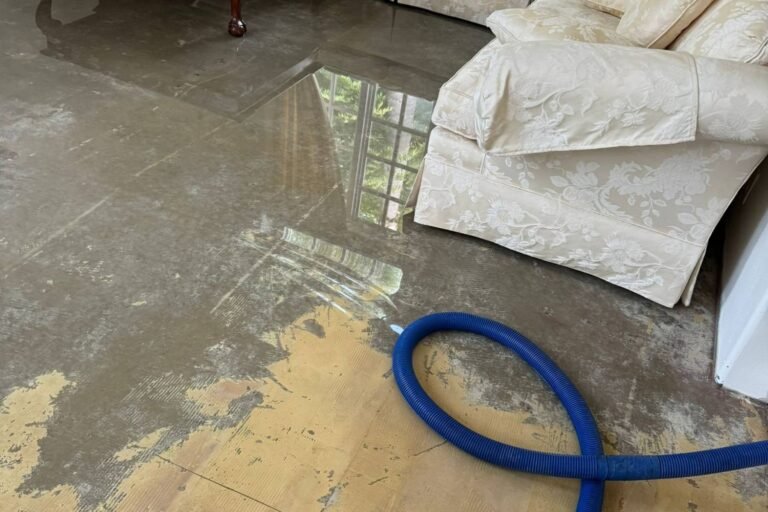


A ceiling water stain after rain means one thing: water got past your roof or exterior and soaked the material above the drywall. By the time the brown ring shows up on the paint, the insulation above it has been wet for hours and the drywall has absorbed enough water to carry the stain through. So the answer to “what’s next” is not paint. It’s this order: contain any active drip, turn off power to wet fixtures, photograph everything, get the source found and fixed, and get the ceiling cavity dried before mold has time to start. Whether that’s a small repair or a bigger job depends on how long it’s been wet and how far the water traveled.
What does a ceiling water stain after rain actually mean?
Drywall is gypsum wrapped in paper. When water sits on top of it, the paper wicks moisture through and carries dissolved dirt, dust, and wood tannins from the attic with it. As the wet spot dries from the edges inward, that residue gets left behind as a ring.
What the stain tells you depends on how it looks and feels:
- A single faint ring, dry and hard to the touch: water got in once, in a small amount, and dried. The source still exists and will leak again in the next storm.
- Several rings inside each other: repeat wetting. Each storm added a ring. The materials above have been wet and dried more than once.
- A dark center that’s cool or damp to the touch: it’s wet now. Water is still in the insulation or the drywall.
- Bubbling paint, a soft spot, or a sag: the drywall is saturated and losing strength. This one is urgent.
If the stain only appears or grows after rain, the source is almost always the building exterior. If it grows in dry weather too, look at plumbing or an AC condensate line above it instead.
Where is the water coming from if the stain is nowhere near the leak?
This is what surprises most homeowners. Water that gets through the roof doesn’t fall straight down. It runs along the underside of the roof deck, follows a rafter or truss, drops onto the insulation, and spreads across the top of the drywall until it finds a low spot, a seam, or a light fixture. The stain can be several feet from the entry point, sometimes in a different room.
The usual entry points after rain in Southern California homes:
- Flashing around chimneys, skylights, vent pipes, and where a roof meets a wall
- Cracked or slipped tiles and worn underlayment on tile roofs, where the underlayment is the real waterproof layer
- Flat roofs with clogged drains or scuppers that let water pond
- Clogged gutters and valleys that back water up under the roofing edge
- Balconies, decks, and upper-floor windows above the stained room, when the stain is on a first-floor ceiling
Our rainy season roof prep guide walks through each of these failure points. Finding and repairing the entry point is a roofer’s job. Finding out how far the water went inside the house is ours.
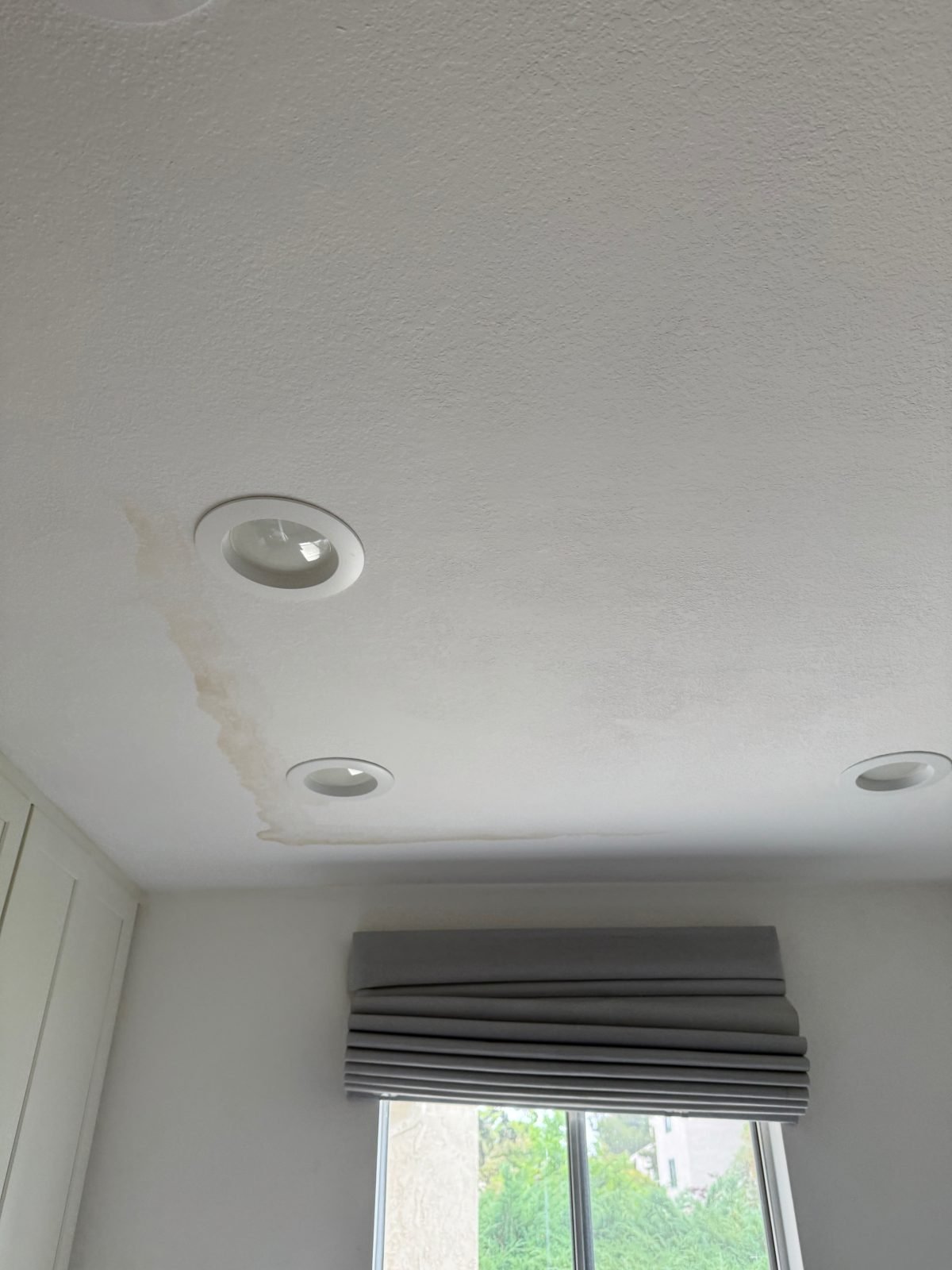
A textbook example from a Culver City job: the stain runs to the recessed lights — which means water found the ceiling cavity AND the electrical penetrations in it.
What should you do first when you see the stain?
- Contain it. If it’s dripping, put a bucket under it and move furniture, rugs, and electronics out of the way.
- Turn off power to anything wet. If the stain is at or near a light fixture, ceiling fan, or smoke alarm, switch off that circuit at the breaker panel and leave it off until it’s been checked.
- Photograph it. Take wide shots of the room and close-ups of the stain, with the date. If the stain grows, photograph it again. A pencil line around the edge shows whether it’s spreading.
- Stay off the roof. A wet roof in a storm is how people get hurt. If you can safely look into the attic with a flashlight, do that instead, and step only on framing.
- Call for the source and for the drying. A roofer for the leak, and a restoration contractor for what’s wet inside.
More rain on the way raises the stakes, because every storm re-wets the same materials. The National Weather Service Los Angeles office posts the local forecast, and it’s worth a look before you decide whether this can wait until next week. If water is actively coming in, our first 24 hours after water damage guide covers the bigger-leak scenario step by step.
Is a ceiling water stain dangerous?
The stain itself isn’t. What’s behind it can be, in three ways.
Electrical. Water follows wiring and collects in fixture boxes. A light that flickers, a fixture with water in the globe, or a breaker that trips after rain all mean the circuit stays off until an electrician clears it.
Collapse. Saturated drywall and soaked insulation are heavy. A ceiling that’s sagging has already started to fail.
Mold. The EPA’s mold and moisture guide says to dry water-damaged areas and items within 24 to 48 hours to prevent mold growth. Wet insulation sitting on the back of drywall in a closed, dark ceiling cavity doesn’t dry on that schedule by itself. If a stain has gone fuzzy, spotted, or musty, our mold vs. mildew guide shows what you may be looking at. We are restoration professionals, not medical professionals; questions about symptoms belong with your doctor.
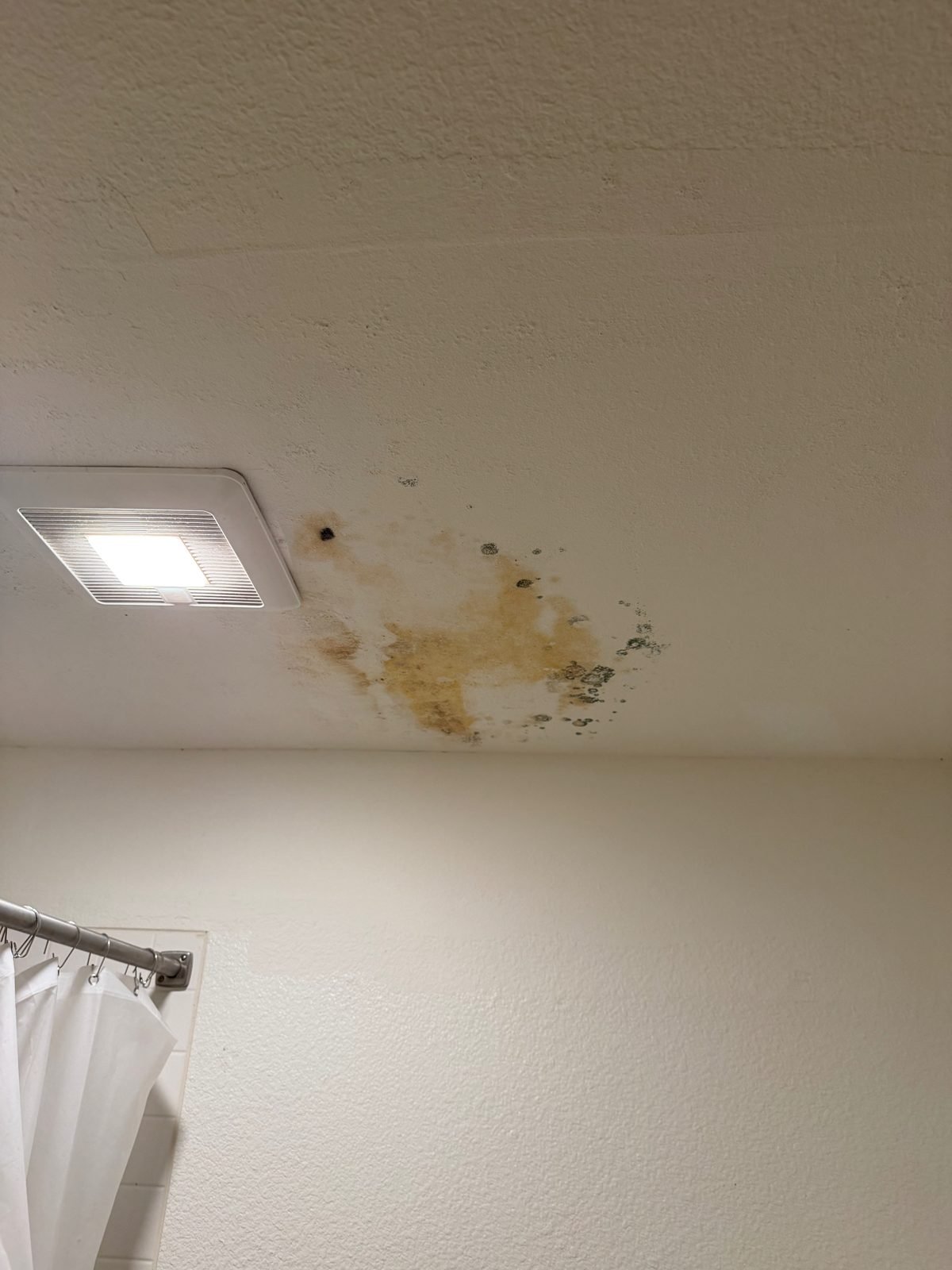
Why waiting is expensive: a Los Angeles bathroom ceiling where the stain sat long enough to start growing mold beside the exhaust fan.
Can you just paint over a ceiling water stain?
Only when three things are true: the source has been repaired, the drywall and the cavity above it are confirmed dry, and the drywall is still hard and flat. Then a stain-blocking primer and ceiling paint is a reasonable finish.
Painting before those three things are true hides the one warning sign you had. The leak keeps leaking, the insulation stays wet, and the next thing you see is a bigger stain or a soft spot. If the drywall is soft, crumbling, sagging, or has been wet repeatedly, that section gets cut out and replaced.
When does a ceiling stain need professional drying?
A paint-only fix is realistic for a small, old, dry stain from a leak that’s already been repaired. Call a restoration contractor when:
- the stain is damp, growing, or came back after a previous repair
- the ceiling is soft, bubbled, or sagging
- there’s a musty smell in the room or the attic
- the stain is under attic insulation, which holds water like a sponge
- water reached a wall, a light fixture, or the floor below
On a job like this, our water damage restoration crew maps the wet area with moisture meters, so the scope is based on readings and not on the size of the stain. Wet insulation comes out. Drywall that can’t be saved is removed in a clean cut. Then air movers and dehumidifiers dry the framing, and we record daily readings until the wood is back to a dry standard. Those readings and photos go into a file you can give your insurer. If mold is already growing, the work becomes mold remediation under containment, with clearance by an independent third party. Once it’s dry, the same licensed crew does the rebuild: insulation, drywall, texture, and paint.
Got a stain that showed up after the rain and not sure what’s wet above it? Call (818) 486-6546. We answer 24/7, and we’ll show you with moisture readings how far the water went.
Oren Gedalia, Owner — CSLB #1078518