
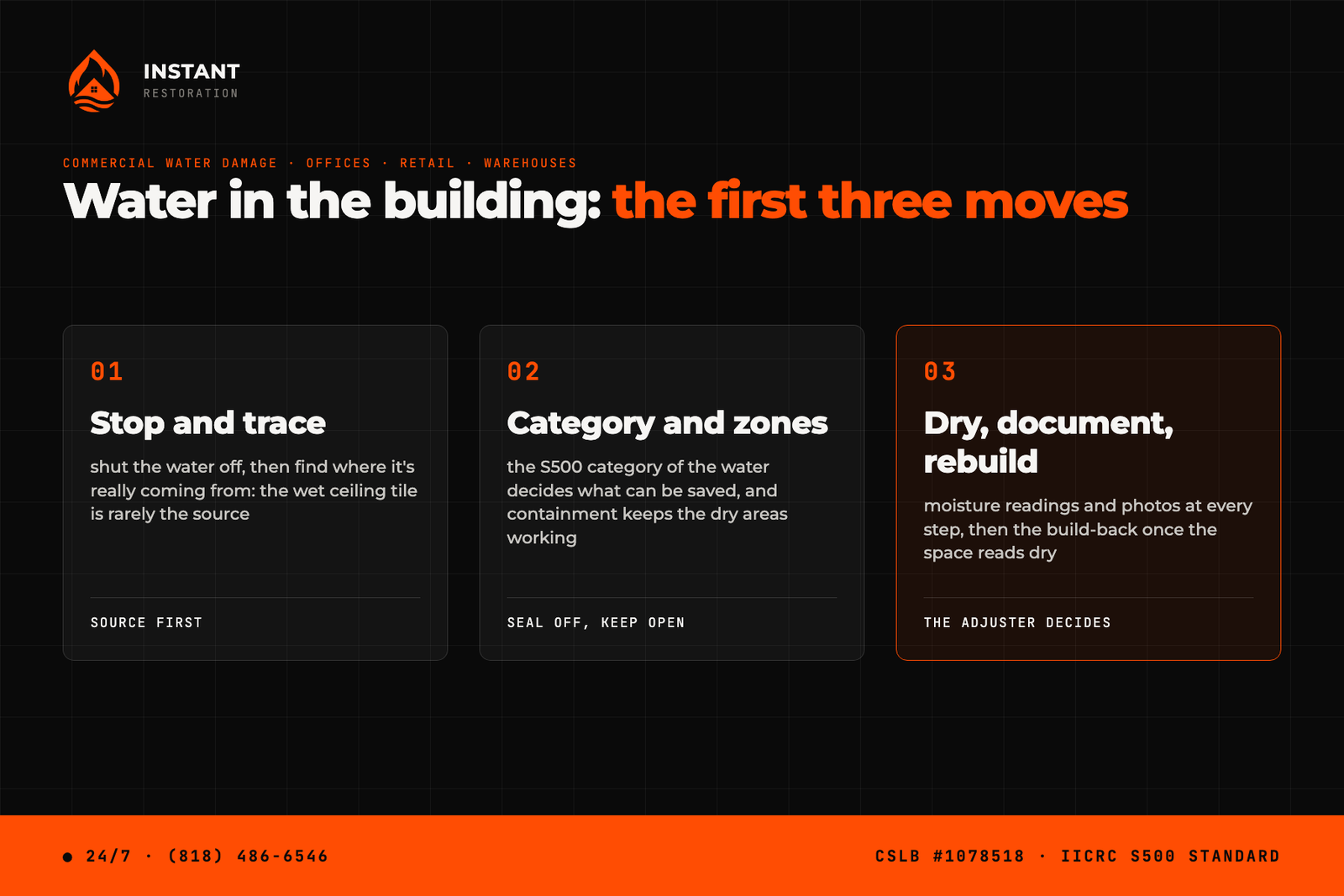
Commercial water damage restoration is the same science as a house, done inside a building that has a lease, a business and usually more than one party with a say. The first moves don’t change: stop the water, find where it’s really coming from, sort out how contaminated it is, and get the wet materials drying before mold has a chance. What changes is everything around that. The leak may be two floors up. The ceiling is a grid of tiles hiding ducts and wiring. The landlord, the tenant and two insurers may all need the same photos. And the business wants to stay open. Here’s how it works for LA offices, retail spaces and warehouses.
What should you do first when water hits a commercial space?
Stop it, make the area safe, and start a record. In that order.
- Shut off the source if you can. Know where the main shutoff and the fire sprinkler riser are before you need them. If it’s a sprinkler line, call your fire protection contractor and the building engineer, since shutting a sprinkler system down has its own rules.
- Kill power to wet areas. Water near floor boxes, outlets, server racks or light fixtures is an electrical problem first. Don’t walk into standing water around live equipment.
- Get people and stock out of the wet zone. Move inventory, files and electronics up and away. Don’t start tearing out ceilings or drywall yourself.
- Photograph everything before it moves. Wide shots of the space, close-ups of the source, the waterline on walls, and any damaged stock or equipment. That record matters more in a commercial loss than a residential one, because more people will ask for it.
- Tell the right people. The landlord or property manager, your insurance broker, and any tenant below you.
Then call a restoration contractor. Our line is answered 24/7.
Water damage, step by step, on video from our own jobs. The last chapter, at 2:54, is a restaurant where the ceiling came down: the same steps as a home, with one more goal, getting the doors open again.
Why is the source harder to find in a commercial building?
Because water travels. In a commercial building it runs along slab, conduit, beams and the tops of ceiling tiles before it shows up anywhere, and it usually shows up where it’s easiest to see, not where it started. A stained tile over a reception desk can come from a rooftop unit’s condensate line, a cracked supply line in the suite above, or a failed roof drain.
Drying a space without fixing the source just means drying it twice. We trace the water back with moisture meters, plus acoustic and thermal leak detection we do in-house, and we open only what we need to. If the fix is plumbing or roofing, that goes to the building’s plumber or roofer, and we dry and rebuild around it.
How does the category of water change a commercial job?
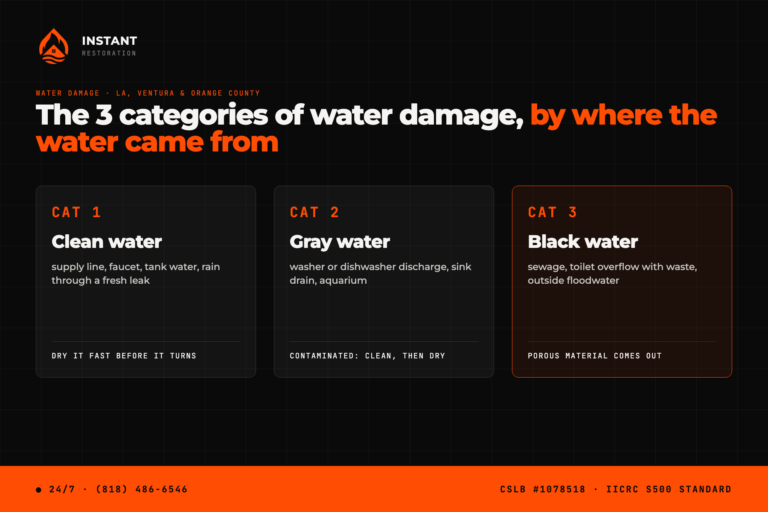
The IICRC S500, the industry standard for water damage restoration, sorts water into three categories by where it came from. Category 1 is clean, like a broken supply line. Category 2 carries contaminants, like a washing machine or dishwasher discharge. Category 3 is grossly contaminated: sewage, backed-up drains, or floodwater that came in from outside. Our guide to the three categories of water damage goes deeper.
In a commercial building the category decides a lot. Clean water caught early can often be dried in place. Category 3 changes the job completely: porous materials it touched come out, the area gets sealed off, and cleanup follows sewage protocols. That’s common in buildings with shared drain lines, ground-floor restaurants, or warehouses that take in storm runoff. Our sewage cleanup and sanitization page covers that side. Water also gets worse the longer it sits, so a clean leak that dripped all weekend may not be clean anymore.
How do offices, retail and warehouses differ?
The drying science is the same. The things that get in the way aren’t.
- Offices. Drop ceilings soak up water and sag, and wet tiles usually come out rather than get dried. Carpet tile, cubicle panels and the cabling under raised floors all need checking.
- Retail. The question is inventory. Stock that’s been touched by Category 2 or 3 water is usually a loss, and your insurer will want it photographed and listed before it goes anywhere. Fixtures and display walls often hide wet drywall behind them.
- Warehouses. Concrete slab dries slowly and holds water under pallets and racking. Water wicks up into the bottom of stacked goods and up the drywall of office build-outs along the walls. Big open volumes take more equipment to dry, and roll-up doors left open fight the dehumidifiers.
Can a business stay open during water damage restoration?
Often, yes, at least partly. That’s what containment is for. We seal the wet area off with plastic walls and zipper doors so dust and moisture stay inside it, and the rest of the space keeps working. Vents into the wet zone get sealed so the building’s HVAC doesn’t pull moisture or debris through the rest of the floor.
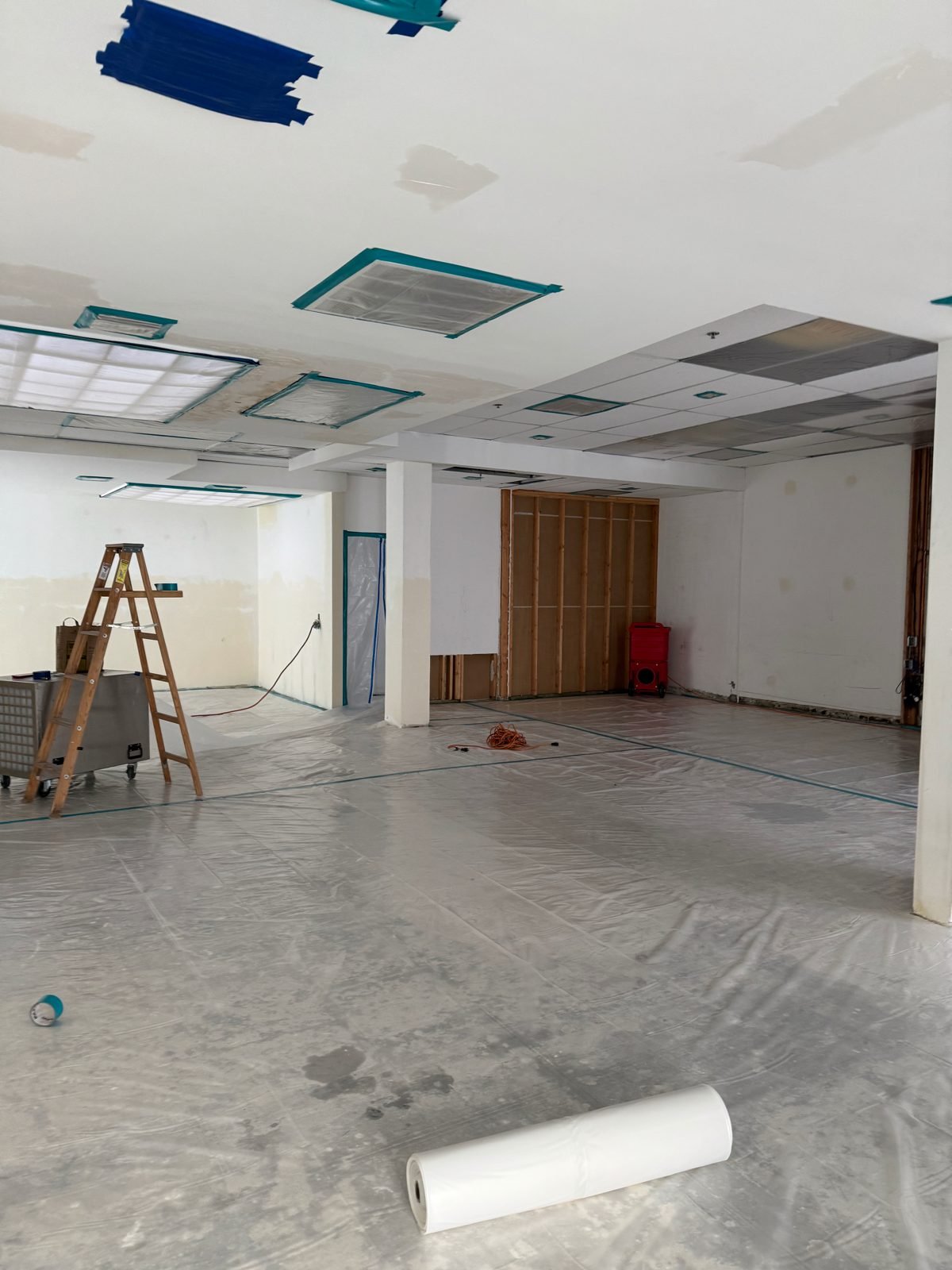
An office-style space on a Malibu job: plastic taped over the floor, the ceiling vents and light panels sealed off, and one wall opened to the studs.
Whether a space can stay open depends on the category of water, where the wet zone is, and what the business does. We’ll tell you plainly what’s safe to keep running and what isn’t, and the call on hours belongs to you and the building.
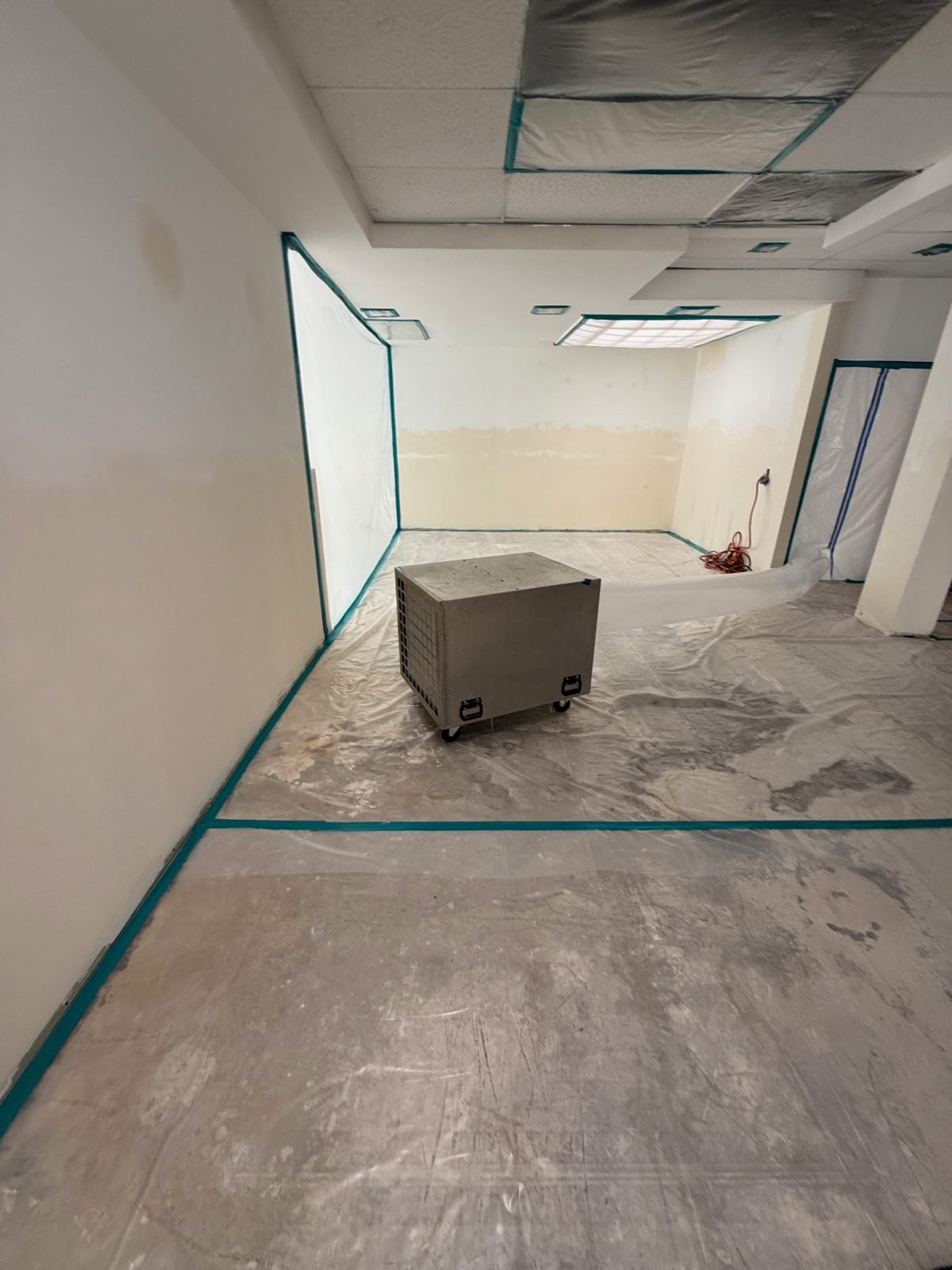
On the same Malibu job, a wheeled equipment unit with lay-flat ducting running across the floor plastic toward a zippered plastic wall.
How long does commercial water damage take to dry?
It depends on how much got wet, what it’s made of, and how long it sat. Drywall and carpet can dry quickly when the job starts early. Slab, hardwood, and wall cavities full of insulation take longer. The EPA’s guide to mold and moisture says to dry water-damaged areas and items within 24-48 hours to prevent mold growth, which is why the first day matters more than any other. Building managers may also want the EPA’s guide to mold remediation in schools and commercial buildings.
We don’t call a space dry because it looks dry. We take moisture readings on the wet materials and compare them to dry materials of the same kind in an unaffected part of the building, and drying is done when they match. Those readings get logged every visit. If you want the full picture of the process, our water damage restoration page lays it out.
Who pays, and what paperwork will you need?
In a commercial building more than one policy can be involved: the owner’s building policy, the tenant’s policy for contents and improvements, and sometimes a neighbor’s if the water came from their space. Your lease usually says who’s responsible for what. Business income coverage, if your policy has it, is a separate question for your broker. We are not public adjusters, and we do not represent you in coverage discussions. We document the loss; the adjuster decides.
What everyone will ask for is the same: photos from the first hour, a written scope of work, moisture readings over time, and a list of what was removed and why. We keep that record on every job. Property managers juggling several tenants can see how we work with them on our property managers page. When drying’s done and the space reads dry, the build-back starts. Our reconstruction and build-back service handles drywall, ceilings, flooring and paint, so the same team that dried it puts it back.
Water in your office, store or warehouse? Call (818) 486-6546. We answer 24/7, and scheduled on-site assessments run Monday to Saturday, 9 AM to 5 PM. You’ll get a written scope and price before work starts.
Oren Gedalia, Owner — IICRC-certified · CSLB #1078518