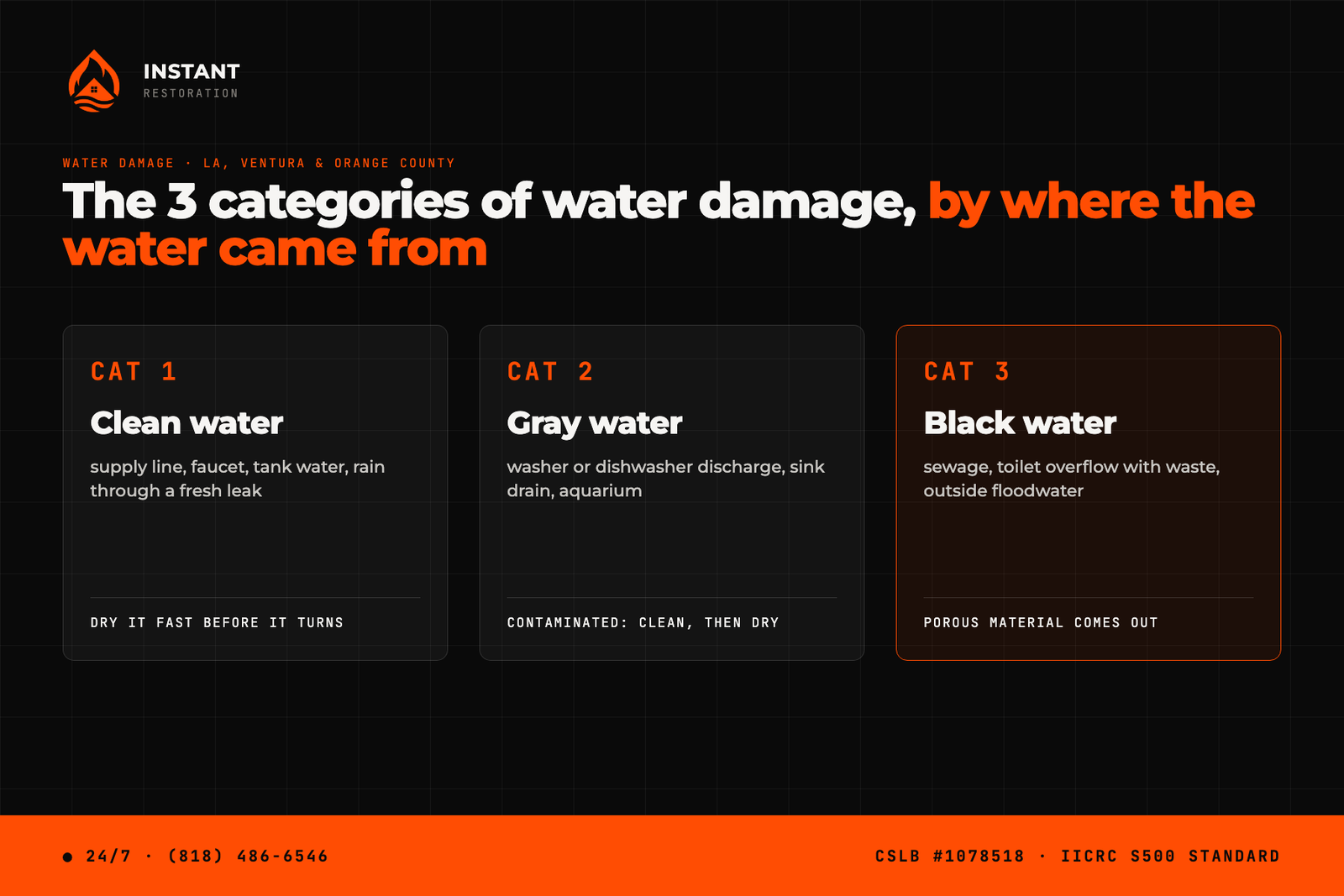
There are three categories of water damage, and they’re sorted by one thing: where the water came from. Category 1 is clean water from a sanitary source, like a burst supply line. Category 2 is gray water that carries contamination, like a washing machine overflow. Category 3 is black water, grossly contaminated, like a sewage backup or floodwater coming in from outside. The category decides almost everything about the cleanup: what can be dried in place, what has to come out, what the crew wears, and whether anyone should be in the house while the work happens. Here’s how to tell which one you’ve got, and why Category 3 changes the rules.
Here’s what a fresh loss looks like on an Oxnard job: water spreading across the floor from room to room. It started in the bathroom.
What are the 3 categories of water damage?
The categories come from the IICRC S500, the industry standard for water damage restoration that we work to. They grade contamination, not volume. A few gallons of sewage under a sink are a bigger problem than a lot of clean water from a supply line, because of what’s in it.
- Category 1, clean water. It comes from a sanitary source and isn’t a significant health risk at the moment it escapes. Leaking or burst supply lines, a faucet left running, a sink or tub that overflowed with nothing in it, water from the toilet tank (not the bowl), and in many cases rain coming through a fresh roof or window leak.
- Category 2, gray water. It carries real contamination and can make people sick if they’re exposed to it. Washing machine and dishwasher discharge, a sink drain backing up, a toilet bowl overflow with urine but no feces, aquarium water.
- Category 3, black water. It’s grossly contaminated and can carry bacteria, viruses and other pathogens. Sewage, a toilet overflow with feces, a backup from the sewer line, and floodwater coming in from outside, off streets, yards and hillsides.
Can clean water turn into Category 3?
Yes. The category describes the water as it is now, not where it started. Clean water that sits for a few days in a warm house picks up whatever’s growing in the materials it soaked into. Clean water that runs across a dirty crawl space, through a wall cavity full of droppings, or down into an old carpet pad doesn’t stay clean either. On our jobs, water that’s sat for days, or traveled through contaminated material, gets treated as the next category up, and we write it that way in the scope.
That’s one more reason the first day matters. The EPA’s guide to mold and moisture says to clean and dry wet building materials within 24-48 hours to prevent mold growth. Category 1 water that’s dried inside that window is a drying job. The same water left for a week is a contamination job, and often a mold job too.
Why is Category 3 water a health hazard?
Because it carries what sewage carries. Ready.gov’s flood guidance tells people to avoid wading in floodwater, which can hold dangerous debris and be contaminated. Sewage backups and outside floodwater bring bacteria and viruses into the house, and they don’t stay on the floor. They wick up the drywall, soak into carpet pad and insulation, and dry into dust that gets tracked through the rest of the house.
What that means in practice:
- Keep people out, especially kids, older relatives, anyone pregnant, and anyone with a weakened immune system or a breathing condition. Keep pets out too.
- Don’t walk through it barefoot or in sneakers, and don’t touch it with bare hands.
- Turn off the HVAC if it pulls air from the affected area, so it doesn’t push contaminated air into the other rooms.
- Don’t use a household shop vac on it. It sprays a fine mist out the exhaust, and the vac’s contaminated afterward.
If anyone’s been exposed and feels sick, call a doctor. We are restoration professionals, not medical professionals, and health questions belong with them. Our sewage backup guide walks through the first steps in order.
How does the cleanup change by category?
The work follows the category, which is why it’s the first thing that gets decided on a job:
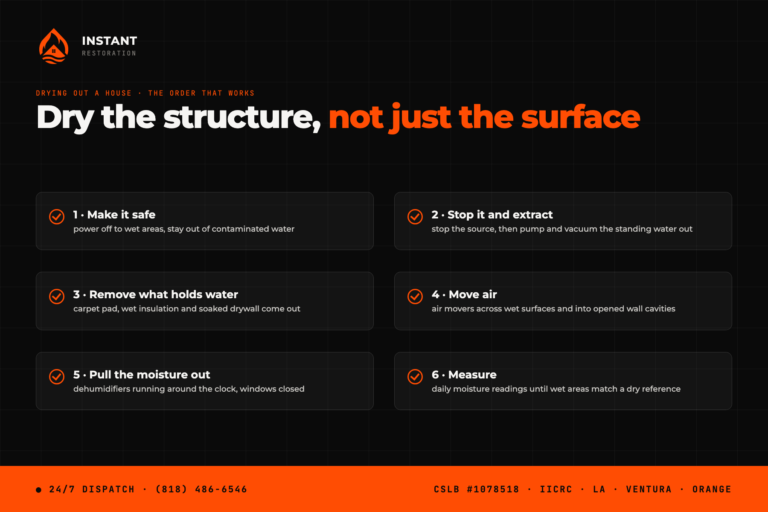
- Category 1: extract the water and dry in place. Carpet, pad, drywall and cabinets can often be saved if drying starts quickly, and moisture readings decide what stays.
- Category 2: extract, clean and disinfect the affected surfaces, then dry. Carpet pad usually comes out. Drywall that wicked gray water often gets cut out above the waterline.
- Category 3: containment where it’s needed, a crew in protective gear, and the porous material that touched the water comes out: carpet and pad, drywall above the wick line, insulation, and often lower cabinets and soft contents. Hard surfaces get cleaned and disinfected. Then everything’s dried and checked before anything’s rebuilt.
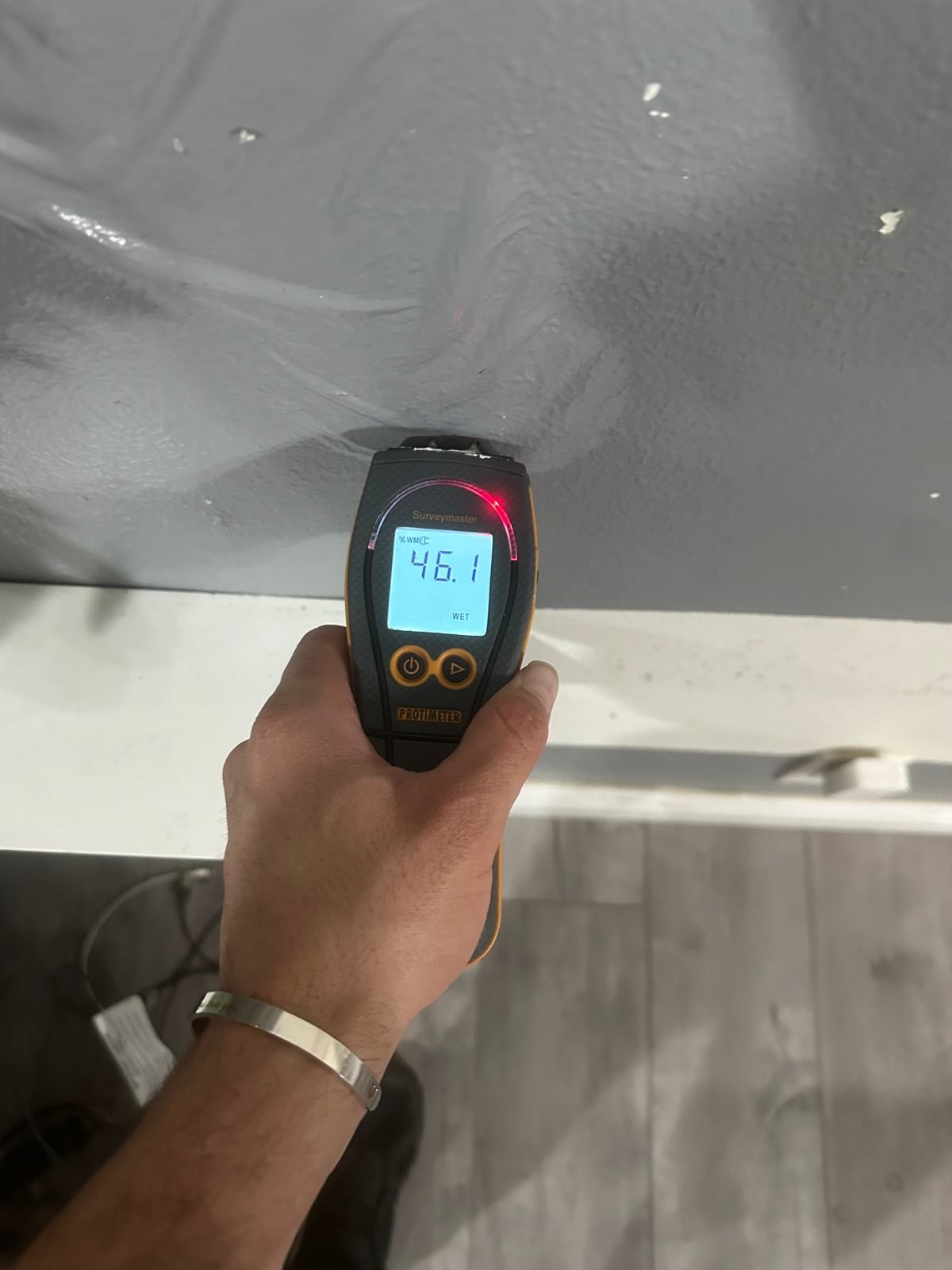
A moisture meter reading 46.1 and WET on a painted surface on an Oxnard water job. Readings like this, logged and dated, are how drying gets tracked until the material reads dry.
See how we run each one on our water damage restoration and sewage cleanup and sanitization pages. For water that came in from outside, start with our flood damage cleanup page.
How do you know which category you have?
Start with the source: what broke, overflowed or came in. Then think about what the water touched on the way. A few quick reads:
- Water from a pipe, a faucet or the toilet tank that you caught quickly: probably Category 1.
- Water from an appliance drain, a sink backup, or a toilet bowl without waste in it: Category 2.
- Anything from a sewer line, a floor drain backing up, a toilet with waste, or water coming in from outside at ground level: Category 3.
When we get to a job, the category is the first thing we determine and write down, with photos of the source, because it drives the scope and it’s one of the first questions an adjuster asks. It’s also separate from class. The S500 sorts water damage into Classes 1-4 by how much water the materials absorbed. Category is how dirty the water is; class is how wet the house got.
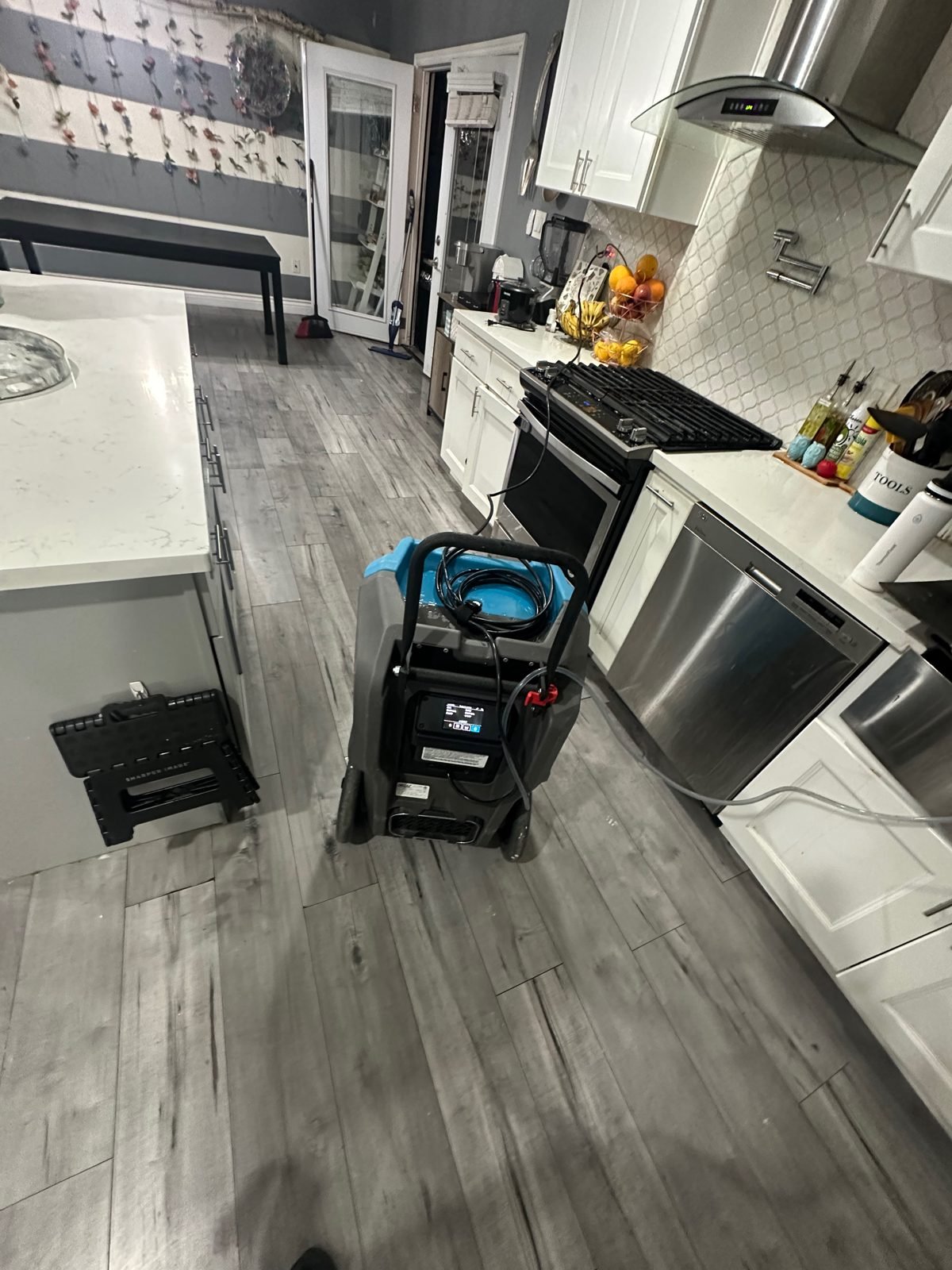
A dehumidifier running in the kitchen on the same Oxnard job.
Coverage is its own question. Our guide to whether homeowners insurance covers water damage in California goes through it.
Not sure which category you’re dealing with? Call (818) 486-6546. We answer 24/7, and you’ll get a written scope and price before work starts.
Oren Gedalia, Owner — IICRC-certified · CSLB #1078518