

To sandbag your house for flooding, fill each bag about half full, fold the open end under it, and lay the bags like brickwork across the places water gets in: door thresholds, the garage door, low vents and window wells on the uphill side. Stagger the joints, tamp each bag flat, and put a sheet of plastic under the first row in doorways. Below a burn scar, though, sandbags are only one layer. They steer shallow water and light mud. They won’t stop a debris flow, which is why drainage, barriers and the evacuation order matter more. Here’s how each piece fits.
Burned hillsides don’t soak up rain the way they used to. The USGS says fire can change a watershed so much that even modest rainstorms can produce dangerous flash floods and debris flows. That’s the risk for homes below the 2025 burn scars in Altadena, Pasadena and the Santa Monica Mountains, and below older scars across LA and Ventura County. This is a living guide: it stays general on purpose, so it reads true in any storm season.
Do sandbags actually work below a burn scar?
Yes, for the job they’re built for. A sandbag line is a low, heavy wall. It steers shallow water around a doorway instead of under it, holds back a few inches of runoff at a garage door, and keeps light mud off a patio or out of a crawl space vent. That’s real protection, and on most rainy days below a burn scar it’s exactly the problem you’ve got.
What a sandbag wall can’t do is stop a debris flow. A debris flow is a fast slurry of mud, rock and broken trees moving down a channel. It can go straight over a row of bags or push it aside. The USGS post-fire debris flow program is clear that these flows are dangerous, and no homeowner barrier is designed to hold one. So think of bags as protection for the everyday storm, and the evacuation order as protection for the big one. Ready.gov’s flood guidance is short on this: evacuate if told to do so, and turn around rather than drive or walk into floodwater.
How do you sandbag your house the right way?
Most sandbag failures come from how the bags were filled and stacked, not from the bags themselves. A few rules cover nearly all of it:
- Fill them about half full. A half-full bag flattens and molds into the bags around it. An overfilled bag stays round and leaves gaps water runs straight through.
- Don’t tie them. Fold the open end under the bag so its own weight holds it closed.
- Lay plastic first in doorways. A sheet of heavy plastic under the first row and up the face of the wall cuts down on seepage between bags.
- Stack like brickwork. Overlap each row so the joints don’t line up, then tamp every bag flat before the next one goes on. Gaps and loose bags are where water gets through.
- Go wide before you go high. If a wall needs to be taller, make the base wider so it doesn’t tip.
Sand is the standard fill. Cities and counties across the region often hand out empty bags and sand before storms, and your city or county public works site will say where. Plastic-weave bags break down in the sun over a season, so check any bags left out from last year before you count on them.
Where should the sandbags go?
Start with where water actually gets in, and work from the uphill side of the house:
- Exterior doors and sliders that face the slope or sit at grade.
- The garage door. It’s usually the lowest, widest opening in the house, and the seal at the bottom isn’t built to hold water back.
- Crawl space and foundation vents near ground level. Mud that gets under a raised floor is slow and messy to clear.
- Window wells and below-grade doors, if the house has them.
- A diversion line along the uphill side to steer sheet flow around the house toward the street, rather than through the yard.
Put them out before the storm, not during it. Filling and stacking in the dark and the rain is slow, and it’s how people get hurt. Our flash flood checklist for homes below burn scars covers the rest of the pre-storm list, from go-bags to shutting off utilities.
What about flood barriers and door dams?
Barriers do the same job as sandbags with less work. Door dams and garage barriers are panels or tubes that seal across an opening, and some fill with water instead of sand. They go up faster, and they store flat for next year. The trade-off is that each one fits one opening, so you need the right size for every door you’re protecting.
A simple version works too: heavy plastic sheeting laid across the threshold and up the door, with a row of sandbags on top to hold it down. It’s cheap, and it seals better than bags alone. Whatever you use, test it on a dry day. A barrier you’ve never put up is one you’ll be figuring out in the rain.
Why does drainage matter more than the bags?
Because a wall the water never reaches can’t fail. Every gallon that drains away from the house is a gallon your sandbags don’t have to hold. Before the rain starts:
- Clean the gutters and downspouts. Ash and burned debris from the hillside clog them fast after a fire.
- Extend the downspouts so they empty well away from the foundation, not against it.
- Clear yard drains, swales and the street drain in front of the house. Rake debris away from the grate; never climb into a storm drain or culvert.
- Check the grade. Soil and mulch should slope away from the walls. Planters and beds piled against the house hold water right where it gets in.
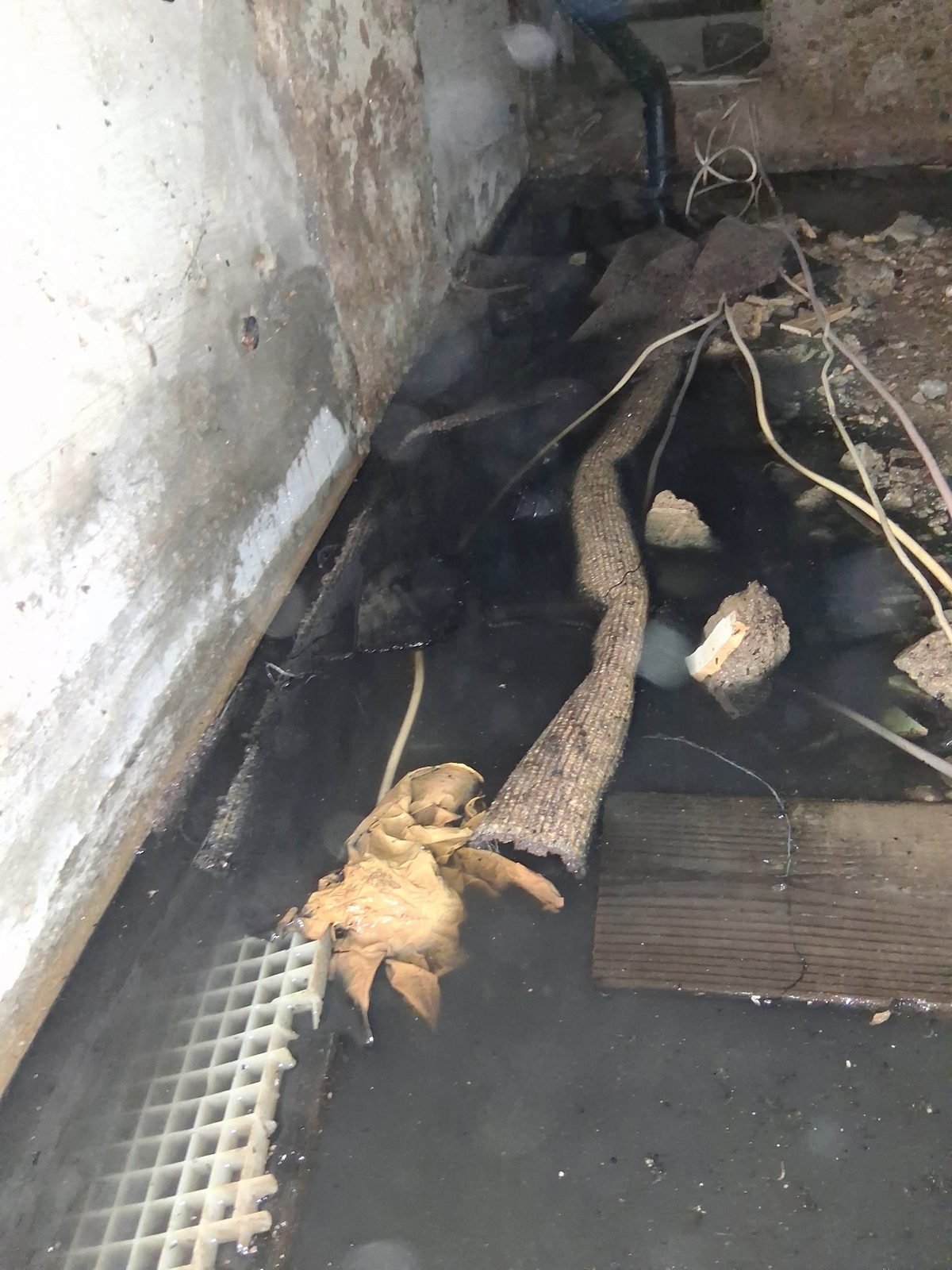
Standing water against a foundation wall on a Beverly Hills job, with debris floating beside a drain grate. When water collects at the foundation, it finds its way under the house.
What should you do when water or mud gets in anyway?
Safety first. Stay out of standing water anywhere it could reach outlets, cords or the electrical panel, and don’t go back in until it’s safe. Floodwater that came in from outside is Category 3 under the IICRC S500 standard, the most contaminated of its three categories, because it carries soil, sewage and whatever else it picked up on the way down. Treat everything it touched as contaminated.
Then document before anything gets moved: photos and video of the water line, the mud, the rooms and the damaged contents. After that, the work is extraction, removal of the porous materials the water soaked, cleaning, and drying until the framing reads dry on a moisture meter. Our guide to restoration after a burn-scar debris flow walks through that order step by step.
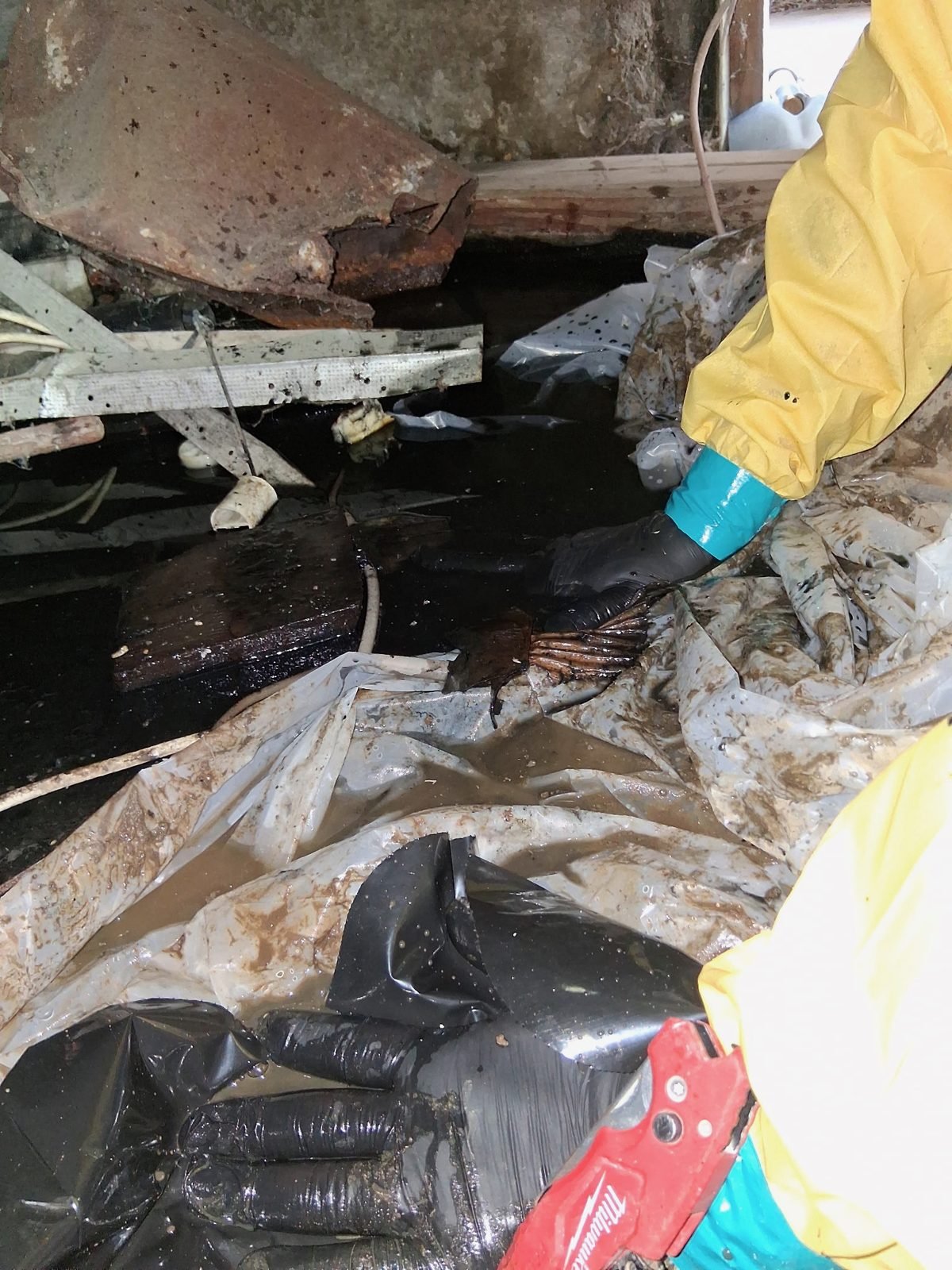
On the same Beverly Hills job: muddy plastic sheeting being pulled out of standing water under the house.
That’s the part we do. Our flood damage cleanup crews pump out water and mud, remove what can’t be saved, and set up drying, and our water damage restoration work takes it through to a dry, rebuilt house. We work to the IICRC S500 standard, and you’ll get a written scope and price before work starts.
Water or mud already inside? Call (818) 486-6546. We answer 24/7.
Oren Gedalia, Owner — IICRC-certified · CSLB #1078518