

Floodwater and sewage are health hazards, not just a mess, and the risk doesn’t end when the water drains. Water that came in from outside or up from a sewer line can carry germs, chemicals and debris. It reaches people three ways: through skin and cuts, from hands to mouth, and through the air when it’s stirred up or left to grow mold. The short version: keep kids, pets and anyone vulnerable out, don’t touch it bare-handed, don’t run a shop vac or fan through it, and treat anything porous it soaked into as a loss. Here’s the part nobody explains: why each of those rules exists.
What’s actually in floodwater and sewage?
More than people expect. The National Weather Service’s after-the-flood safety page warns that floodwater can be contaminated, including with sewage and chemicals. Water that ran across streets, yards and garages picks up whatever was there: overflowing sewer lines, lawn and garage chemicals, fuel, animal waste and debris. Sewage from a backed-up drain or a broken line is human waste, full stop.
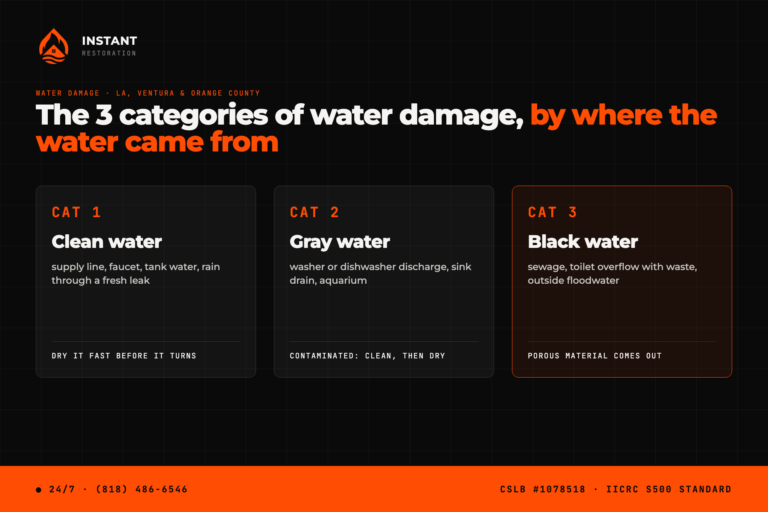
The restoration industry sorts this with the IICRC S500 standard, which puts water into three categories by where it came from. Category 1 is clean, like a broken supply line. Category 2 carries some contamination, like a washing machine overflow. Category 3 is grossly contaminated: sewage, and floodwater that came in from outside. Our guide to the three categories of water damage goes deeper.
The part that surprises people: categories don’t stay put. Clean water that sits in a wall or under a floor gets worse with time and warmth. A supply-line leak nobody found for a while isn’t clean water anymore, and it gets treated by what it’s become, not by where it started.
How does contaminated water actually make people sick?
It has to get from the water into you. There are three routes, and most of the rules exist to block one of them.
- Skin and cuts. Wading through it or cleaning up bare-handed puts contaminated water on your skin and into any cut or scrape, even one you didn’t notice. That’s why boots and gloves aren’t optional.
- Hands to mouth. This is the route people never think about. You touch a wet baseboard, then your phone, then a sandwich. A child touches the floor, then their face. It’s the easiest route to miss, which is why washing up before you eat or drink matters so much.
- The air. A household shop vac or a box fan throws a fine mist of whatever’s in the water into the room. Tearing out soaked drywall raises contaminated dust. And wet materials left in place start growing mold, which puts spores into the air for weeks after the water’s gone.
Why doesn’t the danger end when the water drains?
Because the water leaves things behind. Floors and walls keep a film of whatever was in it. Carpet, pad, drywall and insulation soak it up and hold it where you can’t clean it. And anything that stays wet becomes food for mold. The EPA’s guide to mold and moisture says to dry water-damaged areas and items within 24-48 hours to prevent mold growth. After a flood, that clock is already running by the time most people get back into the house.
That’s why a room can look fine and still not be safe. The surface dried; the wall cavity didn’t. Mold that grows there doesn’t need the flood to come back. It just needs the wall to stay wet.
Who should stay out of a flooded or sewage-damaged room?
Anyone who doesn’t need to be there, and especially:
- Young children, who touch everything and put their hands in their mouths
- Pets, who walk through it, then lick their paws and climb on furniture
- Older adults, anyone who’s pregnant, and anyone with a weakened immune system or a health condition
- Anyone with an open wound, a fresh cut or broken skin on their hands or feet
Close the door to the affected area if there is one, and keep the rest of the house as the clean side. We are restoration professionals, not medical professionals. If someone’s been in contact with floodwater or sewage and feels unwell, or a cut that touched the water gets red, swollen or painful, that’s a call to your doctor, not to us.
What has to be thrown out after sewage or floodwater?
The rule of thumb is porous versus non-porous. Hard, sealed surfaces like tile, metal, glass and sealed concrete can usually be cleaned and disinfected. Soft, porous things that soaked up Category 3 water generally can’t be cleaned well enough to keep, so they come out:
- Carpet and carpet pad
- Drywall and insulation the water wicked into
- Particleboard cabinets and furniture
- Mattresses, upholstered furniture, pillows and stuffed toys
- Anything you’d eat, drink or put on your skin that the water touched
Photograph everything before it goes, with a wide shot of the room and close-ups of each item, and keep a list. That record is what your insurer will ask for.
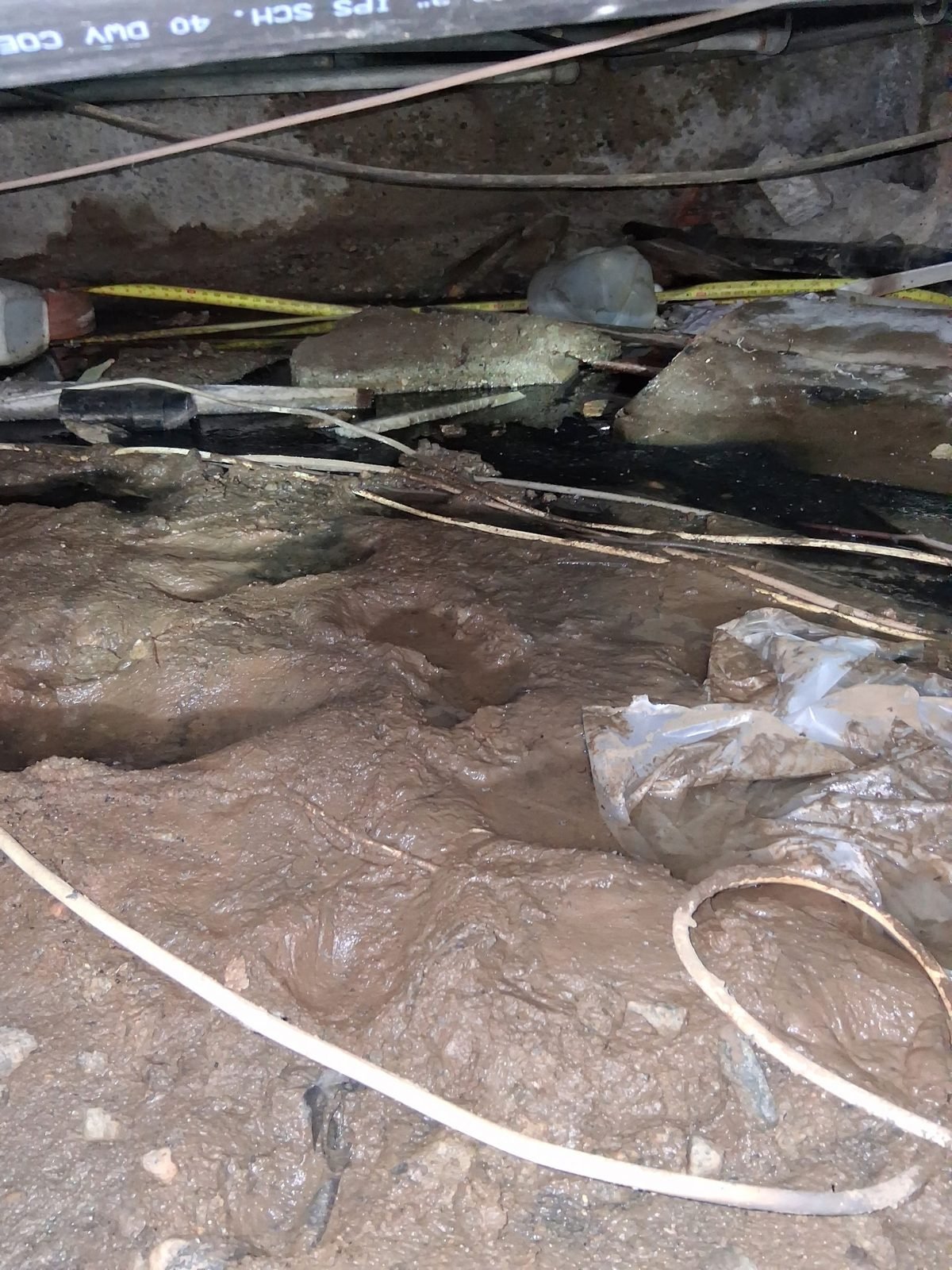
Sewage-soaked soil, debris and torn plastic sheeting in a Beverly Hills crawlspace after a sewer line leaked under the home.
How do you clean up without spreading it?
A small, fresh overflow on a sealed tile floor can be a careful do-it-yourself job. Anything bigger is a different job, and the line is porous materials: once sewage or floodwater has reached carpet, baseboards, drywall or cabinets, or spread past one room, cleaning in place stops being realistic.
If you’re doing a small one yourself:
- Cut the power to wet areas first, and only if you can reach the panel without standing in water.
- Wear rubber boots, waterproof gloves and eye protection. Cover any cuts.
- Don’t use a household shop vac or a fan. They aren’t sealed for this, and they put it in the air.
- Bag porous items and get them out. Then clean hard surfaces with soap and water before you disinfect, since disinfectant doesn’t work well through grime.
- Never mix bleach with ammonia or other cleaners. The fumes are dangerous on their own.
- Wash up every time you leave the area, and wash work clothes separately from everything else.
For anything larger, professional sewage cleanup and sanitization follows a set order: contain the area, extract the water and solids, remove what can’t be saved, clean and disinfect what stays, then dry it to verified moisture readings. Doing it out of order is how contamination gets sealed into a wall. If the water came in from outside after a storm, our flood damage cleanup page covers what that job looks like, and our post on what to do after a sewage backup walks through the first steps at home.
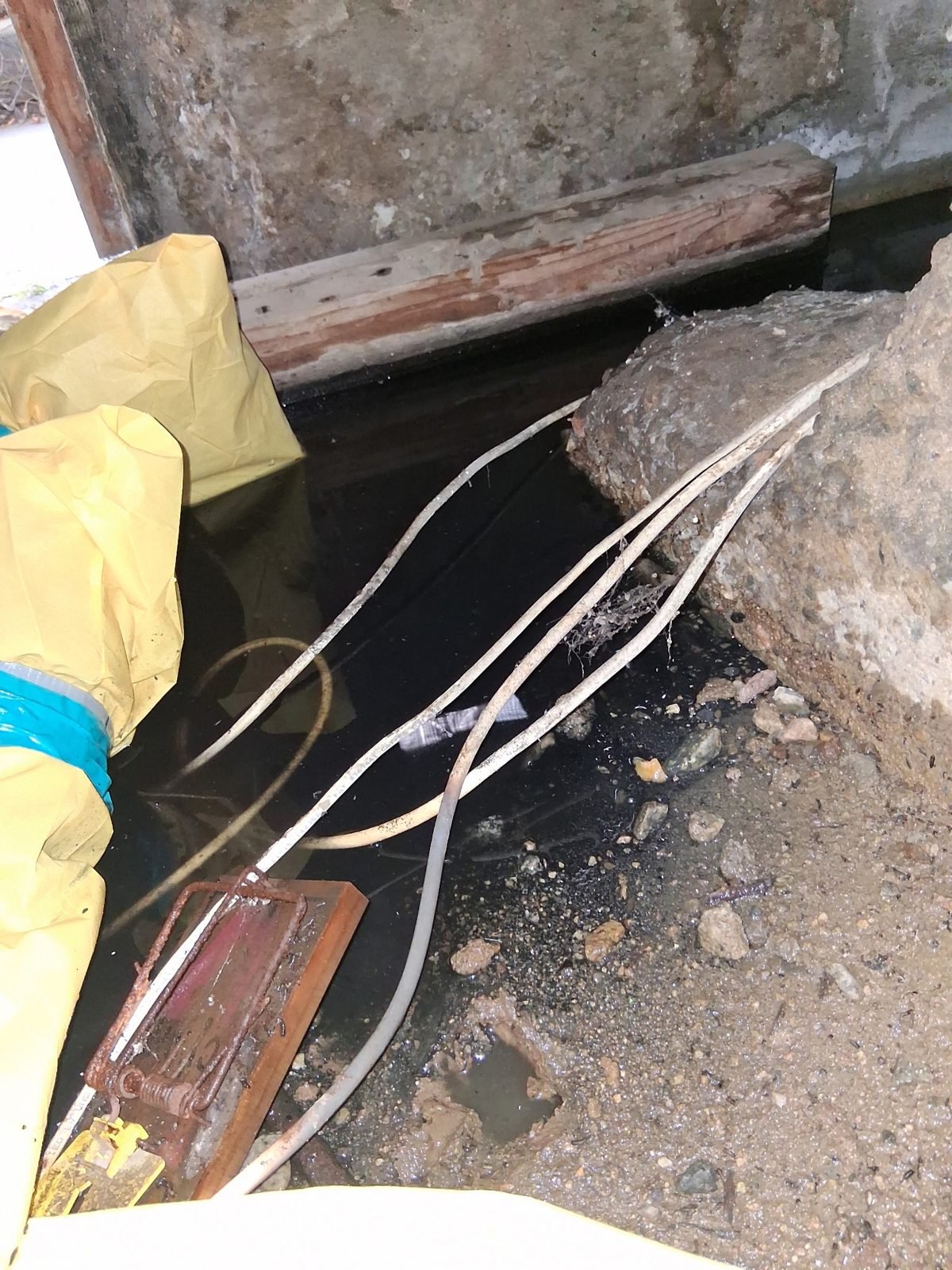
On the same Beverly Hills job, a crew member in a yellow protective suit works beside dark standing water and wiring in the crawlspace.
Floodwater or sewage in your home? Call (818) 486-6546. We answer 24/7, and scheduled on-site assessments run Monday to Saturday, 9 AM to 5 PM. You’ll get a written scope and price before work starts.
Oren Gedalia, Owner — IICRC-certified · CSLB #1078518