Skip to content
WOODLAND HILLS HQ OPEN 24/7 IICRC S500 · S520 · S700 STANDARDS CSLB LICENSED ★ 5.0 122 REVIEWS WATER FIRE SMOKE MOLD SERVING LA VENTURA ORANGE COUNTY
Woodland Hills HQ Burbank Smoke damage restoration · Los Angeles County About 32 min drive from our HQ [ Service area · Los Angeles County ] Instant Restoration · 24/7 · CSLB #1078518
Burbank, CA · Smoke Damage Restoration · IICRC S700

Smoke Damage Restoration in Burbank, CA

Smoke damage in Burbank is defined by the January 2025 Eaton Fire. Prevailing winds pushed heavy smoke and ash westward from Pasadena and Altadena across the eastern San Fernando Valley — Burbank sustained multi-week smoke and ash exposure. HVAC systems city-wide pulled wildfire smoke composite (burned structures, plastics, vehicles, and household contents mixed with wildland fuels) into homes, buildings, studio properties, and commercial spaces. Attic insulation absorbed. Soft goods absorbed. Porous building materials absorbed. Eastern Burbank sustained heavier deposition than western neighborhoods due to proximity to the fire corridor. Beyond post-Eaton scope, standard structural smoke from any on-property fire runs S700. Est. 2021. CSLB #1078518 B-General Building.

⚡ Call (818) 486-6546
32min
Drive from Woodland Hills HQ
S700
IICRC fire & smoke standard
24/7
Live dispatch
5.0★
122+ Google reviews
★ 5.0 from 122+ reviews ·CSLB #1078518 · B-General Building ·IICRC S500/S520/S700 standards ·Local Woodland Hills HQ
Section 01 · First 15 minutes

First 15 minutes — what to do before we arrive.

While we’re en route, this is what protects your property and your insurance claim.

Don’t run the HVAC system.

Every cycle pulls smoke-saturated air from the attic and ducts and redistributes it through the rest of the property. Turn it off completely until we assess.

Don’t wipe soot or ash from surfaces.

Both are acidic. Wiping spreads the acid and embeds it deeper. The marks that look like dust are actually corroding the surface underneath.

Don’t try home air purifiers as a fix.

Standard purifiers handle airborne particles but don’t address smoke that has settled into HVAC ducts, attic insulation, or porous surfaces. They mask the symptom temporarily without removing the source.

Don’t wash smoke-affected clothing in your home washer.

Home washing sets smoke odor permanently into fabric. Specialty cleaning is required.

Open windows for short ventilation cycles only.

Brief airing-out helps with airborne smoke, but won’t address embedded contamination — and if outdoor air quality is still poor, you’re making it worse.

Document with photos.

Wildfire smoke claims are often filed weeks or months after the fire — early documentation matters.

Contact your insurance carrier.

Wildfire smoke remediation is often covered as a separate claim category, even when the home didn’t burn. Coverage depends on your policy.

Section 02 · Smoke damage patterns

Smoke damage in Burbank runs in distinct patterns.

Post-Eaton Fire exposure, structural smoke, and HVAC contamination each behave differently — and each demands a different remediation approach.

Post-Eaton Fire exposure — the 2025 defining pattern.

Prevailing winds pushed heavy smoke and ash from Pasadena and Altadena westward across the eastern San Fernando Valley — Burbank sustained multi-week smoke and ash exposure. HVAC distributed contamination throughout homes and buildings city-wide, and attic insulation, soft goods, and porous surfaces absorbed. Eastern Burbank sustained heavier deposition than western neighborhoods, and the wildfire smoke composite chemistry is more aggressive than wildland-only.
Structural smoke — an on-property fire.

Kitchen fires push protein smoke and grease film. Electrical fires push plastic and synthetic smoke. Wood-burning fireplaces or chimney fires push dry smoke. Each soot type requires a different cleaning method — the wrong method on the wrong soot makes it worse. Standard S700 response, unrelated to Eaton.

HVAC smoke contamination — universal post-Eaton.

The Eaton Fire distributed smoke through Burbank HVAC systems city-wide. Coils, filters, and ducts hold the contamination, so the system needs full cleaning and filter replacement. Without HVAC decontamination, smoke odor returns within days.

Where smoke and ash actually hide:

HVAC ductwork and air handler.

The biggest single concentration point. The Eaton Fire distributed smoke through Burbank HVAC systems city-wide, and it lives in the ducts indefinitely, redistributing into the property every time the system runs.

Attic insulation.

Ash entered through attic vents during the active burn, and fiberglass and blown-cellulose insulation held smoke and ash. Attic insulation removal and replacement is standard scope after major exposure.

Wall cavities.

Smoke migrates through electrical outlets, recessed lighting, and any other ceiling or wall penetration into wall cavities. Even cleaned interior surfaces continue to off-gas if the cavity behind isn’t addressed.

Soft furnishings.

Curtains, upholstery, carpet, bedding. All porous and all absorbed the multi-week Eaton smoke and ash. Often requires ozone chamber or specialty laundry off-site.

Closets and storage areas.

Closed spaces trap smoke. Clothing, linens, and stored items often need full inventory cleaning.

Electronics.

Complex electronics absorb smoke and carry corrosive residue. They need specialty corrosion cleaning to avoid failure.

Wood and hard surfaces.

Hardwood floors, cabinets, doors, and trim carry acidic surface soot that continues etching the finish until properly cleaned and resealed.

Section 03 · IICRC S700 wildfire ash composite protocol

Our IICRC S700 wildfire ash composite protocol.

Wildfire smoke composite requires specific handling different from standard structural smoke — soot identified first, then the method matched to it.

Soot identification

  • Wildfire ash composite (burned structures + wildland fuels + vehicles + household)
  • Composite-specific cleaning methods required
  • Different from wet smoke, dry smoke, protein, or fuel oil

Cleaning method

  • Dry sponge for dry ash components
  • Solvent cleaning for combustion residue
  • HEPA vacuuming throughout
  • Attic-first workflow drives whole-home decontamination

Odor neutralization

  • Ozone treatment (unoccupied space)
  • Thermal fogging (penetrates the same paths as the original smoke)
  • Hydroxyl generation (occupied-space compatible — often the Burbank default)
  • Sealing as a last resort for unrecoverable surfaces

HVAC decontamination (non-negotiable)

  • Duct cleaning (mechanical and HEPA vacuum)
  • Coil and pan cleaning
  • Filter replacement
  • System sanitization

Attic remediation (non-negotiable for corridor-adjacent properties)

  • Insulation removal (batts, blown-in, spray)
  • HEPA vacuuming rafters, joists, decking
  • Antimicrobial treatment where warranted
  • Re-insulation to code

Contents

  • Soft goods: ozone chamber or specialty laundry
  • Hard goods: surface cleaning, individual item assessment
  • Electronics: specialty corrosion cleaning
  • Pack-out and inventory for major exposure
Section 04 · Post-Eaton Fire workflow

A Burbank smoke job typically runs a specific sequence.

Attic-first workflow drives whole-home decontamination. Typical timeline: 4–16 weeks depending on scope and content volume.

The post-Eaton smoke sequence.

  1. Assessment — full property walk covering HVAC, attic, structural surfaces, and contents
  2. Contents pack-out — inventory, photograph, remove for controlled cleaning
  3. Attic insulation removal — HEPA-contained
  4. HVAC decontamination — full system service
  5. Structural cleaning — walls, ceilings, floors, framing
  6. Odor neutralization — hydroxyl (occupied return) or ozone (vacant)
  7. Contents cleaning — soft goods, hard goods, electronics
  8. Attic re-insulation — to current code
  9. Reconstruction if smoke damage required material removal
  10. Contents return and final walkthrough
Section 05 · Studio commercial smoke workflow

Studio and production properties within the Eaton smoke corridor.

Studio and production commercial is a major part of Burbank — production facilities, sound stages, and post-production took HVAC and content contamination on Eaton exposure and require specific handling.

Studio commercial handling.

  • After-hours and off-schedule assessment and remediation
  • Confidentiality coordination with production and facilities teams
  • Specialty equipment protection during cleaning
  • Sound stage and post-production HVAC decontamination
  • Set piece and prop contents cleaning (specialty handling)
  • Coordinated around active productions to minimize interruption

What post-Eaton wildfire smoke means for Burbank properties:

HVAC needs full decontamination.

Exposed systems usually need full decontamination, not just a filter change — the Eaton smoke settled into ducts, coils, and the air handler across Burbank.

Attic insulation holds odor.

Attic insulation can hold Eaton smoke and ash odor for months and keep off-gassing into the property until it’s assessed and replaced where saturated.

Soft goods absorb deeply.

Carpet, drapes, and upholstery often need professional cleaning or replacement — surface dusting doesn’t reach the absorbed contamination.

Eastern Burbank carries heavier loading.

Eastern Burbank sustained heavier Eaton smoke and ash deposition than western neighborhoods due to proximity to the fire corridor — same city, different loading.

Air quality concerns persist.

Air quality concerns persist until source decontamination is complete — not until the visible dust is wiped away.

Section 06 · Wildfire context for Burbank

Why Burbank sees Eaton Fire smoke exposure.

Burbank sits in the eastern San Fernando Valley — close enough to the Eaton corridor that a fire that burned Pasadena and Altadena still pushed smoke and ash across the city for weeks.

Smoke and ash reached Burbank — the fire did not.

Most of Burbank’s flatland is outside the Very High Fire Hazard Severity Zone (VHFHSZ), though its hillside edges are mapped inside it — the wildfire risk here is smoke exposure during regional fire events, not direct burn. The January 2025 Eaton Fire burned Pasadena and Altadena directly. Prevailing winds pushed heavy smoke and ash westward across the eastern San Fernando Valley, and Burbank sustained multi-week smoke and ash exposure. The Eaton Fire did not directly burn Burbank. Eastern Burbank sustained heavier deposition than western neighborhoods due to proximity. We respond to wildfire smoke damage across the eastern San Fernando Valley.

Section 07 · Cost transparency

What smoke remediation costs in Burbank.

Smoke remediation costs vary by scope. Typical ranges, not quotes — insurance coverage depends on cause and policy specifics.

$5,000–15,000

Light post-Eaton exposure — HVAC decontamination plus light cleaning, single unit.

$15,000–50,000

Moderate post-Eaton exposure — HVAC, attic, contents, and surface work across affected areas.

$50,000–125,000+

Heavy post-Eaton exposure — full S700 protocol with reconstruction. Eastern Burbank carries a higher-loading premium.

Studio commercial: scope-dependent, often $25,000–150,000+

Sound stage, production, and HVAC decontamination with after-hours and confidentiality coordination.

Multi-family cross-unit smoke — $40,000–150,000+

Origin plus adjacent units in the Media District condo and apartment buildings.

Standard structural smoke (unrelated to Eaton) — $18,000–75,000+

On-property fire, plus scope-dependent commercial smoke in downtown Burbank. Insurance coverage depends on cause and policy specifics.

Section 08 · Why Burbank calls us

Why Burbank property owners call us for smoke damage.

One local, licensed team that addresses the hidden contamination — not just the surfaces you can see.

Wildfire ash composite identification first.

Wildfire ash composite behaves differently from wet, dry, protein, or fuel-oil smoke — we identify the soot before we clean, because the wrong method on the wrong soot embeds it deeper.

Full HVAC decontamination.

Ducts, coils, pans, and filters — we decontaminate the whole system, not just swap a filter. The Eaton Fire distributed smoke through Burbank HVAC city-wide; skip decon and odor returns within days.

Odor neutralization at the source.

Hydroxyl generation (the occupied-space default in Burbank), thermal fogging, and ozone that follow the same paths the smoke took — we neutralize odor molecules, not mask them.

Attic remediation and contents cleaning.

Attic insulation removal and re-insulation to code, plus soft goods, hard goods, and electronics — on-site cleaning where possible, pack-out to a controlled facility for major exposure.

Post-Eaton wildfire-smoke specialty.

Wildfire smoke composite carries burned structures, plastics, vehicles, and household contents — a more complex, more aggressive chemistry. We respond to wildfire smoke damage across the eastern San Fernando Valley.

Studio commercial & 24/7 from Woodland Hills HQ.

We dispatch from Woodland Hills into Burbank. We answer 24/7 — after-hours and weekends included for studio and production commercial.

Section 09 · Recent work

What smoke damage work looks like.

Real photos from our own jobs — and what a smoke and soot damage call in Burbank involves.

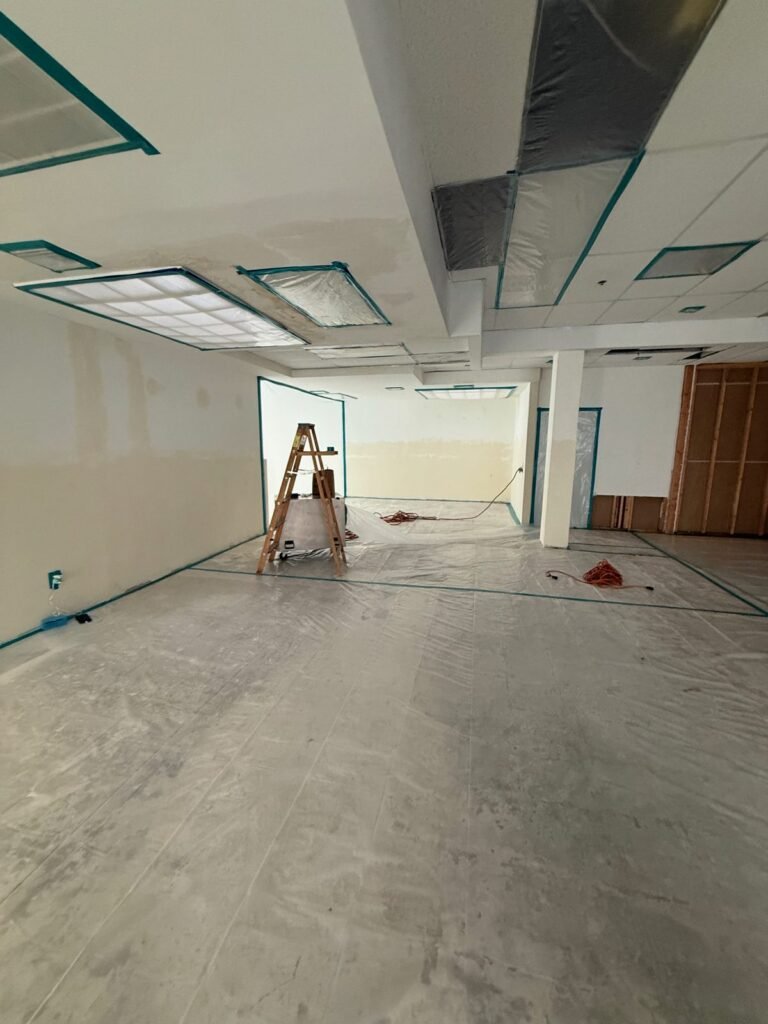
Instant Restoration job (containment stage) in Malibu, CA

Smoke damage restoration: what the work looks like.

The photo is from an Instant Restoration job (containment stage) in Malibu. On a typical smoke and soot damage call in Burbank the same licensed crew will assess residue on every surface, clean soot with the right method for each material, treat odor at the source rather than masking it, clear HVAC and contents where needed, document the loss for the insurance file, and rebuild with the same crew. We are a California-licensed general building contractor (CSLB #1078518), bonded and insured, and we answer 24/7.

We neutralize smoke odor at the source and clear the HVAC and attic — not mask it.

Section 10 · Common questions

Frequently asked questions.

The questions we hear most about smoke damage in Burbank. For the full process, see our smoke damage restoration page.

My Burbank house did not burn in the Eaton Fire but I can still smell smoke. Do I need professional remediation?
Possibly — a free assessment will tell you. Winds carried Eaton Fire smoke and ash west across Burbank. HVAC systems city-wide distributed wildfire smoke composite into homes. Without full IICRC S700 protocol — HVAC decon, attic remediation, surface cleaning, odor neutralization — smoke residue continues to off-gas.
How fast can you get to my Burbank property?
Our response target is 55 minutes across Los Angeles, Ventura and Orange Counties. We dispatch from Woodland Hills HQ. We answer 24/7 for smoke emergencies. After-hours response built in for studio and production commercial.
I manage a studio or production property that took Eaton smoke exposure. Can you handle remediation with confidentiality and off-schedule response?
Yes. Studio and production commercial is a major part of the Burbank commercial landscape. After-hours assessment and remediation, confidentiality coordination, specialty equipment protection, sound stage and post-production HVAC decontamination, and coordination around active productions.
I am a property manager for a Media District condo building with cross-unit smoke damage. Can you handle building-wide remediation?
Yes. We assess origin and adjacent units, contain further spread, do building-wide HVAC decontamination, clean affected units, handle contents, and document per-unit so each carrier has what it needs.
Is Burbank in a fire hazard zone?
Most of Burbank’s flatland is outside the Very High Fire Hazard Severity Zone (VHFHSZ), though its hillside edges are mapped inside it. Wildfire risk here is smoke exposure during regional fire events, not direct burn risk.
My eastern Burbank house feels like it has heavier smoke than my neighbor’s on the west side. Is that possible?
Yes. Eastern Burbank sustained heavier Eaton smoke and ash deposition than western neighborhoods due to proximity to the fire corridor. Same city, different loading.
Can I just run an air purifier and call it done?
No. Air purifiers help ambient air but do not remove source contamination from HVAC ductwork, attic insulation, soft goods, and porous building materials. Professional remediation addresses the source.
How long does post-Eaton smoke remediation take?
4–16 weeks depending on scope. Light exposure single-unit: 2–4 weeks. Moderate with contents pack-out: 6–10 weeks. Heavy with reconstruction: 12–16 weeks or longer.
Do you handle contents cleaning?
Yes — soft goods, hard goods, specialty items, electronics. Pack-out to a controlled cleaning facility for major exposure.
Will my insurance cover this if my house did not actually burn?
Coverage depends on your policy — smoke damage from a wildfire is often covered, and we document everything for your claim. We document thoroughly.

See all questions →

Nearby cities

Smoke damage restoration in nearby cities.

We run smoke damage restoration across the Valley and beyond under one license — mitigation through rebuild. Click into a nearby city for its fast local response.

Section 11 · Get help now

Smoke damage at your Burbank property? The smell fades — the contamination doesn’t.

24/7 smoke damage emergency dispatch from our Woodland Hills HQ into Burbank. Free on-site assessment. We identify the wildfire ash composite, decontaminate the HVAC and attic, neutralize odor at the source, and clean contents — one team, one timeline, one accountable phone call away. CSLB #1078518 · IICRC S700 · Est. 2021.

(818) 486-6546 ⚡ Call now Free on-site assessment · written scope · no obligation