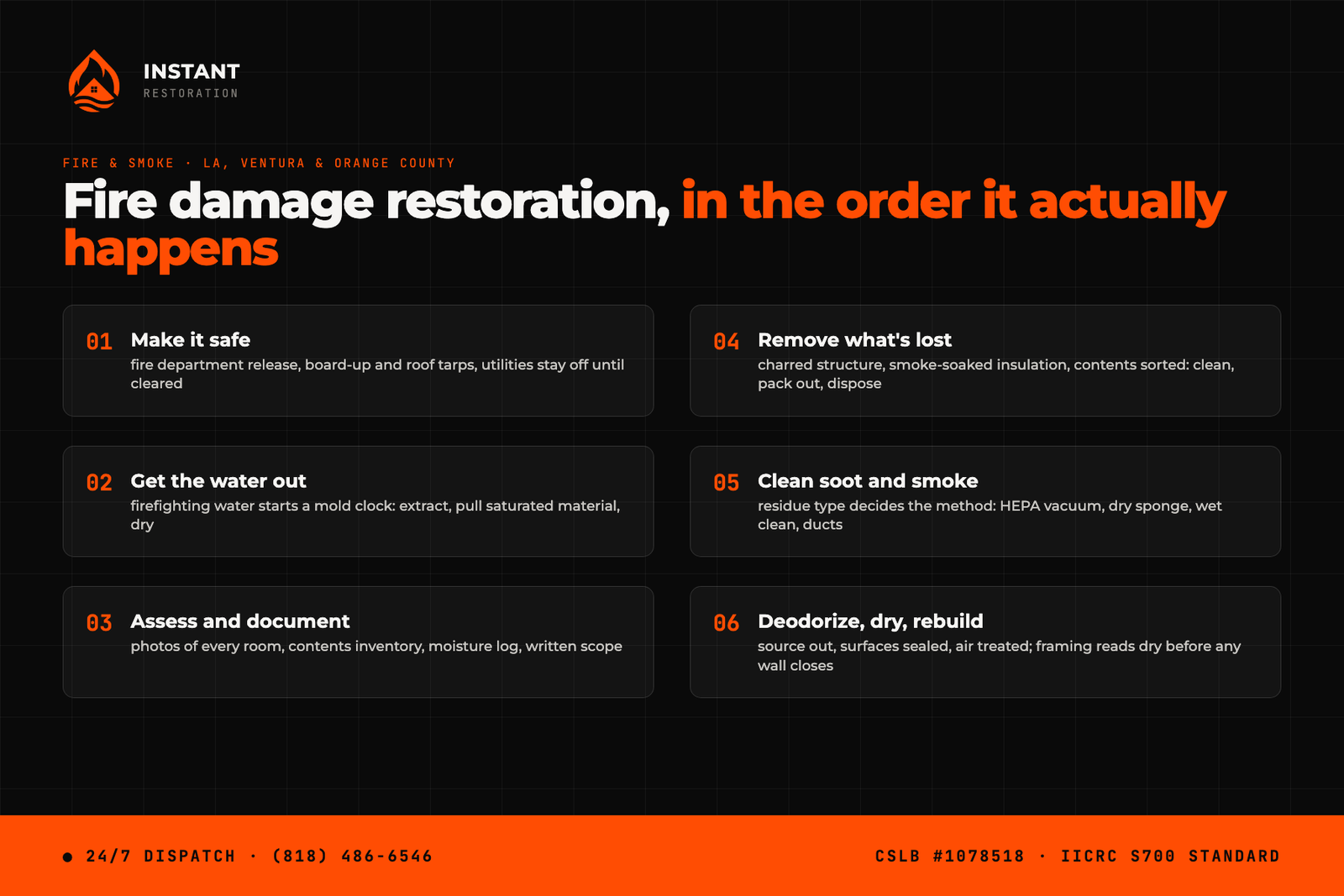
The fire damage restoration process runs in a fixed order, and the order is the whole point. First the structure gets made safe and closed up. Then the water from the firefighting comes out, because wet charred material grows mold while everyone’s busy looking at the soot. Then the damage gets documented, the material that can’t be saved comes out, the soot and smoke residue gets cleaned off what stays, the odor gets dealt with at its source, the framing gets dried and checked, and only then does the rebuild start. Skip a step or run them out of order and you end up paying twice. Here’s what each stage involves and why it sits where it does.
What has to happen before any restoration work starts?
Nothing starts until the fire department says the building is safe. Ready.gov’s home fire guidance is plain about it: check with the fire department to make sure your residence is safe to enter, and don’t go back in until they say so. Floors can be weakened, ceilings can come down hours later, and gas and electrical lines may be damaged. The utility companies, not you, turn gas and power back on.
Once you’re cleared, three things happen fast:
- Emergency board-up and tarping. Broken windows, doors the firefighters forced, and holes cut in the roof for ventilation all get covered. This keeps weather, animals and people out, and most policies expect you to protect the property from further damage.
- Your insurer gets a call. Ready.gov’s advice is to contact your insurance company for instructions on protecting the property, taking inventory and bringing in fire damage restoration companies. Do that early. We’re restoration contractors, not insurance advisors, so the coverage questions go to them.
- Nobody starts cleaning. Wiping soot with a wet rag drives it into the surface. Running the HVAC spreads it to rooms the fire never touched. Leave it until the scope’s written.
Why does a fire job start with water removal?
Because the fire’s out and the water isn’t. Putting out a house fire takes a lot of water, and all of it ends up inside the building: in the drywall, the insulation, the subfloor, and under whatever flooring survived. Charred wood that stays wet grows mold within days. So on a fire job, the first crew work after board-up looks like a water damage call: extract the standing water, pull saturated material that’s already lost, and get air movers and dehumidifiers running. Drying starts before soot cleaning because it’s the clock that’s running.
How is fire damage assessed and documented?
Once the structure’s stable and drying, the damage gets mapped room by room. We assess what the fire burned, what the heat damaged, where the smoke traveled, and how far the water went. Every room gets photographed before anything’s moved. Contents get listed. Moisture readings get logged. The result is a written scope: what comes out, what gets cleaned, what gets rebuilt, and what it costs.
That document matters more on a fire claim than on almost any other kind. Ready.gov recommends an inventory of damaged property, and your insurer will ask for one. What we provide is the documentation: dated photos, moisture logs, and a line-item estimate you can hand over. We are not public adjusters, and we do not represent you in coverage discussions. Your policy and your adjuster decide what’s covered. Our invoice is owed whatever they decide, so it pays to know your coverage early.
What gets removed and what gets cleaned?
The sorting rule is simple. Anything that burned, charred or lost its strength comes out. Anything that’s structurally sound and only carries residue gets cleaned. In practice:
- Structural material. Charred studs, joists and sheathing come out or get sistered, depending on how deep the char goes. Drywall that took direct heat usually comes out even if it looks intact, because the paper face and the gypsum behind it are both compromised. Insulation that’s wet or smoke-saturated can’t be cleaned and gets bagged.
- Contents. Furniture, clothing, books and electronics get sorted into three groups: clean on site, pack out for cleaning off site, or document and dispose. Porous things that sat in heavy smoke, like mattresses and upholstered furniture, are often a loss. Hard goods usually aren’t.
- Finishes. Paint, carpet and cabinets get judged one at a time. A lot of what looks ruined is cleanable. A lot of what looks fine has smoke residue inside it.
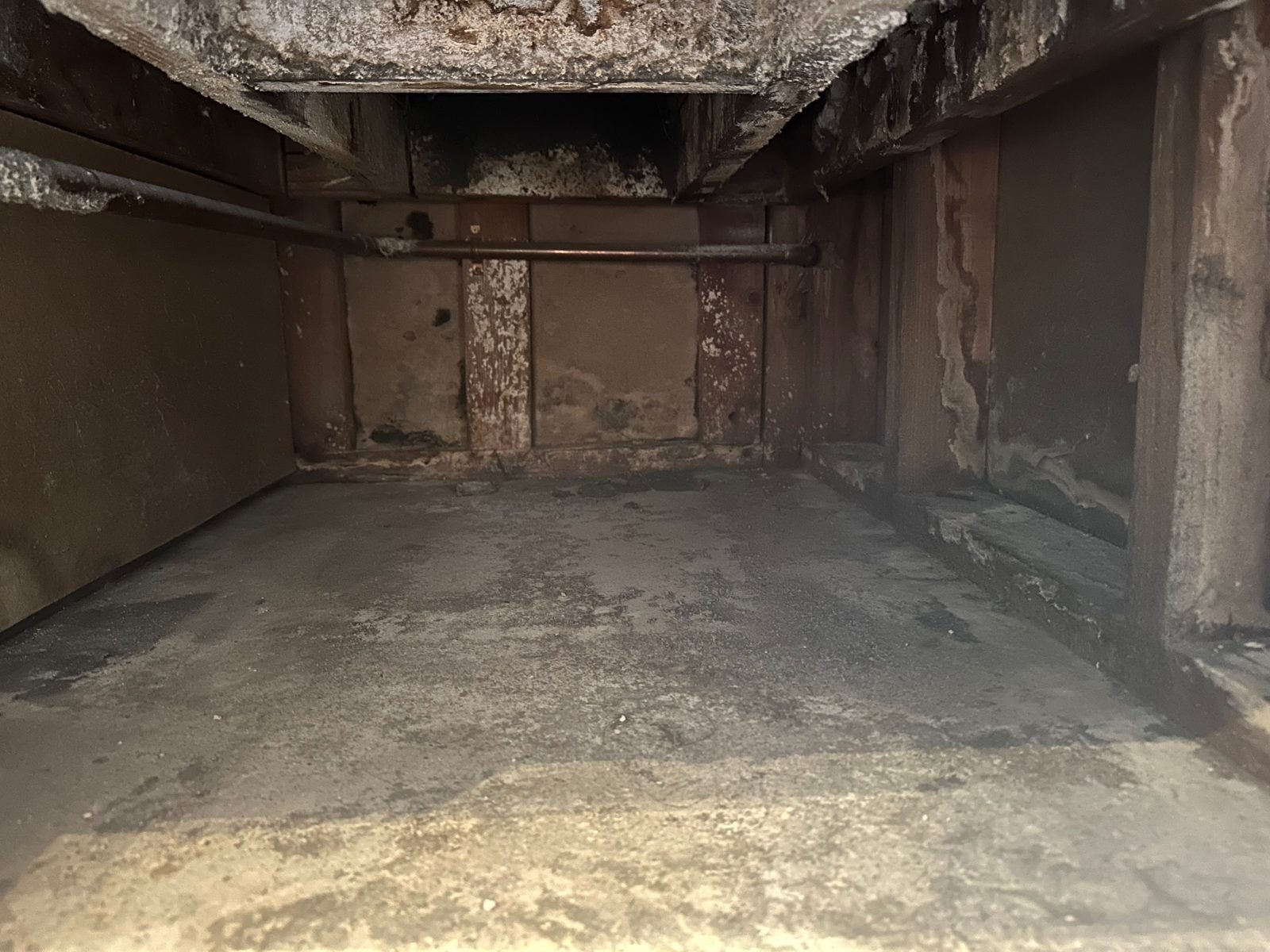
Charred framing above, soot on the wall surfaces and a layer of ash across the floor inside an opened cavity on an Agoura Hills job. This is the sorting stage: what’s charred comes out, what’s sound gets cleaned.
How do you clean soot and smoke residue?
Soot isn’t one thing, and that’s why fire cleaning is its own trade. The IICRC S700 standard for fire and smoke damage restoration is the reference we work to, and the first thing it gets you to do is figure out what kind of residue you have:
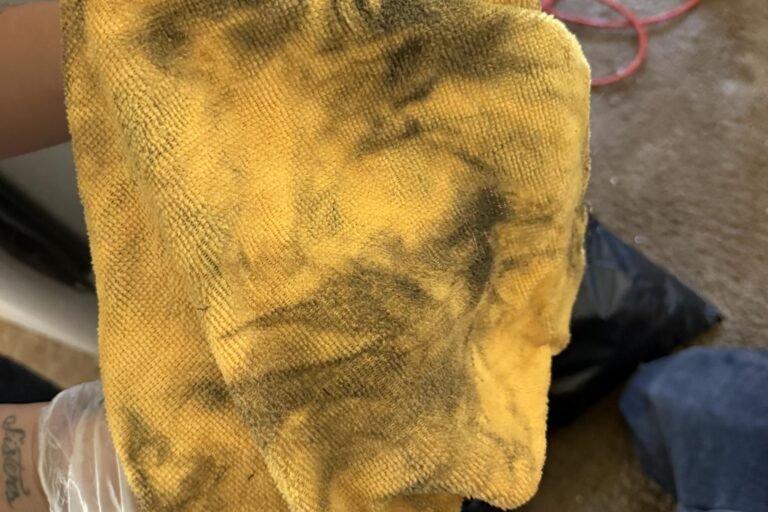
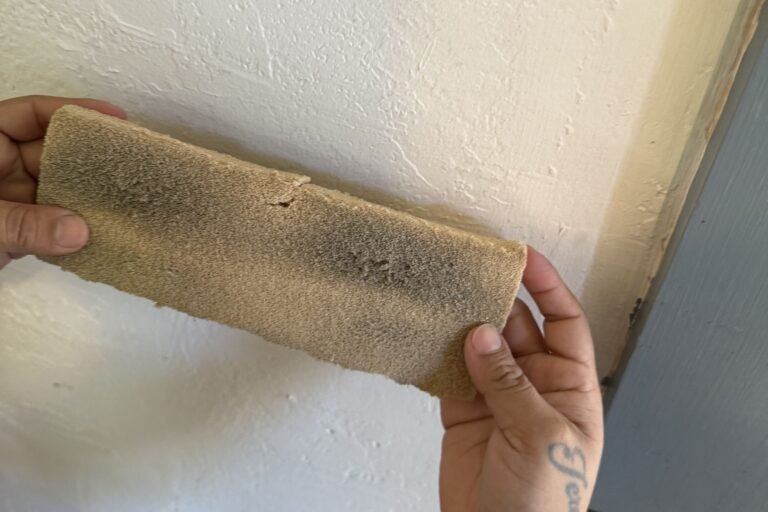
- Dry smoke from fast, hot fires leaves a powdery residue that comes off with HEPA vacuuming and dry chemical sponges. Get it wet and it smears.
- Wet smoke from slow, smoldering fires, especially plastics and synthetics, leaves a sticky, smeary film that needs wet cleaning with the right degreaser.
- Protein residue from kitchen fires is nearly invisible but discolors paint and finishes and carries a strong odor. It takes aggressive wet cleaning.
Mixing those up ruins surfaces. The sequence on most jobs is HEPA vacuum first to lift loose particles, then dry sponge on walls and ceilings, then wet cleaning where the residue calls for it, working top down so nothing gets re-soiled. Air scrubbers run the whole time. Ductwork gets cleaned, because the HVAC system pulled smoke through every register in the house. Our guide to smoke damage without fire covers how far residue travels from a fire that never touched the room.
How is smoke odor removed?
Odor is the complaint that comes back weeks after a job that looked finished, so it gets its own stage. The order: remove the source, clean the surfaces, then treat the air. Charred material that’s still in the walls will outlast any deodorizer, which is why the demolition and cleaning stages come first. After that, porous surfaces that can’t be fully cleaned get sealed so the residue in them can’t off-gas. Then the air itself gets treated with the method that fits the material and the size of the space. Our smoke odor removal guide goes deeper on why it lingers and what actually works. Masking it with fragrance doesn’t.
When does the rebuild start?
After two checks, not before. The framing has to read dry on a moisture meter, and the cleaned surfaces have to be free of residue and odor. Closing a wall over damp or sooty framing locks the problem inside the house. Then the rebuild runs like any reconstruction after a loss: framing repairs, electrical and plumbing sign-offs by the trades and the city as required, insulation, drywall, paint, flooring, cabinets, fixtures. On our jobs the same licensed crew that did the mitigation does the build-back, so nobody has to re-explain the house to a second contractor. See our fire damage restoration and smoke damage restoration pages for how we work each stage.
Fire’s out and you don’t know where to start? Call (818) 486-6546. We answer 24/7, and you’ll get a written scope and price before any restoration work starts.
Oren Gedalia, Owner — IICRC-certified · CSLB #1078518