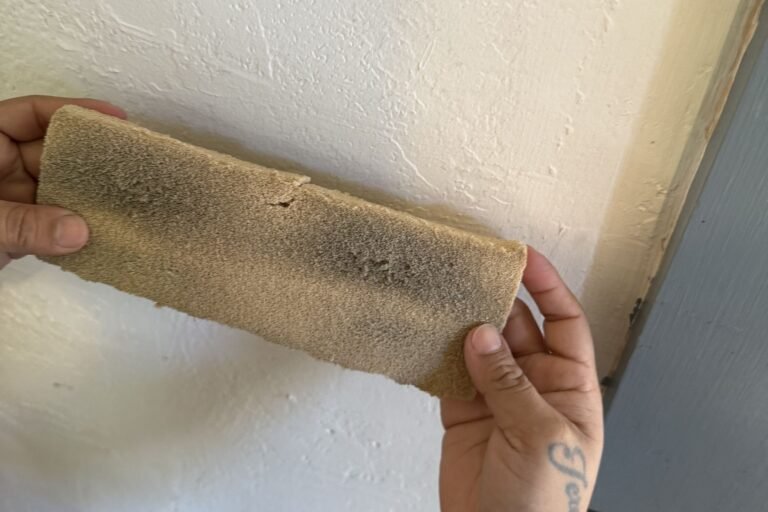

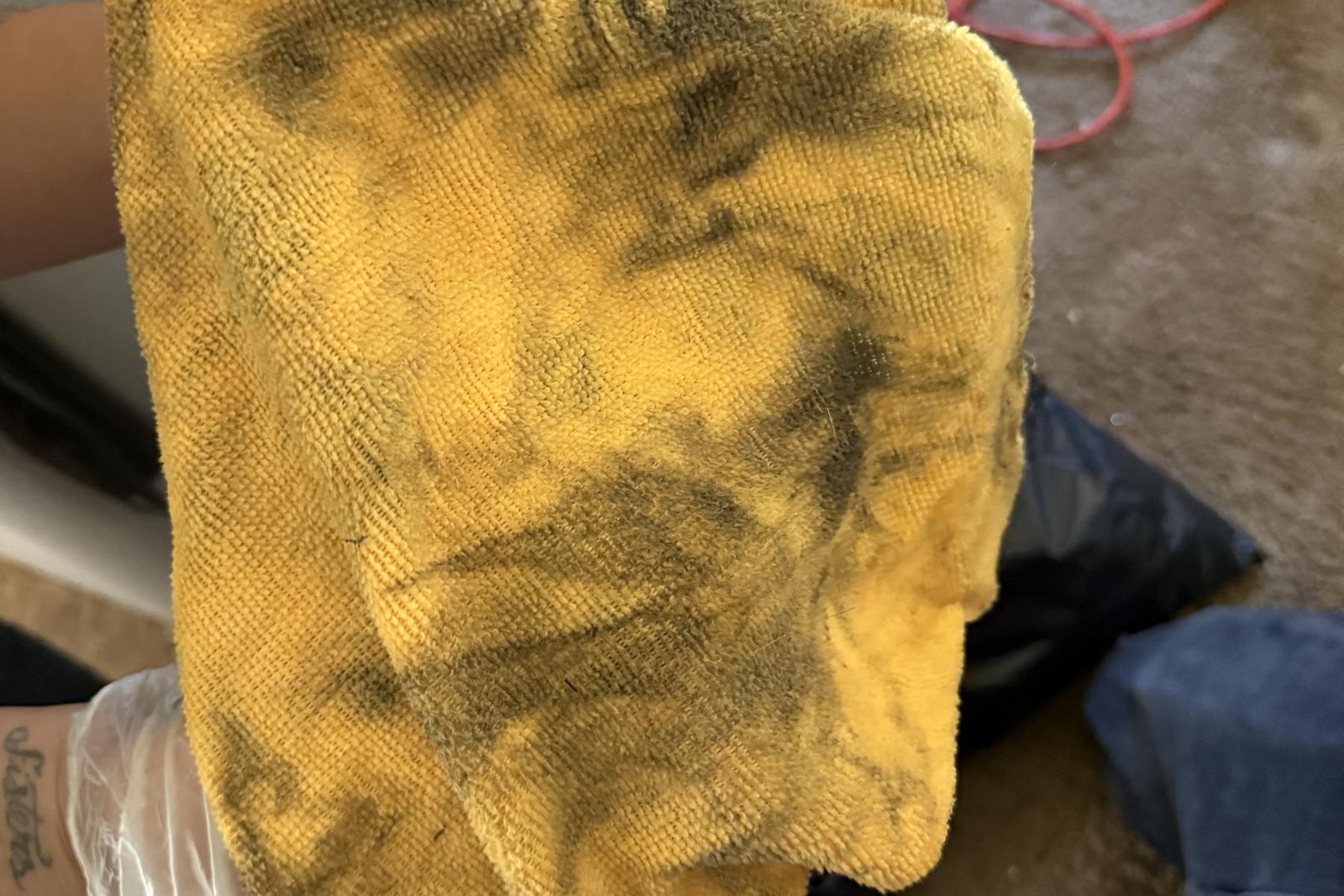
Smoke odor lingers because it isn’t a smell floating in the air — it’s a residue bonded into your house. When smoke moves through a home, microscopic soot particles and the oily compounds they carry settle onto every surface and soak INTO every porous one: paint, drywall, raw wood, fabric, carpet pad, the dust inside your ducts. Warmth and humidity make those materials release the compounds again — which is why the smell “comes back” on hot afternoons and every time the heater kicks on. That’s also why sprays, candles, and open windows never finish the job: they treat the air, and the air was never the problem. What actually eliminates smoke odor is removing the residue at its sources — and the photo above shows exactly what that residue looks like coming off a Camarillo wall that looked perfectly clean.
Why does smoke smell come back weeks after the fire?
Three reasons, all physical. First, absorption: during a fire — or a nearby wildfire pushing smoke into the house for hours — heat expands the pores of paint, wood, and plastics, and smoke compounds ride in; as materials cool, the pores close over the contamination and release it slowly for months. Second, the reservoir problem: soft and hidden materials (carpet and pad, upholstery, attic insulation, duct interiors) hold enormous surface area of residue that no amount of surface wiping reaches. Third, recirculation: every time your HVAC runs, air moves across residue in the ducts and redistributes it through the house — the smell you notice when the heat comes on in November is often October’s cleanup verdict. The EPA’s wildfire indoor-air guidance covers why these fine particles penetrate and persist indoors so effectively.
Why don’t sprays, candles, and “odor bombs” work?
Because they’re additive, and this is a subtraction problem. Deodorizing sprays and scented products layer a new smell over the old one — for a day. Consumer “odor bomb” foggers coat surfaces with fragrance without removing residue, which can actually complicate real cleaning later. Even ozone machines, rented and run without source removal first, mostly buy quiet weeks before the reservoirs reload the air. The industry rule that governs our work (IICRC standards) is blunt: no odor treatment works until the source residue is physically removed. Deodorize before you clean and you’ve perfumed the contamination.
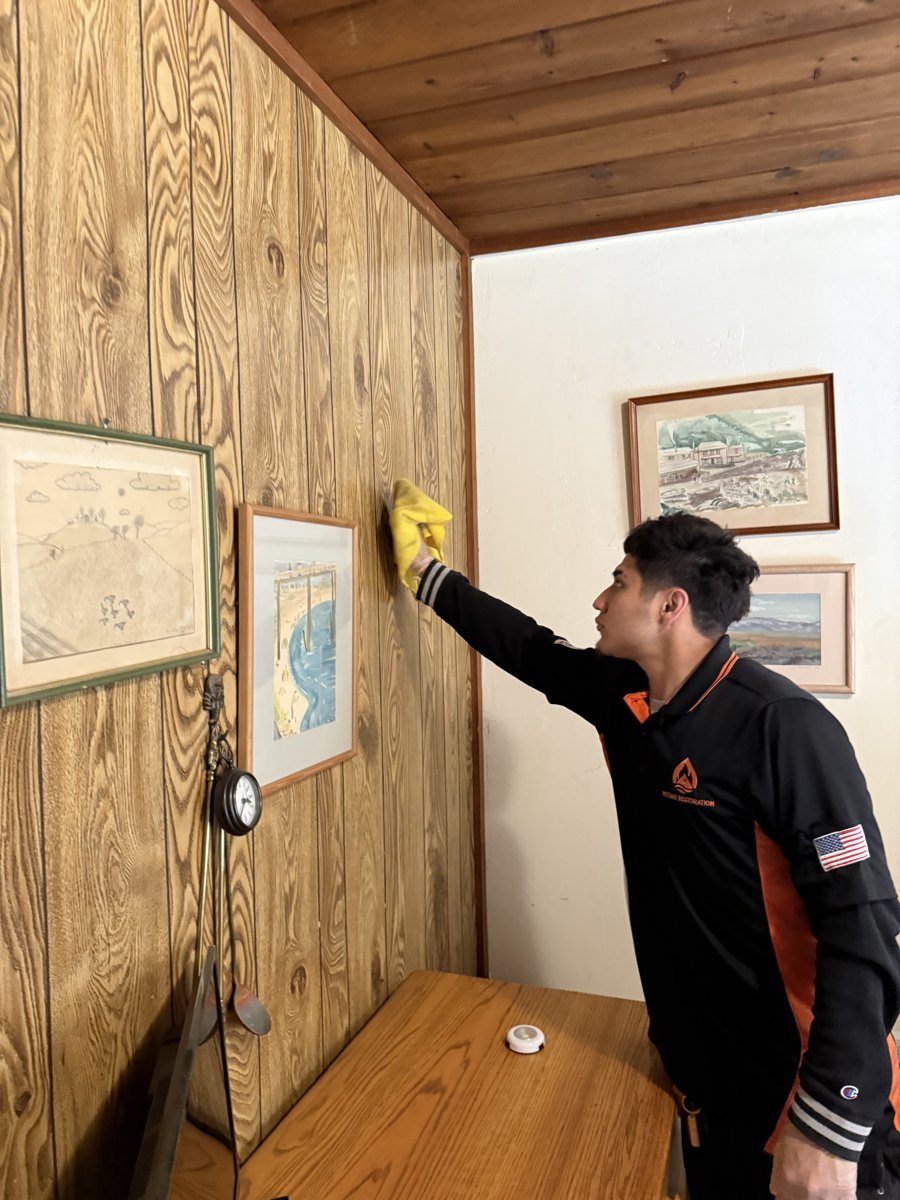
That’s our crew on the Camarillo job this article’s photos come from — wood paneling is one of the hungriest odor reservoirs in a house, and it gets cleaned surface by surface, not sprayed.
What actually eliminates smoke odor?
- Source removal first. HEPA vacuuming and dry-sponge cleaning of every surface — walls, ceilings, sills, closet interiors — exactly the sequence from our smoke vs. fire damage guide, which walks the same Camarillo house. The cloth in the photo up top is what “source” means: residue you can’t see until you wipe.
- The reservoirs dealt with honestly. Washables washed with degreasing cleaners; carpet and upholstery hot-water extracted; and the materials that can’t give the odor up — burned items, saturated pad, sometimes charred framing — removed and sealed out, because a contaminated material indoors will always outlast a fragrance.
- HVAC cleaned, filters replaced. Ducts and the air handler get cleaned and filtration stepped up (MERV-13 where the system allows) so the system stops re-seeding the house.
- Air treatment LAST, when it closes the job. With sources gone, professional air scrubbing with HEPA + activated carbon strips what remains, and treatments like hydroxyl or ozone (unoccupied spaces only) neutralize odor molecules in materials that stay. In stubborn structural cases, cleaned framing gets sealed with an odor-blocking primer before rebuild.
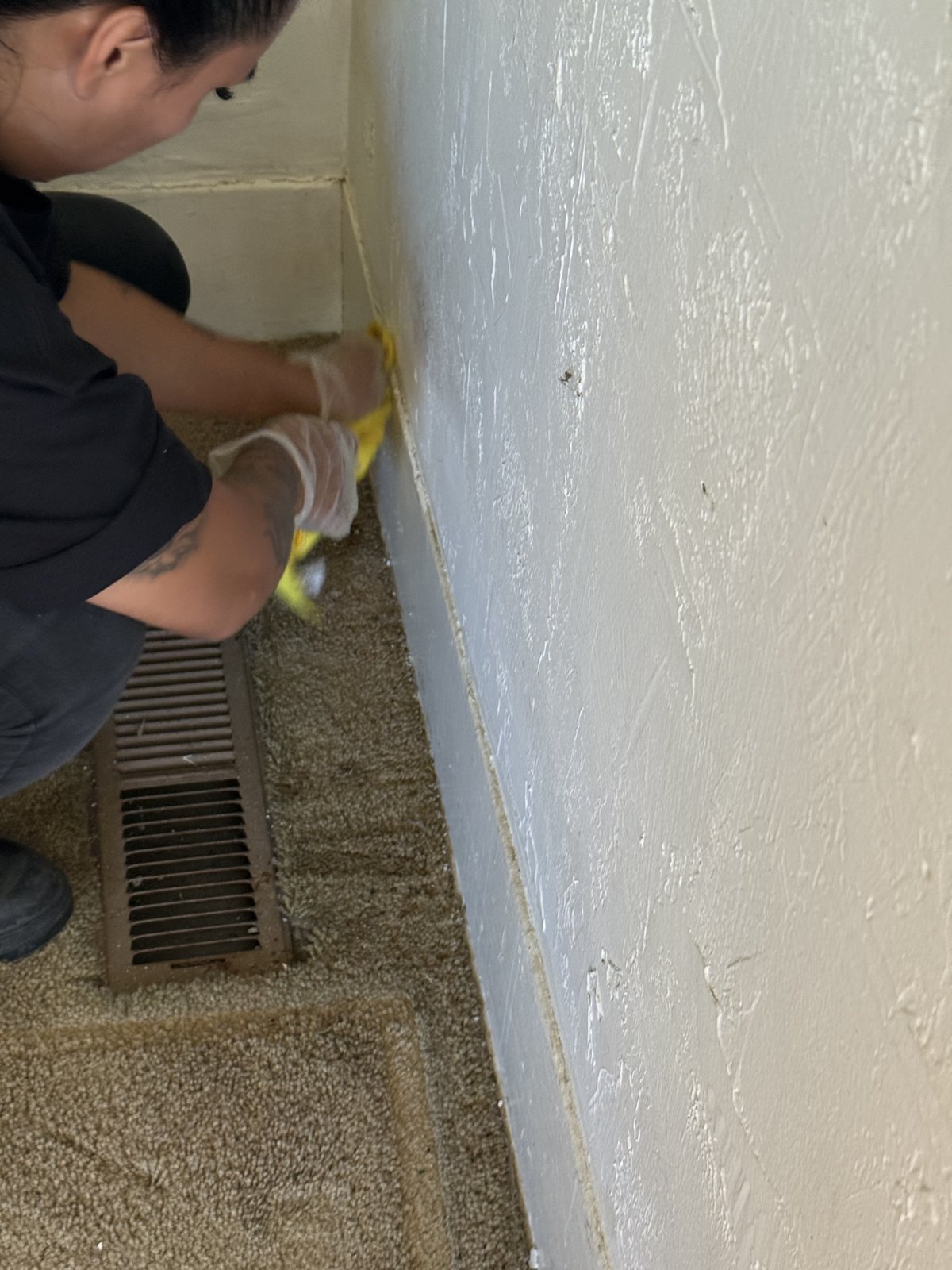
Note where that cleaning is happening: beside a floor vent. The vents and the ductwork behind them are the highway the odor uses to tour your house — skip them and the job undoes itself in a week.
When can you handle it yourself?
Light exposure — a distant fire, smoke in the house for an hour, the cloth test barely shading — is a realistic weekend project: HEPA vacuum everything, wash hard surfaces with a degreasing cleaner, launder every washable, replace HVAC filters, and give it airflow. If the cloth comes up dark, the exposure lasted many hours, the smell survives cleaning, or it rides the HVAC — the reservoirs are past what surface cleaning reaches, and that’s professional smoke damage restoration territory. One more honest note: smoke residue is acidic and keeps working on paint, metal, and electronics while it sits, so the smell isn’t only unpleasant — it’s a timer. We run this work across Ventura County, LA, and Orange County all fire season.
House still smells like the fire that missed it? Call (818) 486-6546 — 24/7. We’ll run the cloth test with you over the phone, and tell you straight whether it’s a weekend of cleaning or a job for us.
Oren Gedalia, Owner — CSLB #1078518