Attic and crawl space mold in Los Angeles almost always comes down to one thing: water reaching a space nobody looks at. In the attic, it’s usually a roof leak, a bathroom or dryer fan blowing damp air into the attic instead of outside, or vents that can’t move air. Under the house, it’s water from uphill, a plumbing leak, or damp soil with nothing between it and the floor framing. Hillside homes get both problems at once, because a slope sends water toward the foundation and most of these houses sit on raised floors with a crawl space on the downhill side. Here’s where it starts, how to tell, and what fixing it actually takes.
Here is the crawl space on that Culver City job — the space most homeowners never see, and what we are actually looking at when we go under a house:
Why do hillside homes get attic and crawl space mold?
Two reasons, and they stack. First, the ground. On a slope, rain that soaks in uphill doesn’t stop at your property line. It moves through the soil and toward the foundation, and on the downhill side that often means into the crawl space. Second, the building. A lot of LA hillside houses are built on raised foundations with a crawl space under part or all of the floor, and many have attics that were insulated and vented to the standards of the year they were built.
Nobody walks through an attic on the way to the kitchen. So a problem up there, or under the floor, can grow for a long time before anything shows downstairs.
What causes mold in an attic?
Mold needs moisture, and attics get it in three main ways:
- Roof leaks. Rain gets past a cracked tile, a lifted shingle or worn flashing and soaks the roof sheathing and the insulation under it. Insulation holds a lot of water before a stain ever shows on the ceiling below. Our rainy season roof prep guide covers the spots that fail first.
- Fans that vent into the attic. A bathroom exhaust fan or a dryer duct that ends in the attic instead of going through the roof or a wall dumps warm, wet air right onto cold wood. The EPA’s guidance is to vent appliances that produce moisture, such as clothes dryers, to the outside where possible. A disconnected or crushed duct does the same damage as one that was never run outside.
- Poor ventilation and condensation. When soffit or roof vents are blocked by insulation, paint or debris, the warm air that rises into the attic has nowhere to go. On cold nights it condenses on the underside of the roof deck, all winter long.
Attic mold usually shows up as dark staining or spotting on the roof sheathing and rafters, often heaviest near the leak, around the fan outlet, or along the cold north-facing side of the roof.
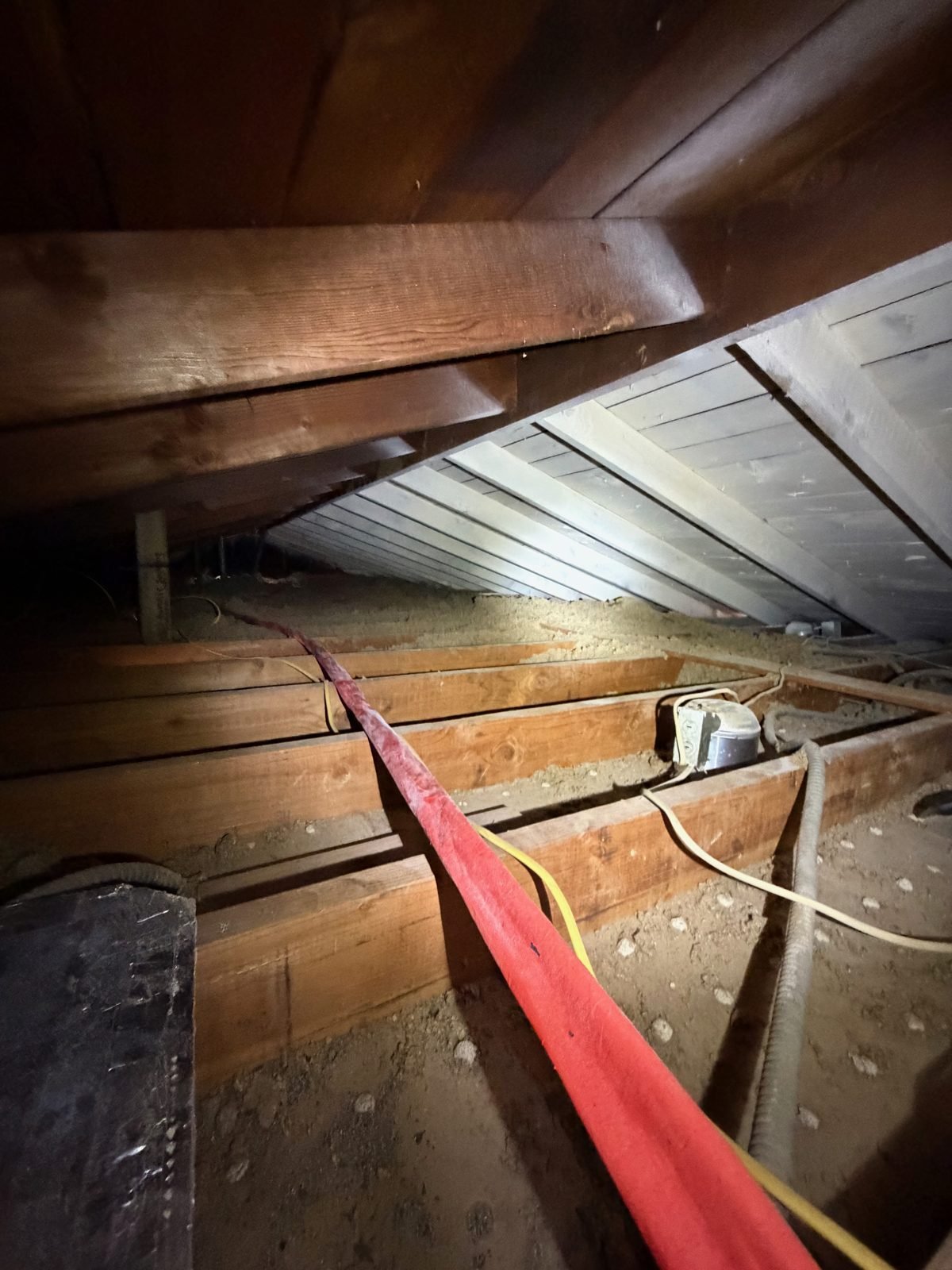
An attic on a Culver City job, with a vacuum hose run across the ceiling joists for insulation removal. Getting the insulation out is how you see the wood underneath it.
What causes mold in a crawl space?
Crawl spaces sit right on the ground, so they start out damp. What tips them into mold is extra water, and on a hillside there are a few common sources:
- Water from uphill. Runoff, saturated soil, a downspout that empties toward the house, or a yard graded the wrong way. After a big storm, it can pool in the low corner of the crawl space and sit there for weeks.
- Plumbing leaks. Supply lines, drain lines and water heater connections often run under the floor. A slow drip onto bare soil can go for months without anyone noticing, because nothing upstairs gets wet.
- Bare soil or a torn vapor barrier. Ground moisture rises into the air of the crawl space and into the floor framing above. A plastic vapor barrier over the soil slows that down. One that’s torn, bunched up, or missing doesn’t.
- Blocked foundation vents. Vents that are covered by plants, soil or storage keep damp air trapped under the house.
Crawl space mold tends to grow on the floor joists, the subfloor’s underside, and on any insulation hung between the joists. Wet insulation sagging out of the joist bays is one of the clearest signs water’s been there.
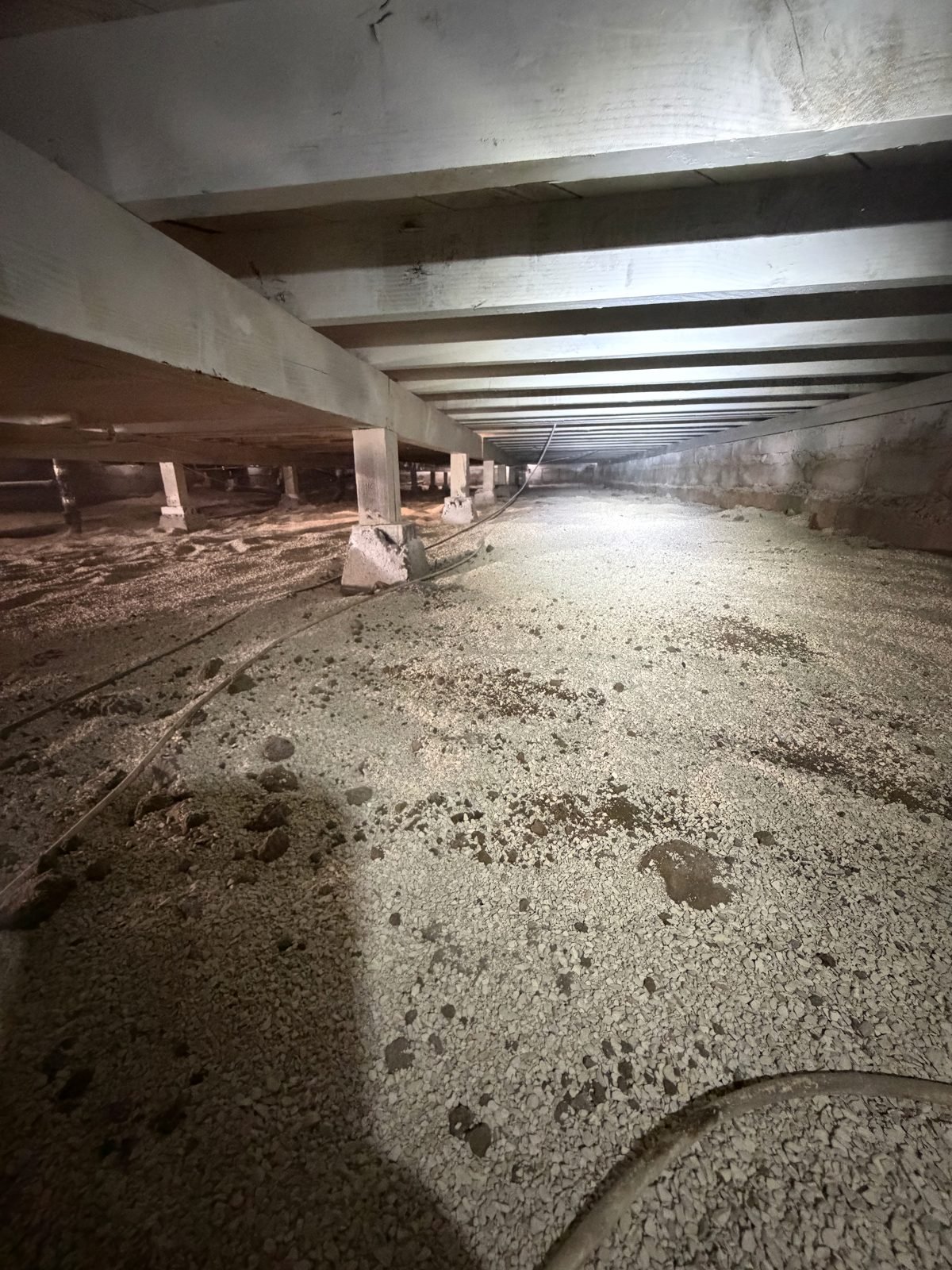
The crawl space on the same Culver City job: floor framing on concrete piers over a gravel-covered soil floor. This is the space most homeowners never see.
How can you tell if you have attic or crawl space mold?
You often smell it before you see it. A musty smell that’s stronger in certain rooms, on humid days, or right after the heat or air conditioning kicks on is a common first sign, especially if the ducts run through the attic or crawl space. Other signs to watch for:
- Ceiling stains on the top floor, or stains that grow after rain
- Floors that feel soft, cold, or damp, or wood flooring that’s cupping
- Higher indoor humidity than you’d expect, or condensation on windows
- Rust on nails poking through the roof deck, or frost on them on cold mornings
- Standing water, wet soil, or sagging insulation when you look through the crawl space access
If you go up or under to look, wear a mask and gloves and don’t disturb anything you suspect is mold. Pulling on moldy insulation sends spores into the air and down into the house. For telling mold from surface mildew, our guide to how fast mold grows after water damage explains why the clock matters.
How is attic and crawl space mold removed?
The order matters more than the products. Here’s how we work it:
- Find and fix the water. Roof repair, rerouting a fan duct outside, fixing the leak under the floor, or correcting drainage. Without this step, nothing else lasts.
- Contain the space. Seal off the attic hatch or crawl space access and run HEPA air filtration under negative pressure, so nothing we disturb travels into the living space.
- Remove what can’t be cleaned. Wet or moldy insulation comes out. So does any material that’s lost its strength.
- Clean the framing. Rafters, sheathing and joists that are structurally sound get cleaned of growth and HEPA-vacuumed.
- Dry and verify. The wood has to read dry on a moisture meter before anything gets closed up or reinsulated.
- Restore. New insulation, a proper vapor barrier in the crawl space, and vents that actually move air.
That’s our mold removal and remediation process in short. We do the remediation only. Testing and clearance are done by an independent third party, never by the company that did the work, so the people doing the job aren’t the ones grading it. In the west Valley hills, see our Calabasas mold remediation page.
On health questions, we are restoration professionals, not medical professionals. If anyone in the house has symptoms or a condition you’re worried about, talk to a doctor.
How do you keep it from coming back?
Keep the spaces dry and keep air moving. The EPA’s guide to mold and moisture recommends keeping indoor humidity below 60 percent, and drying water-damaged areas within 24-48 hours to prevent mold growth. For attics and crawl spaces, that means:
- Make sure every bath fan and the dryer vent all the way outside
- Keep soffit, roof and foundation vents clear
- Look at the roof before the rainy season, not after the first storm
- Send downspouts and yard drainage away from the foundation, especially on the uphill side
- Keep a vapor barrier over the crawl space soil and repair it if it’s torn
- Take a look in both spaces after any big storm
A flashlight check after a storm is cheap. A season of hidden growth isn’t. If you want a sense of what remediation runs once it’s caught late, our mold remediation cost guide has real numbers by job size.
Musty smell upstairs, stains on the top-floor ceiling, or water under the house after a storm? Call (818) 486-6546. We answer 24/7, and you’ll get a written scope and price before any work starts.
Oren Gedalia, Owner — IICRC-certified · CSLB #1078518