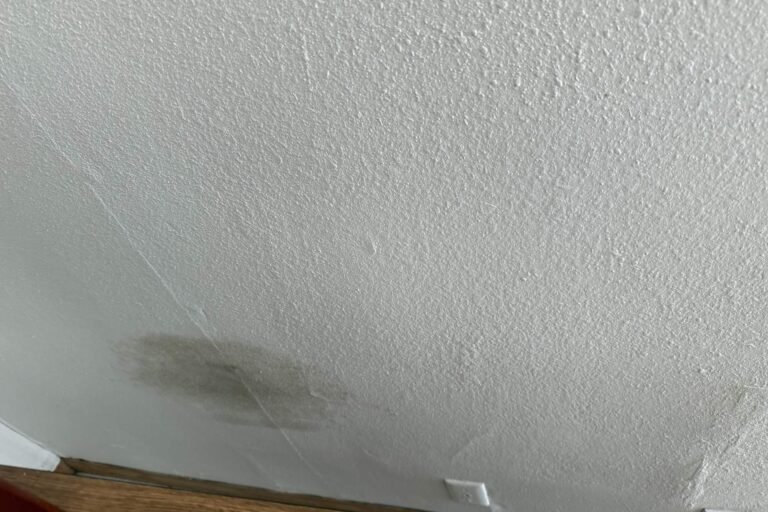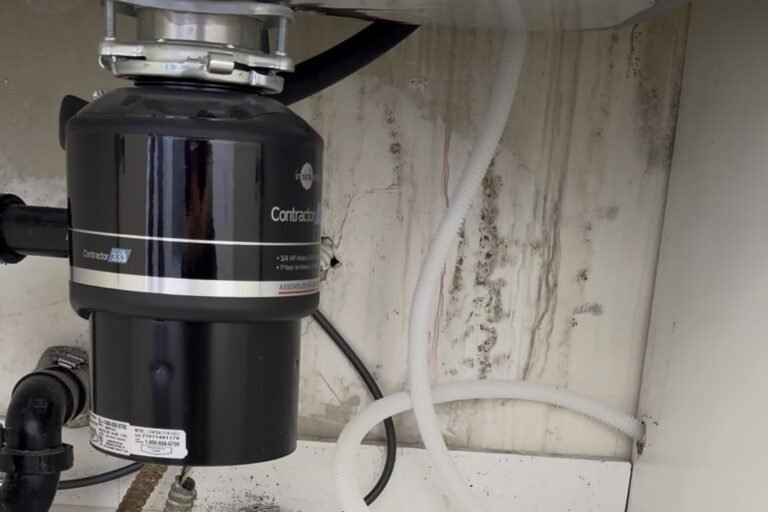

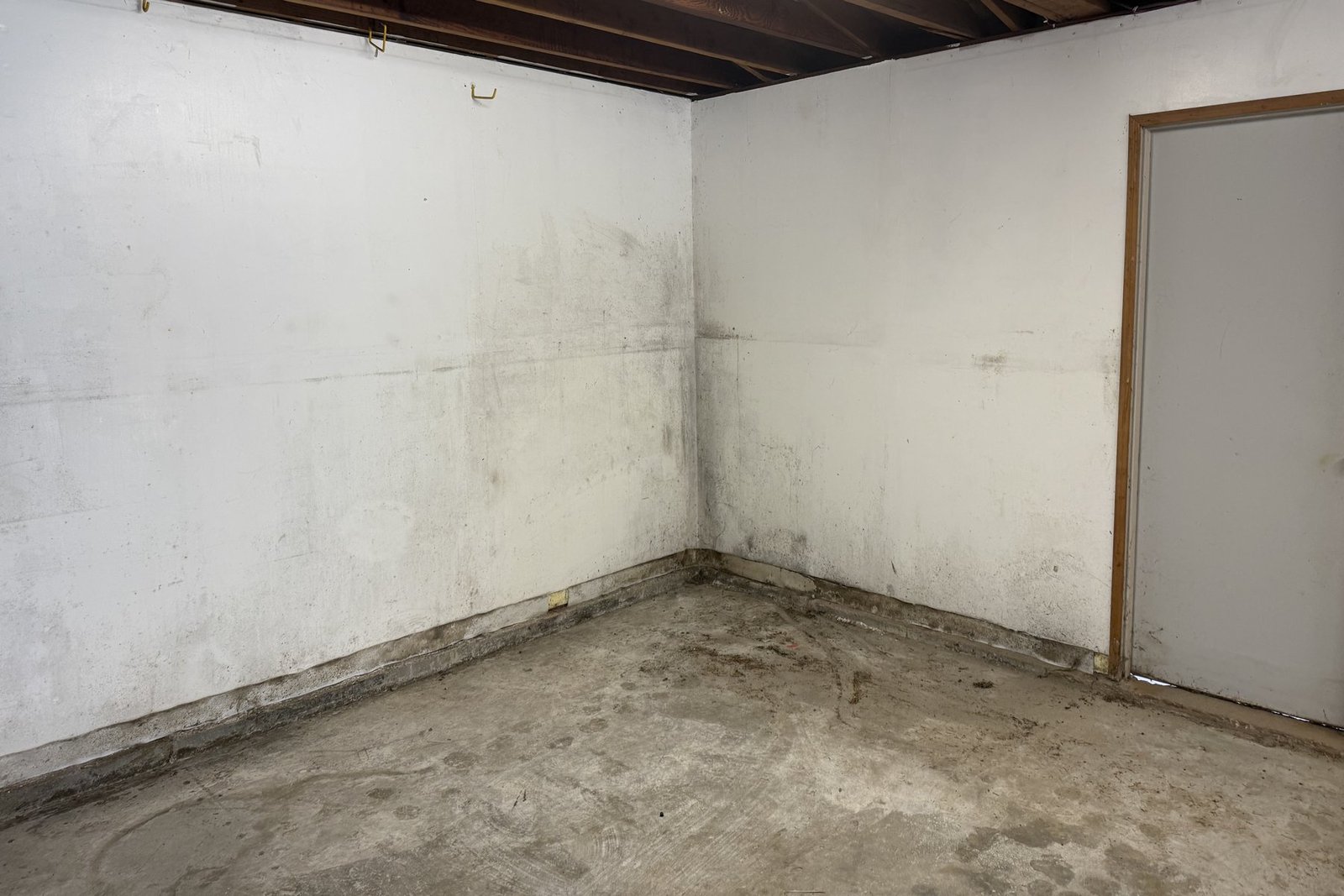
You found black mold in your house — here’s exactly what to do, in order: don’t touch it, don’t spray it, and don’t put a fan on it. Close off the room, fix or stop whatever is making that spot wet, and size the problem honestly — a patch smaller than about ten square feet on a hard surface is potentially a careful DIY job by EPA guidance; anything bigger, anything on drywall or wood, or anything that keeps coming back needs professional remediation. And if anyone in the house has symptoms they connect to it, that’s a conversation with a doctor, not a contractor. The photo above is from a real job of ours: an Oxnard garage where mold quietly mottled two full walls behind the owners’ storage shelves — this article is what we’d tell you standing in front of it.
Here’s that exact Oxnard garage — the find, the containment, and the number that closed the job:
What should you do in the first hour?
- Leave it physically alone. Scrubbing, poking, or blasting it with a fan puts spores into the air — the one way to turn a wall problem into a whole-house problem. Mold that’s sitting still is mostly staying put.
- Close the room off. Shut the door, and if the HVAC return is in that room, turn the system off so it doesn’t circulate air from the moldy room through the house.
- Kill the moisture. Mold is a symptom; water is the disease. Find what’s feeding it — a supply line, a roof leak, a shower gap, condensation — and stop it. Every day the source keeps running, the colony grows behind whatever you can see.
- Photograph everything. For the scope, and for insurance if the water source turns out to be a covered leak — our guide to when California insurance covers mold explains how that usually goes.
- Size it honestly. Bigger than a bath towel, on porous material, inside a wall or under flooring, or recurring after cleaning → get it assessed professionally.
Is black mold really more dangerous?
Here’s the straight answer most websites bury: color doesn’t tell you the species, and for what to do next, the species doesn’t change the plan. The scary black mold of headlines is Stachybotrys chartarum, but plenty of common molds grow dark, and identifying species takes lab work — not eyeballs. What the CDC says is what matters practically: damp, moldy environments can cause health effects ranging from none at all to congestion, coughing, and eye irritation, with stronger reactions in people with asthma, mold allergies, or weakened immune systems — and any indoor mold growth should be removed regardless of type. The CDC doesn’t even recommend routine testing to identify species, because the answer wouldn’t change the response: remove it, and fix the water.
We are restoration professionals, not medical professionals. If you or your family have symptoms you associate with mold — respiratory trouble, persistent allergy-type reactions, anything worse — talk to your doctor about it. What we can do is make the mold and its cause physically gone.
What should you NOT do?
- Don’t bleach it. On drywall and wood, bleach whitens the surface while its water feeds the roots — the colony fades from view and keeps growing. The EPA doesn’t recommend routine bleaching of mold, and repainting over it is the same mistake with extra steps.
- Don’t rip it out yourself. Tearing colonized drywall out without containment is the single most effective way to seed spores through your whole house. Demolition is the step that most needs the plastic and negative air.
- Don’t pay anyone who offers to “test and remediate” in one package. The company that grades the work shouldn’t be the company that did it. Real remediation ends with clearance testing by an independent third-party hygienist — we insist on it, and you should too, whoever you hire.
- Don’t wait a season. Mold never gets cheaper. Every month adds square footage, and drywall that could have been cleaned becomes drywall that gets replaced.
How does professional black mold remediation actually work?
The sequence is the industry standard we work to (IICRC S520), and it’s the same on every job — including the Oxnard garage in the video above:
- Containment first. Plastic barriers seal the work area and negative air pressure keeps any disturbed spores inside it. Nothing gets opened until the containment holds.
- Air control. HEPA filtration scrubs the air inside containment the entire time we work.
- Removal, not treatment-in-place. Colonized porous material — drywall, cabinet backs, insulation — comes out, bagged and sealed inside the containment. That’s the moment in the photo below.
- Clean and treat what stays. Framing and surfaces that remain get HEPA-vacuumed, cleaned, and treated.
- Dry the cause. The leak is fixed and the cavity is dried to verified moisture targets — otherwise the mold is back within the season.
- Independent clearance. A third-party hygienist tests before anything is rebuilt. We don’t grade our own work.
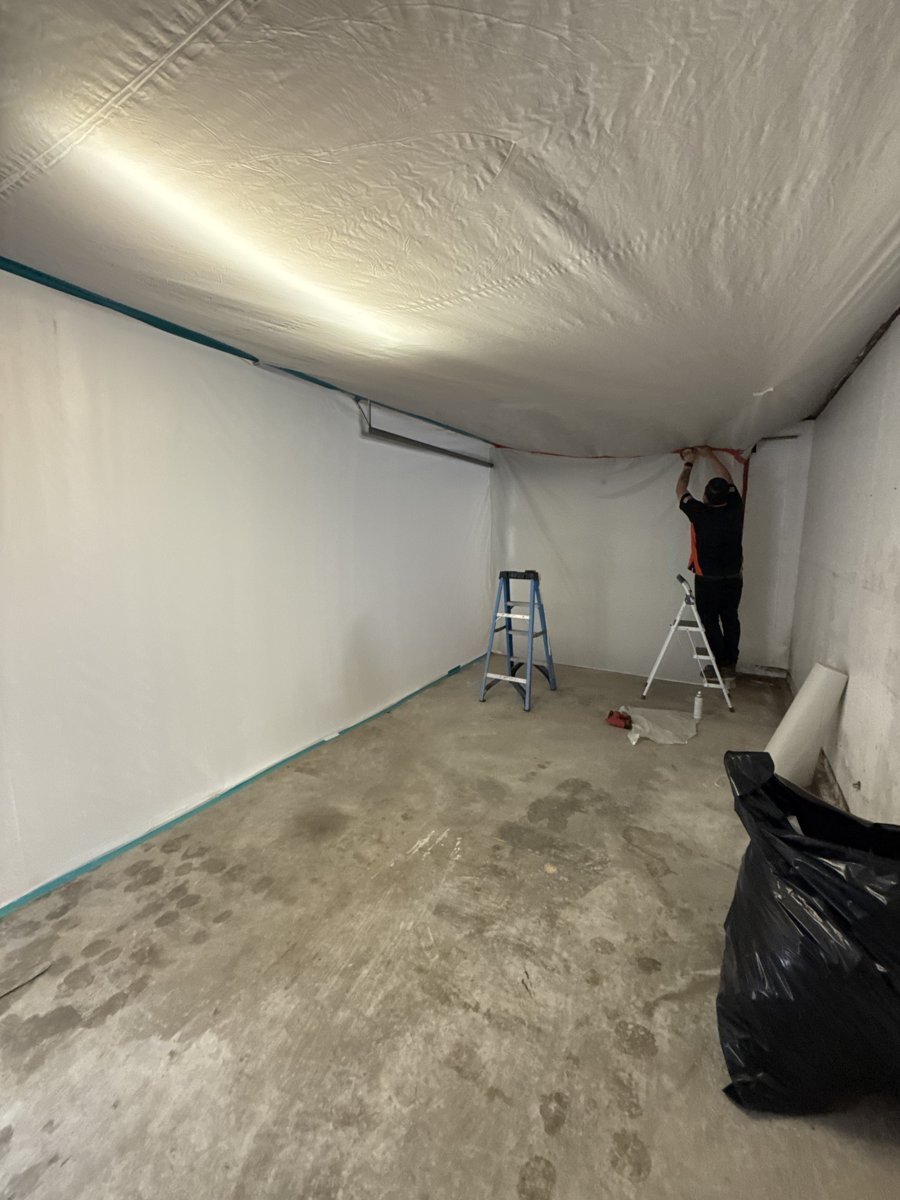
That’s containment on the same Oxnard garage job as the photo up top: every surface sealed in plastic before a single moldy material gets disturbed. It looks like overkill until you understand what it prevents — the colony leaving that room through the air.
When is DIY actually okay?
The EPA’s line is about ten square feet — roughly a bath-towel-sized patch — on a hard, non-porous surface, with the moisture source fixed and nobody sensitive in the home. Inside that box: gloves, N95, detergent and water, bag the rags, done. The honest test isn’t just size, though — it’s whether you can see all of it. Mold you can see the edges of is a cleaning problem; mold that disappears behind a cabinet or baseboard is an opening problem, and opening is where containment matters. Our mold vs. mildew guide covers the one-minute wipe test that tells you which side of that line you’re on.
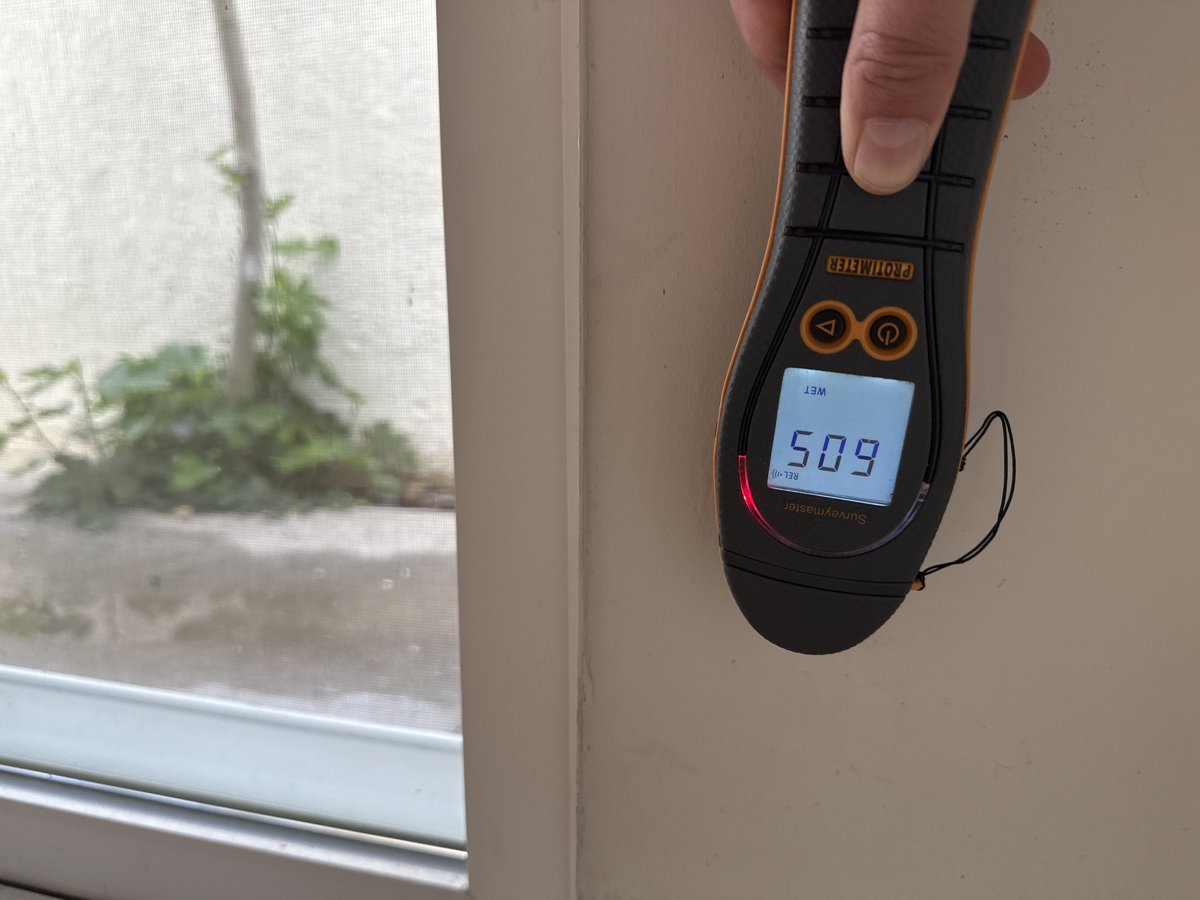
One more habit worth stealing from the professionals, whichever route you take: verify with numbers. That’s a moisture reading from the same Oxnard job — “dry” is a measurement, not a look, and a $30 moisture meter will tell you honestly whether the wall you cleaned is actually done feeding the problem.
Standing in front of a patch of black mold right now? Call us at (818) 486-6546 — 24/7 across LA, Ventura, and Orange County. We’ll tell you honestly whether it’s a careful Saturday cleanup or a remediation job, and if it’s ours, it ends with an independent hygienist confirming it’s done — not with our word for it.
Oren Gedalia, Owner — CSLB #1078518