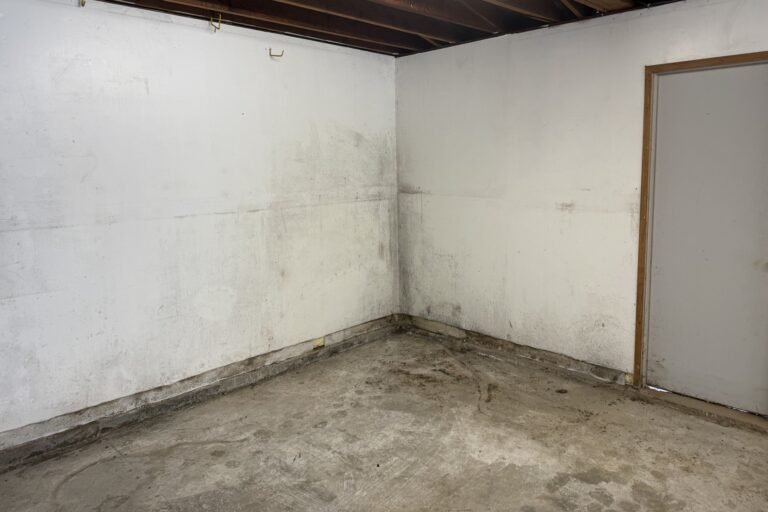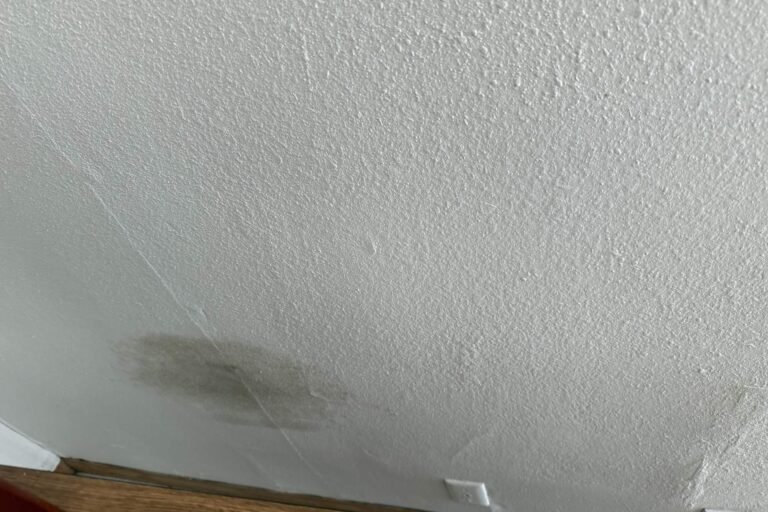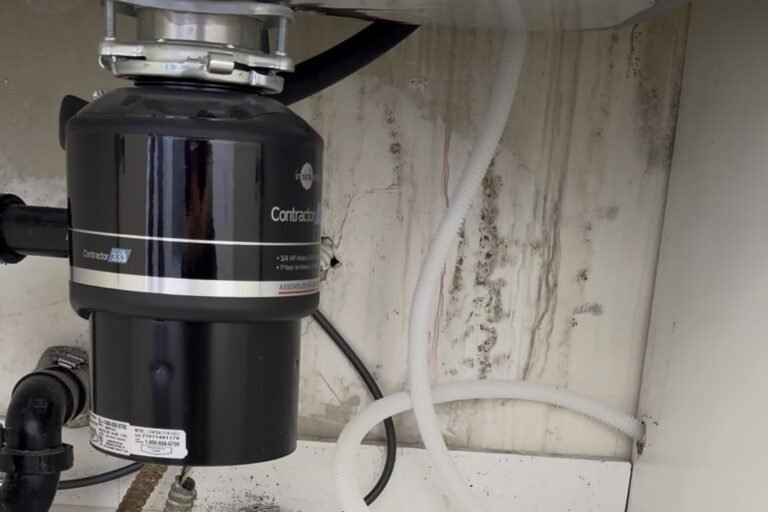


Here’s the answer nobody in this industry likes to publish: based on our own recent quotes and invoices across Los Angeles, Ventura, and Orange County, mold remediation cost in LA in 2026 runs roughly $2,500-$5,000 for a small contained job (a single cabinet, closet, or under-sink area), $5,000-$12,000 for a full room with containment and material removal, $12,000-$30,000 when mold has spread across multiple rooms and reconstruction is involved, and $30,000 and up for large or commercial properties. Those aren’t national averages from a lead-generation site — they’re the numbers on our actual paperwork. The rest of this article explains what moves a job up or down inside those ranges, why the cheap bid is usually the expensive choice, and how to keep your own number as low as possible.
Why is the range so wide?
Because “mold remediation” describes jobs as different as a cavity filling and a root canal. Five things set the number:
- How far the mold traveled. The single biggest factor. A colony caught at one cabinet is hours of work; the same leak ignored for a season colonizes wall cavities, flooring, and adjacent rooms — every additional wet square foot is containment, removal, and rebuild.
- Containment scope. Sealing one closet takes an hour of plastic and a small negative-air setup. Containing a whole floor of a house is a build of its own — and it’s not optional, because remediation without containment spreads what it’s removing.
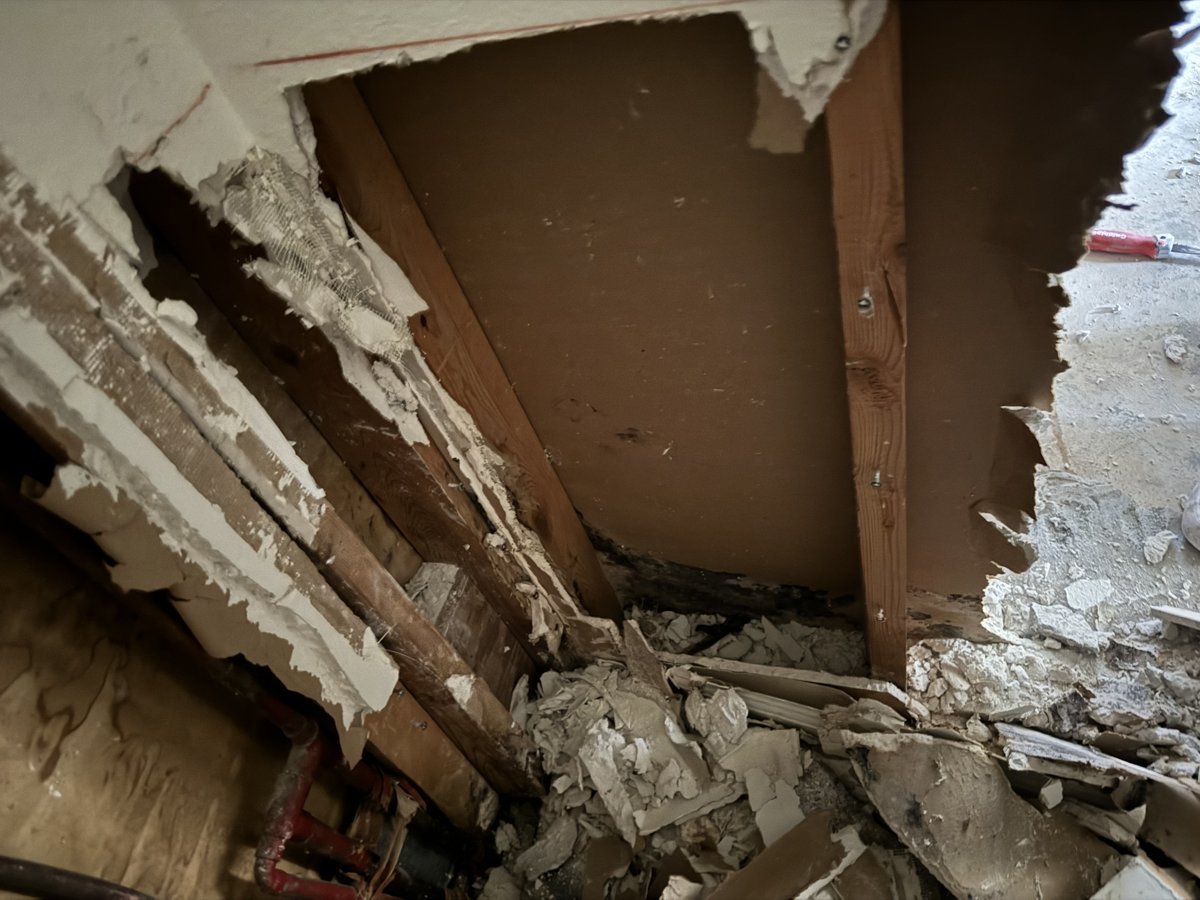
- What has to come out. Hard surfaces get cleaned; porous colonized materials — drywall, insulation, cabinetry, flooring — get removed and disposed of as the standard requires. Demo and disposal scale the price directly.
- The water problem behind it. Every mold job is a moisture job. If the source is a simple supply line, the fix is cheap; if it’s a roof, a slab leak, or a shower pan, that repair rides along.
- Rebuild. Remediation ends with clean, dry, open framing. Putting the drywall, paint, cabinets, and flooring back is reconstruction — sometimes a bigger line than the remediation itself, which is why our multi-room tier stretches to $30k.
What the tiers actually look like
Small contained — $2,500-$5,000. One defined area: under a sink, a closet wall, behind a vanity. Containment around the spot, affected materials out, cleaning, drying, done in a day or two. Recent examples on our books landed at $4,300-$4,900.
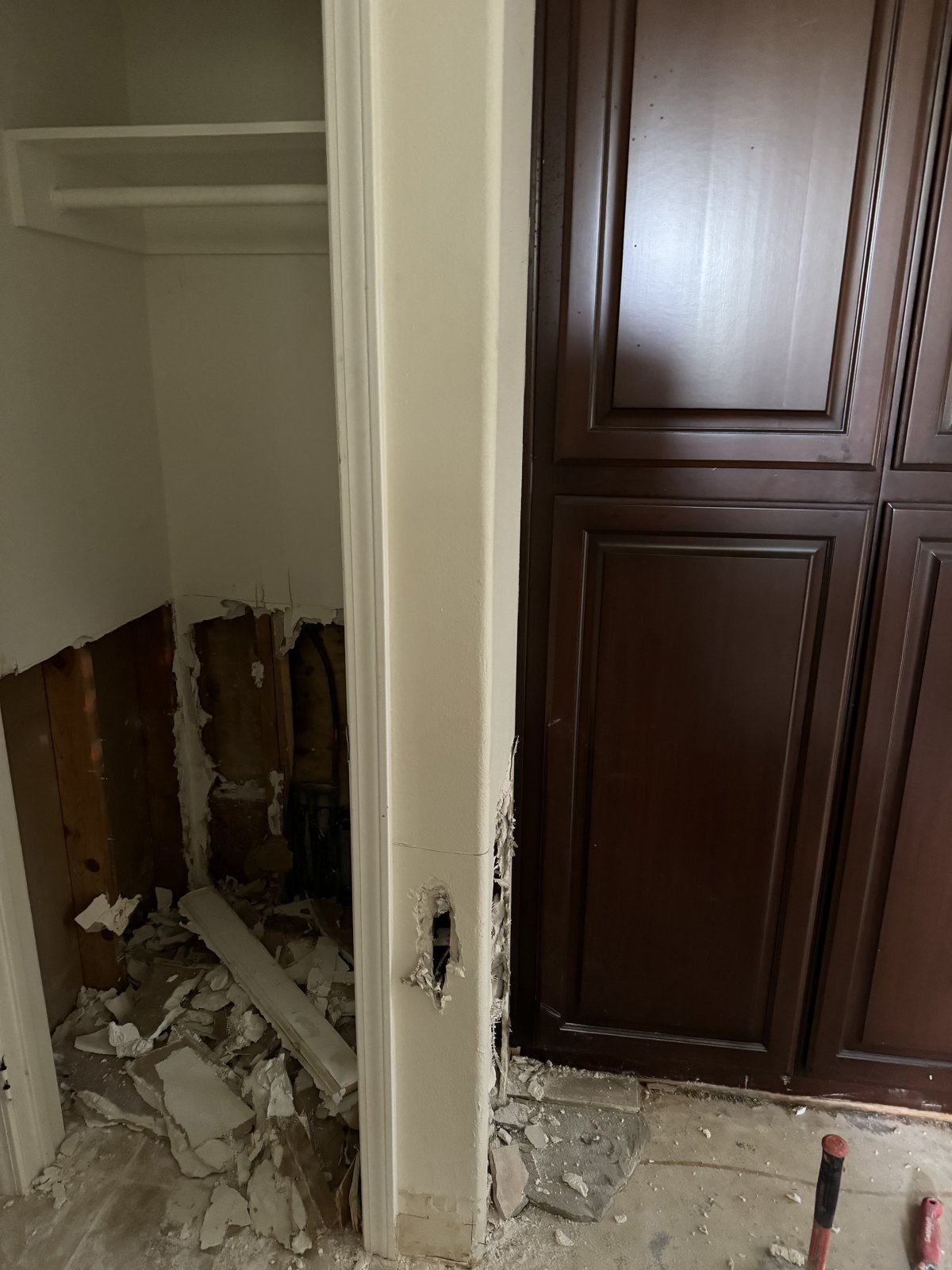
One room, full containment — $5,000-$12,000. The most common tier. Plastic and negative air seal the room, colonized drywall and materials come out, everything left gets cleaned and dried to verified moisture numbers. Our recent quotes here ran $6,900-$11,400.
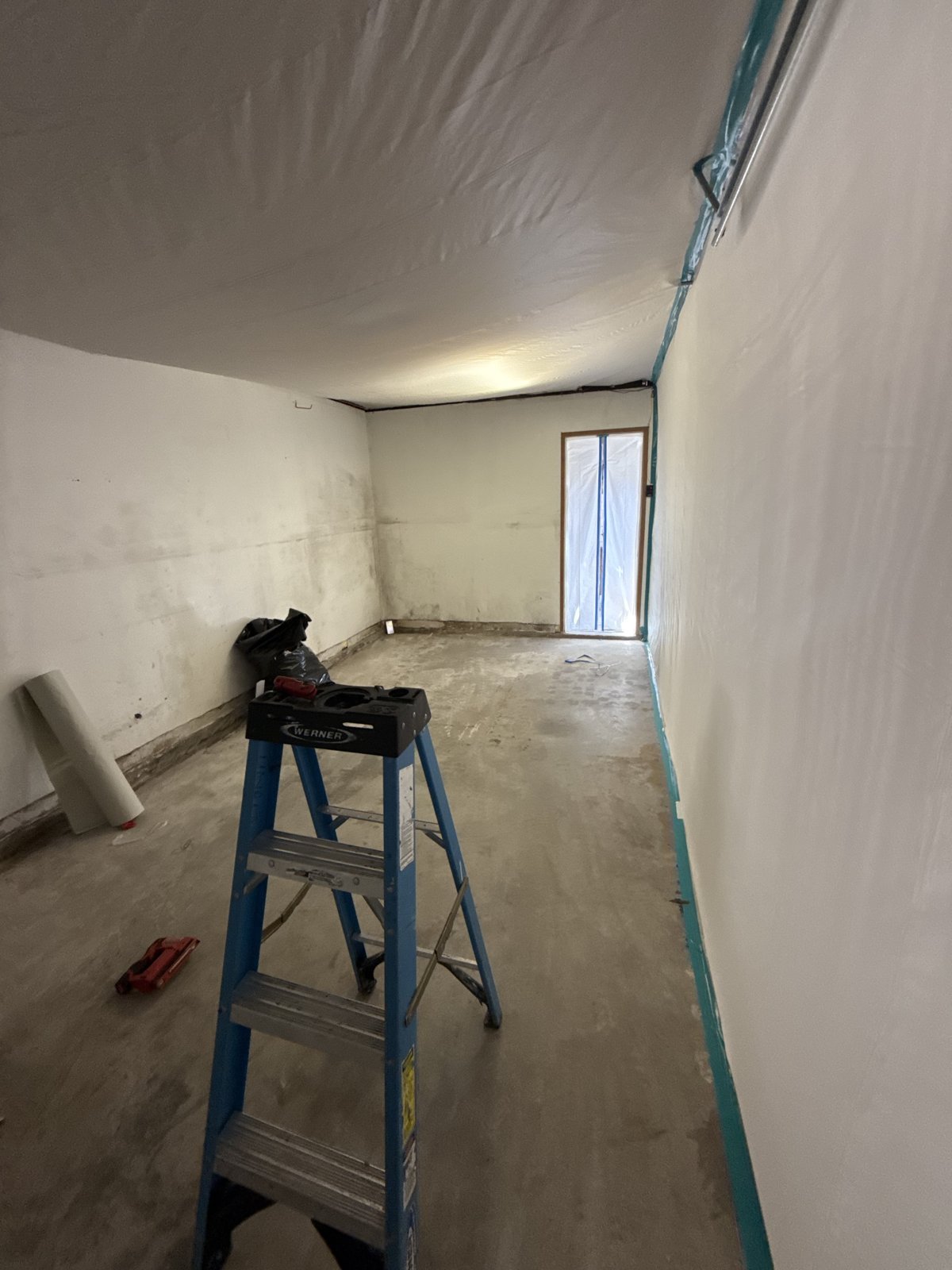
Multi-room with rebuild — $12,000-$30,000. Mold followed water through wall cavities or under flooring into several spaces. Serious demo, larger containments, and real reconstruction afterward. Recent quotes: $12,800 to just under $30,000.
Large and commercial — $30,000+. Multi-unit buildings, commercial spaces, whole-home events. We’ve quoted close to $50,000 on this tier. At this scale the drivers are logistics: phased containments, occupancy, and rebuild scope.
Why the cheapest bid usually costs the most
The corner-cutting in this trade is predictable, because the expensive steps are the invisible ones. A low bid usually omits real containment (spreading spores through the house during demo), skips removal in favor of spraying and painting over colonized drywall (the mold comes back, because the moisture and the colonized material are still there — our black mold guide shows what removal actually means), leaves the moisture source to the homeowner (which all but ensures a repeat), or “self-certifies” the result instead of independent clearance. Every one of those omissions is invisible on day one and expensive in month three. When you compare bids, compare these lines — containment, removal vs. treatment, source repair, independent clearance — not just the total.
How to keep your number at the bottom of the range
Speed is the whole game. Mold pricing is really a timeline: the same leak costs four figures if it’s remediated the month it happens and five figures if it waits a year. The EPA’s guidance says a patch under about ten square feet can usually be handled yourself — we’d add: only on hard, non-porous surfaces. That’s the truly small catch. Beyond that: fix water fast (the quick wipe test in our mold vs. mildew guide tells you in a minute whether you’re looking at a surface chore or a material problem), don’t disturb what you find, and get it assessed while it’s still one wall instead of three rooms. On the money side, if the mold traces to a sudden covered water event, insurance may participate — our guide to when California insurance covers mold walks through exactly how that works.
Want a real number instead of a range? Send photos or book an assessment — (818) 486-6546, 24/7 across Los Angeles, Ventura, and Orange County. Written scope and price before work starts, independent clearance — every mold remediation job.
Oren Gedalia, Owner — CSLB #1078518