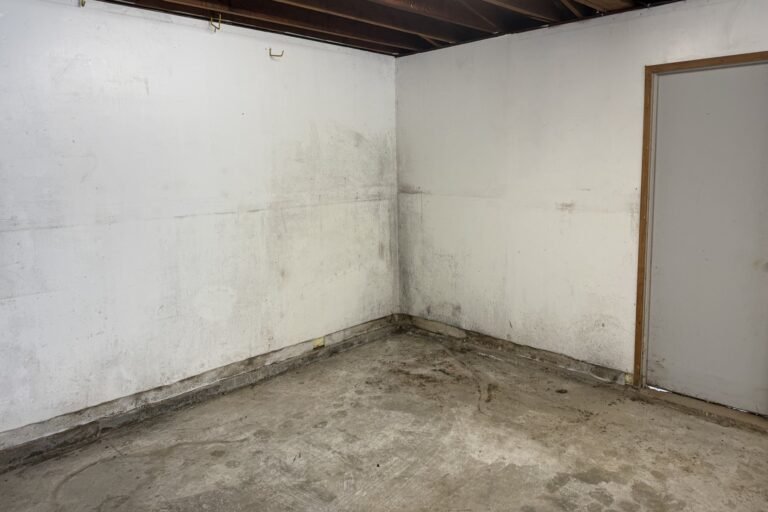
Mold can start on wet building materials sooner than most people expect. The EPA’s guidance is to dry water-damaged areas and items within 24 to 48 hours to prevent mold growth, which is why restoration crews treat the first two to three days after a leak as the window that decides how the job goes. Get the structure dry inside that window and most water damage stays a drying job. Miss it, and the same leak can turn into mold remediation: containment, removal of colonized material, and independent clearance before anything is rebuilt. You usually can’t see mold when it starts, so the clock runs from the moment the water arrived, not from the moment you noticed it.
How fast does mold grow after water damage?
Mold needs three things: moisture, something to feed on, and time. Drywall paper, wood framing, carpet pad, and the dust inside a wall cavity are all food, so in a house the one thing you can control is moisture. The spores themselves are already there. The EPA’s guide to mold, moisture, and your home notes that some mold spores will always be found floating through the air and in house dust. They don’t need to arrive from anywhere. They need a surface that stays wet.
That’s why the 24 to 48 hour figure matters. It isn’t a promise that nothing grows before then, or that everything grows right after. It’s the practical deadline: dry wet materials within that window and the conditions mold needs never last long enough. Warm, still, closed-up spaces such as wall cavities, the space under a sink, and the area beneath flooring are where it moves fastest.
What you can see comes later. By the time growth shows on the face of a wall, it has usually been growing for a while on the back of the drywall or on the framing, where the water actually sat. Not seeing mold on day three doesn’t mean the wall is fine. It means nobody has looked behind it yet.
What happens hour by hour after a leak?
Every job is different, but the pattern is consistent enough that this is how we plan the first few days:
- Hours 0 to 24: the water spreads. It wicks up drywall from the bottom, soaks into insulation, runs under baseboards, and moves beneath flooring. This is when extraction does the most good, because water that’s pulled out never has to be dried.
- Hours 24 to 48: the EPA window closes. Materials that weren’t dried are now wet through. Drywall softens, wood swells, and carpet pad holds water like a sponge.
- Hours 48 to 72: the meter decides. Anything still reading wet is at real risk. Inside walls, under cabinets, and below flooring are the usual places moisture hides.
- Past 72 hours: remove, don’t hope. Porous materials that are still wet are usually cut out and replaced. Drying them in place at this point is a gamble with the house.
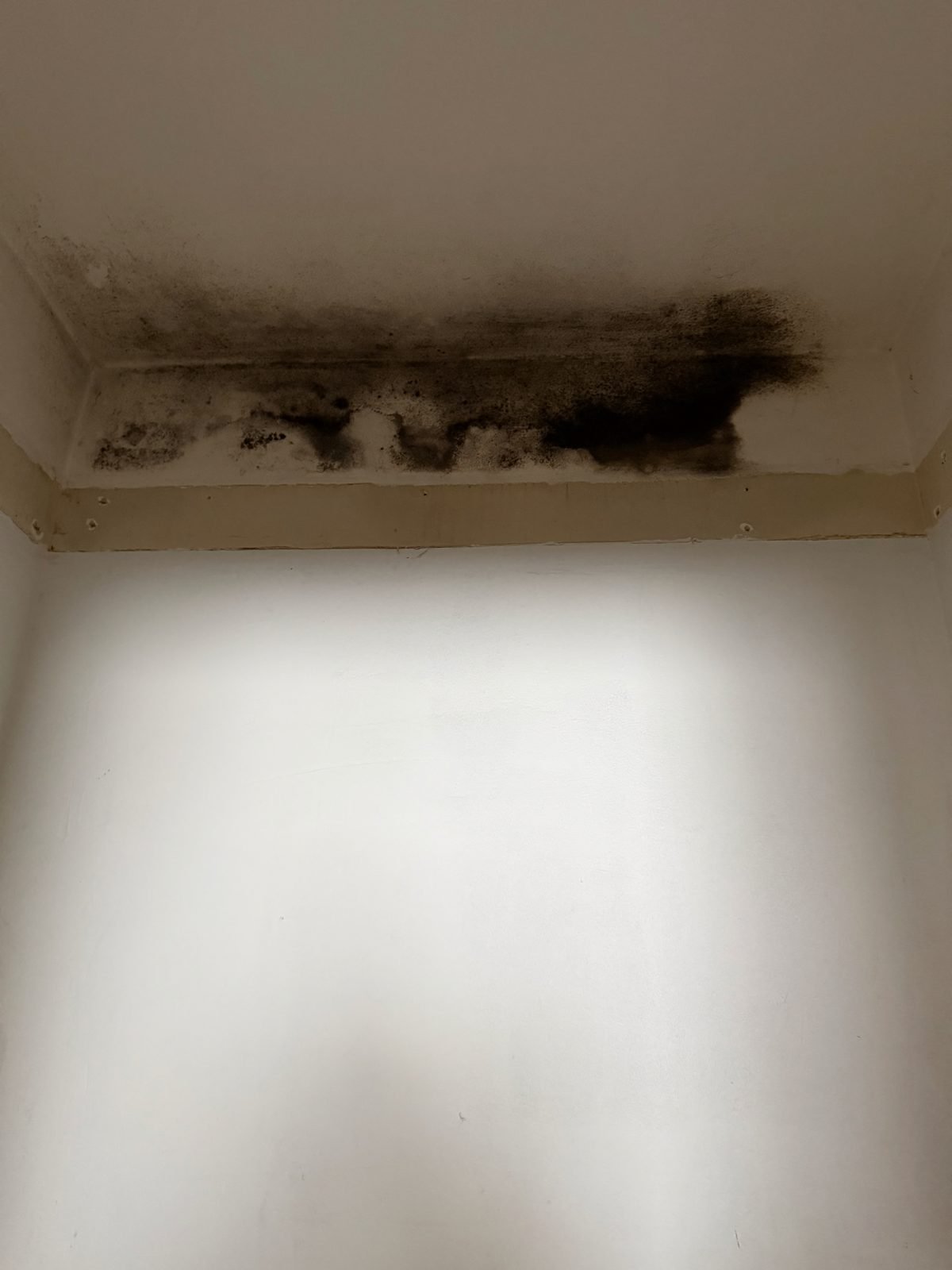
This is what the clock looks like when it runs out: a recent Culver City job where moisture sat in the wall long enough for a solid colony band to form below the ceiling. Nothing about this happened overnight — and nothing about it was visible on day one.
What should you do in the first 24 hours to prevent mold?
The goal of the first day is simple: stop adding water and start removing it.
- Stop the source. Shut off the water at the fixture or the main. If the water came from a storm, deal with what you safely can and leave roof work to a roofer.
- Make it safe. Keep people and pets away from wet electrical outlets and sagging ceilings. If water reached outlets or the panel, shut off power to that area if you can do it safely.
- Get the standing water out. Every gallon you extract is a gallon nobody has to dry.
- Move belongings off wet floors. Rugs, boxes, and furniture legs sitting in water keep wicking it up.
- Take photos before anything is moved or removed. Dated pictures of the water, the source, and the damage help with any insurance claim later.
- Call for professional drying if the water got inside walls, under flooring, or into a ceiling.
Household fans help dry a wet floor surface, but they rarely dry the inside of a wall. Our water damage restoration crew uses commercial air movers and dehumidifiers and, when a cavity is holding water, opens the bottom of the wall so air can actually reach the framing. For the full first-day checklist, see our first 24 hours after water damage guide.
How do you know the wet materials are actually dry?
You measure them. Dry to the touch isn’t dry. The surface of a wall can feel fine while the framing behind it is still holding water, and paint dries in hours while the insulation above a ceiling can stay wet for days.
A proper drying job uses a moisture meter. Readings are taken on the wet materials every day and compared to a dry reference: the same material in a part of the house the water never reached. When the wet area reads the same as the dry area, it’s dry. Until then, walls stay open and equipment stays running.
The air matters too. The EPA recommends keeping indoor humidity below 60 percent, ideally between 30 and 50 percent. Dehumidifiers pull the moisture that the air movers lift out of the materials, so it doesn’t just soak back into the house.
Our guide to ceiling water stains after rain explains what that stain is telling you and what to do next.
What if it’s already been more than 72 hours?
First, don’t seal it up. Painting over a stain, closing an opened wall, or laying new flooring over a damp subfloor traps the moisture and hides whatever is growing. Signs that the window was missed include a musty smell, staining that spreads or darkens, bubbling or peeling paint, soft drywall, and warped baseboards or flooring.
What changes after the window is the approach. Wet porous materials, such as drywall, insulation, and carpet pad, are usually removed instead of dried. If mold is already growing, size matters. The EPA’s mold cleanup guidance uses less than about 10 square feet as the size of a patch a homeowner can usually clean up, and anything larger as a job for a professional. Inside a wall, you often don’t know the size until the wall is open.
Larger growth, or growth inside walls, calls for mold remediation: containment so nothing disturbed travels into the rest of the house, HEPA air filtration, removal of colonized materials, cleaning and drying of the framing that stays, and then clearance. Homeowners in the Valley can see how that works locally on our Encino mold remediation page.
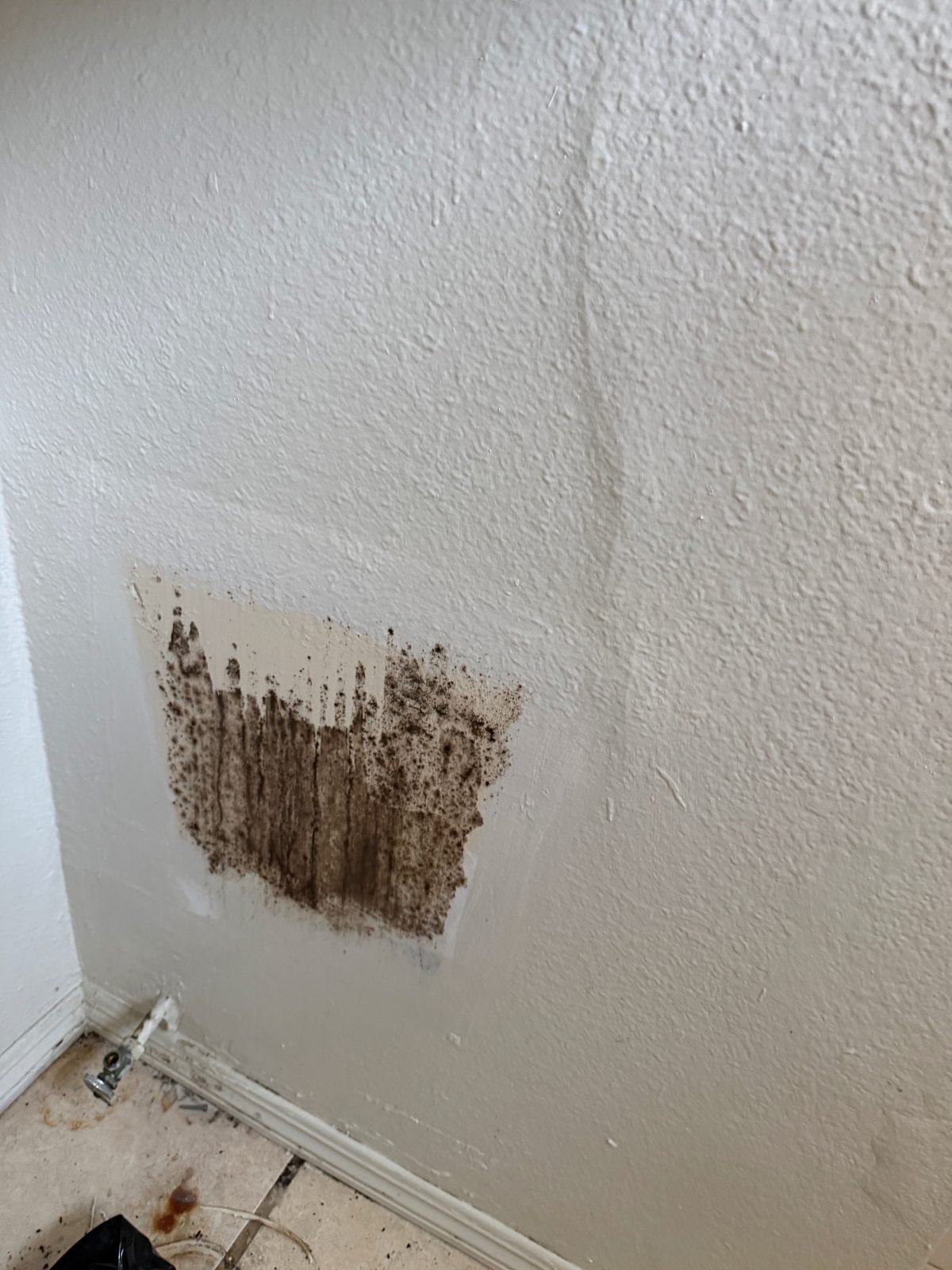
Same Culver City job: this colony was living under the paint. The wall looked like a wall until the surface came off. That’s the core problem with the past-72-hours scenario — by then the growth is usually in and behind materials, not on them.
Who confirms the mold is gone, and is it a health risk?
Clearance is done by an independent third party, not by the company doing the work. That’s a deliberate separation. We do the remediation; a separate professional does the sampling and confirms the area is clear before rebuilding starts. The company that does the work is never the one grading it.
On health: we are restoration professionals, not medical professionals. Some people are more sensitive to mold than others. If anyone in your home has symptoms or a health condition you’re worried about, talk to a doctor. Our part is the building: finding the moisture, drying it, and removing what can’t be saved.
Water in the house right now, or a stain you’re not sure about? Call (818) 486-6546. We answer 24/7, and you’ll get a written scope and price before work starts.
Oren Gedalia, Owner — IICRC-certified · CSLB #1078518