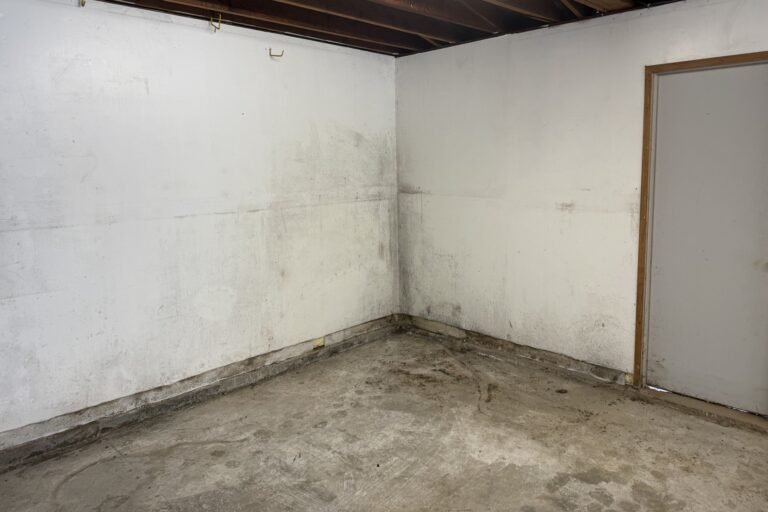

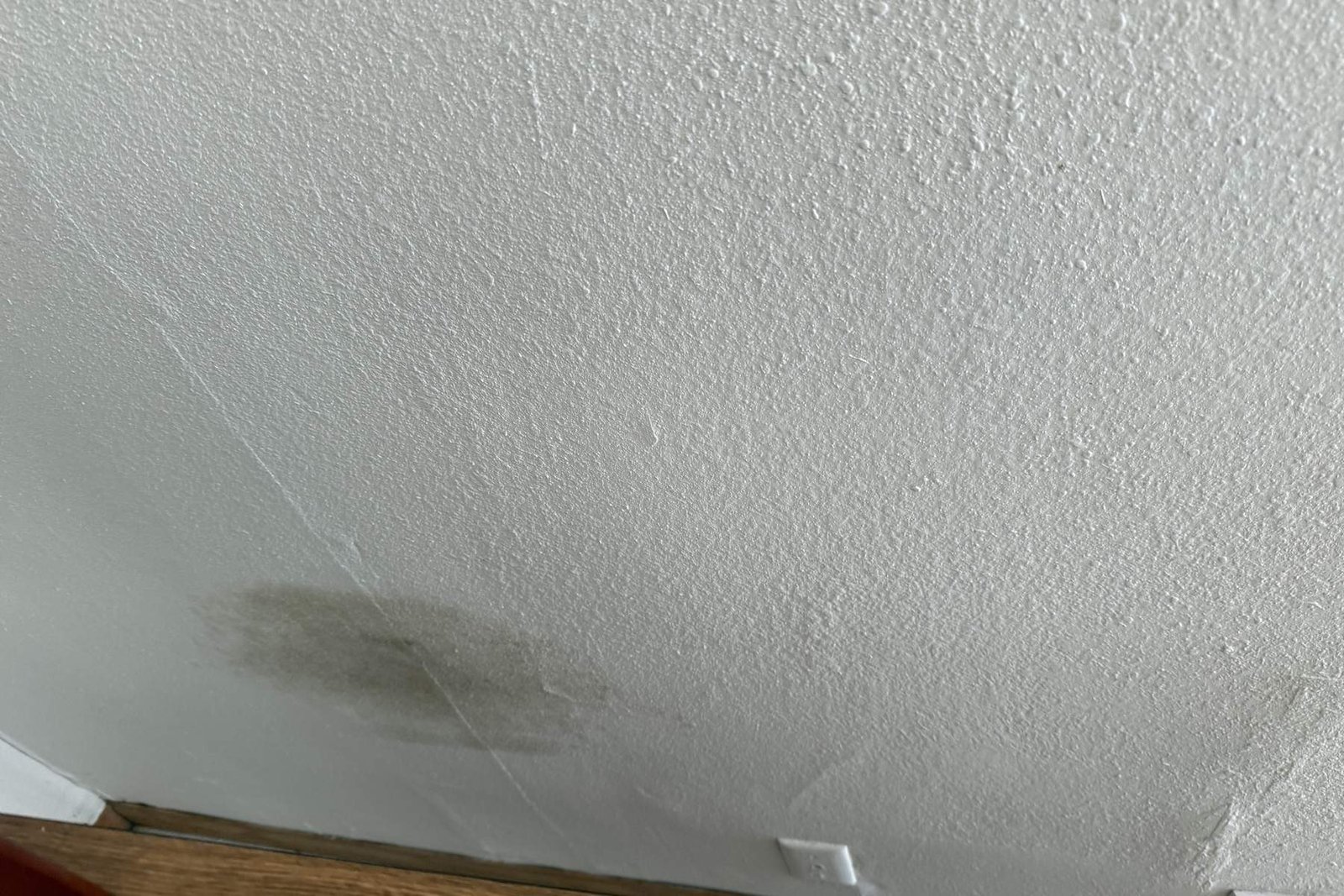
Here’s the honest answer to the mold vs. mildew question: mildew is a surface problem, mold is a material problem. Mildew lives on top of things — a flat, powdery, gray or white film on grout, window sills, and bathroom ceilings that wipes away with household cleaner and stays gone if you fix the moisture. Mold roots into things — green, black, or brown growth, often fuzzy or slimy, that penetrates drywall, wood, and cabinet backs, smears instead of lifting when you wipe it, and comes back because the colony lives deeper than the surface. One is a Saturday-morning chore. The other is a moisture problem inside your walls wearing a small disguise. Below: how to tell which one you’re looking at in about a minute, and where the honest DIY line sits.
What’s the actual difference between mold and mildew?
Scientifically, mildew IS a mold — an early-stage, surface-level form of it. That’s why the internet answers feel circular. The distinction that matters in your house is practical, not botanical:
- Mildew stays on the surface of a material. It’s flat or powdery, usually gray, white, or light brown, and shows up where humidity condenses on non-porous or sealed surfaces: tile grout, shower doors, window sills, painted bathroom ceilings.
- Mold colonizes the material itself. It’s darker — green, brown, black — often fuzzy, raised, or slimy, and it grows where a material stays wet: drywall behind a leak, wood framing, the back of a cabinet with a slow drip, carpet pad after water damage.
The other tell is smell. Mildew smells musty in the room it’s in. An earthy, persistent mustiness with no visible source is the classic sign of mold growing somewhere you can’t see — inside a wall, under flooring, behind a vanity.
How do you tell which one you have?
The one-minute wipe test, straight from how we assess it on jobs:
- Spray the spot with an all-purpose bathroom cleaner and wipe firmly with a white rag.
- If it lifts completely — surface bright, rag lightly gray, nothing left in the texture — treat it as mildew. Fix the ventilation or condensation and it stays gone.
- If it smears, stains the material underneath, or is back within days — the growth is in the material, not on it. That’s mold, and what you can see is usually the smallest part of the colony.
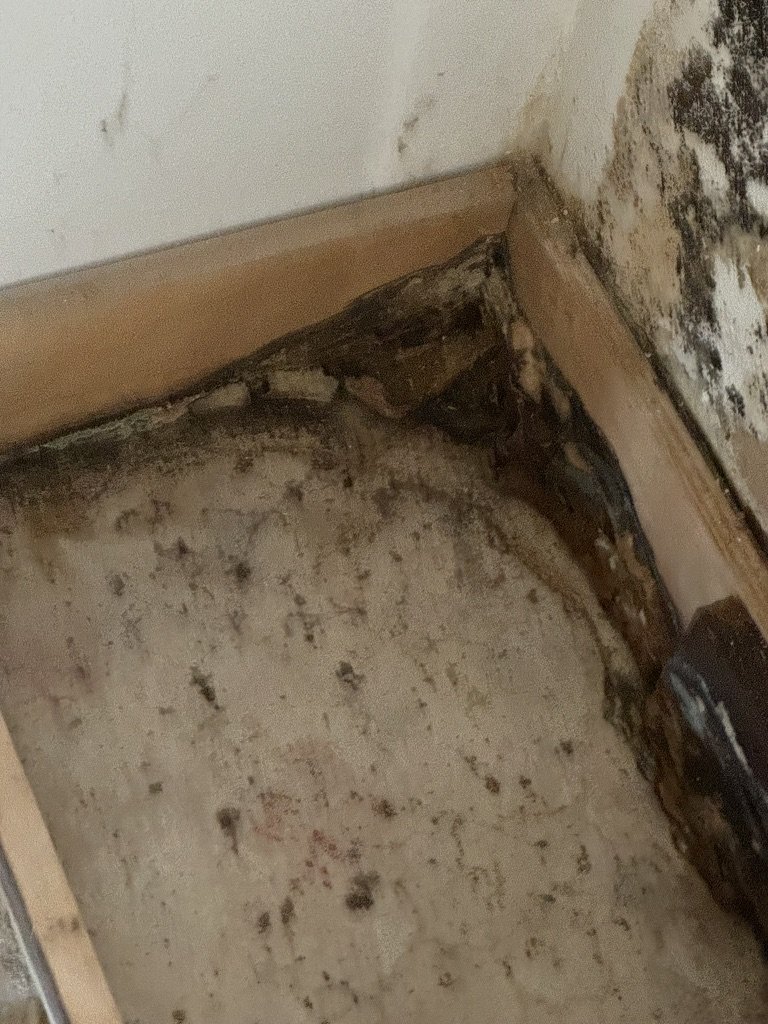
That corner is from the same Calabasas job as the photos below: spotting scattered across the floor and up the baseboard that a quick glance could write off as surface grime. It failed the wipe test — the growth was in the wood, not on it — and opening the floor confirmed how far it had traveled.
When is it safe to handle it yourself?
The EPA’s mold cleanup guidance draws the DIY line at about 10 square feet — roughly a 3-by-3-foot patch. Inside that, on a hard, non-porous surface, with no health sensitivities in the house: gloves, ventilation, detergent, done. We’d add three conditions of our own, from years of seeing DIY jobs go sideways:
- You can see all of it. Growth that disappears behind a baseboard, cabinet, or wall edge continues where you can’t reach.
- The material is non-porous. Tile, glass, sealed counters — yes. Drywall, raw wood, carpet, ceiling texture — the growth is inside the pores, and surface cleaning leaves the colony alive.
- You know where the water came from and fixed it. Every mold problem is a moisture problem first. Clean without fixing the source and you’re renting the result.
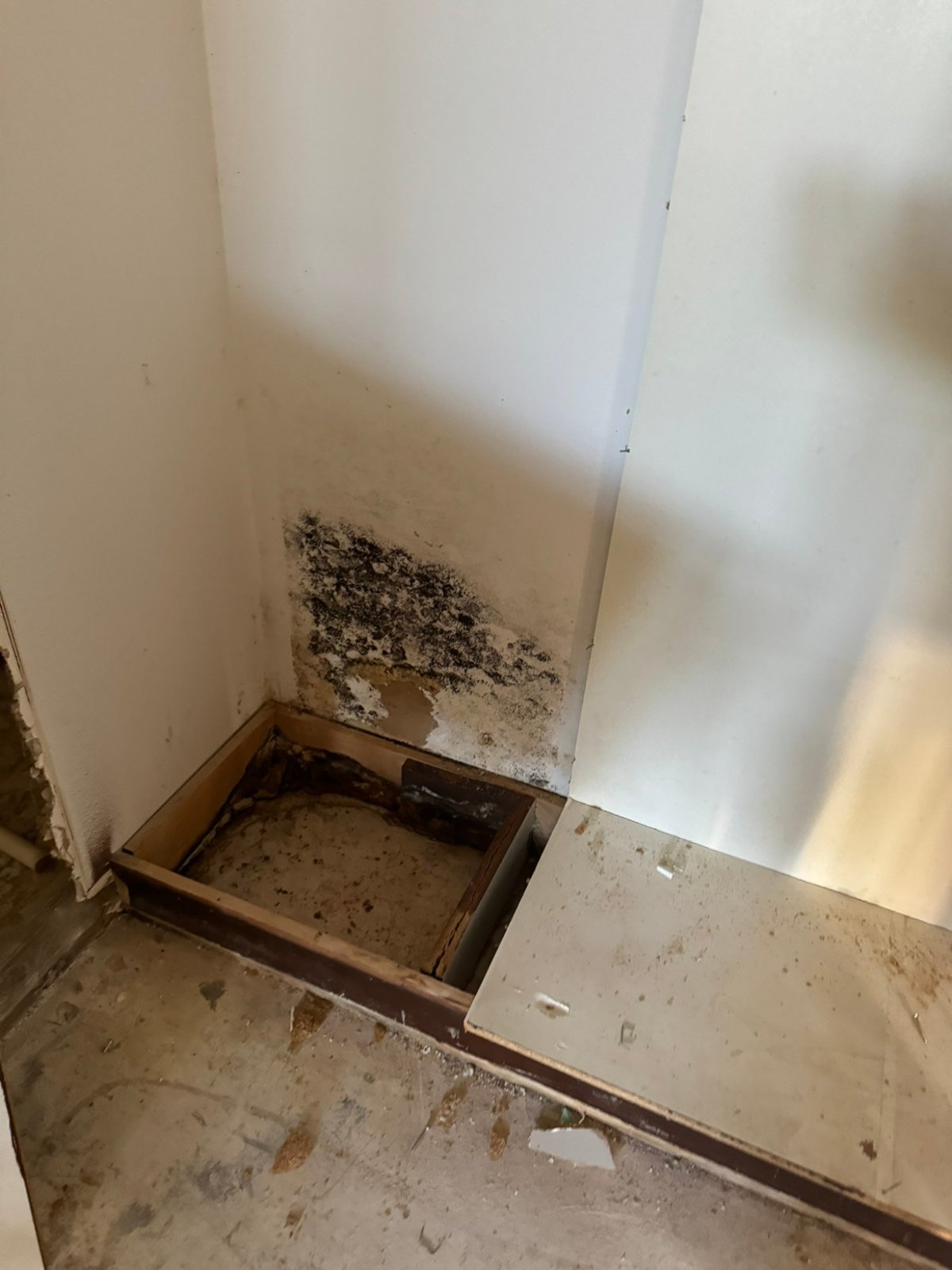
This is what the losing side of the wipe test eventually looks like — a recent job of ours in Calabasas: the colony has grown through the paint into the drywall itself, and the floor below is open because the damage didn’t stop at the surface. No spray fixes this — the material comes out as part of proper mold remediation.
What a remediation firm actually does differently
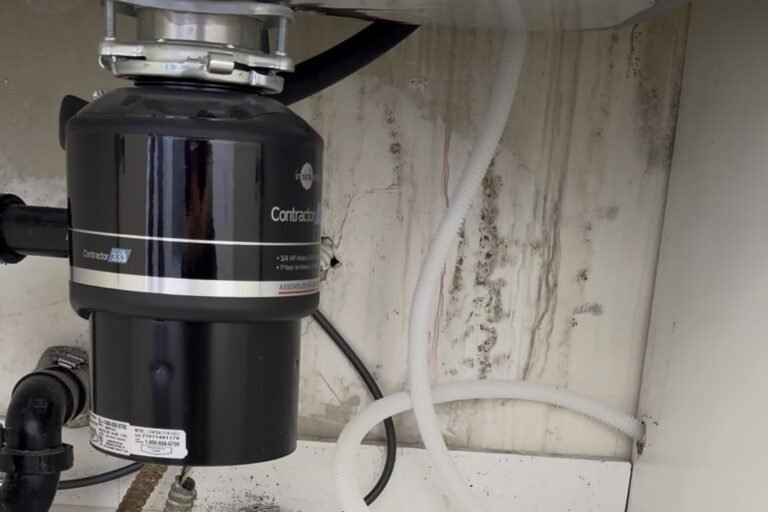
As an IICRC-certified remediation firm, our job starts where the wipe test fails. Real remediation is containment first — plastic barriers and negative air pressure so disturbing the colony doesn’t seed spores through the house — then HEPA air filtration, removal of the colonized material (not spraying it, removing it), treating what stays, and drying the cause. On that Woodland Hills job, that meant a sealed containment around the kitchen, the cabinet back and a section of drywall out, and the supply line fixed before anything was rebuilt.
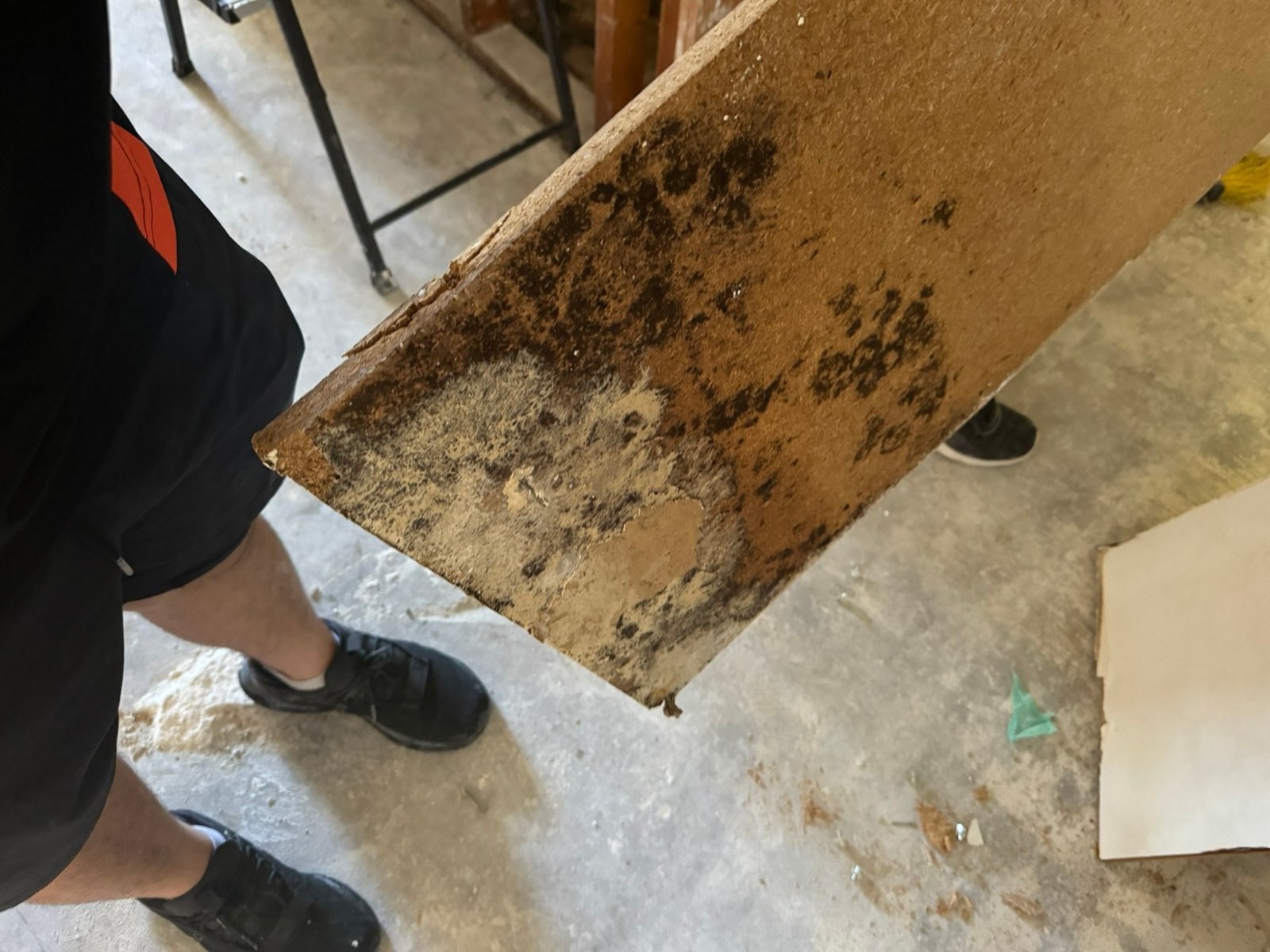
That’s what “removal” means in practice: the colonized panel leaves the building — bagged, sealed, gone — instead of getting a coat of paint over the problem.
Two things we deliberately don’t do, and you should be suspicious of any contractor who does both: we don’t test or inspect for mold — clearance testing after remediation comes from independent third-party hygienists, so the company grading the work isn’t the company that did it — and we don’t diagnose health symptoms. We are restoration professionals, not medical professionals. If anyone in your home has symptoms they connect to mold, that conversation belongs with your doctor; the EPA’s mold resources cover the health side well.
If the problem traces back to a leak or flood, timing matters more than anything in this article — mold’s head start is measured in days, which is why our first-24-hours guide pushes drying so hard. And if you’re wondering who pays when it turns out to be the real thing, we’ve covered when California homeowners insurance covers mold separately.
Failed the wipe test, or smelling something you can’t find? Call us at (818) 486-6546 — 24/7, across LA, Ventura, and Orange County, including our home base in Woodland Hills. We’ll tell you straight if it’s a Saturday chore or a remediation job.
Oren Gedalia, Owner — CSLB #1078518