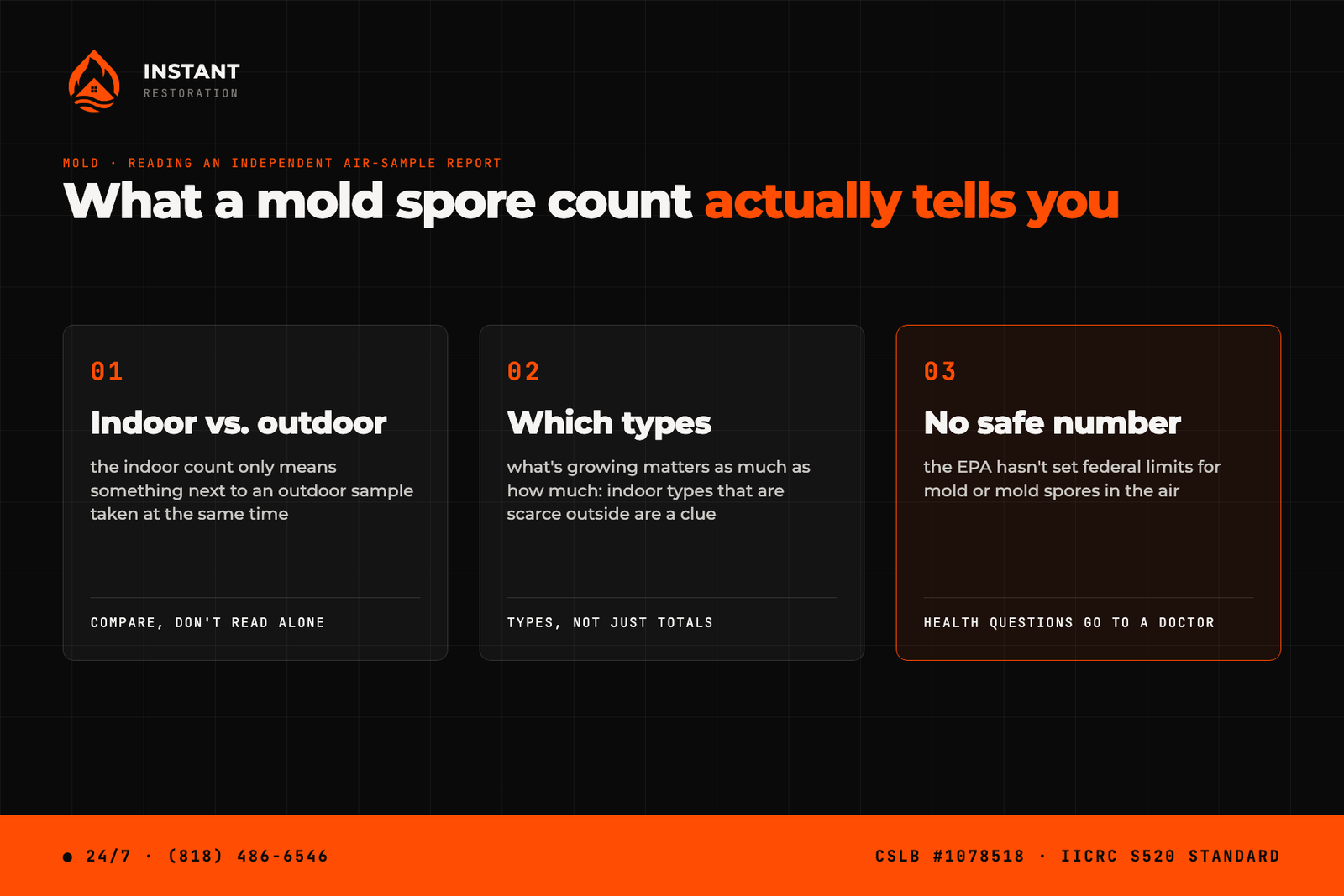
A mold spore count is a measure of how many mold spores were in a sample of air, usually reported as spores per cubic meter. It’s a snapshot of one room at one moment, and on its own it doesn’t tell you much. There’s no federal safe number to hold it up against: the EPA says no federal limits have been set for mold or mold spores. A count means something only when it’s compared with an outdoor sample taken at the same time and read alongside the types of spores the lab found. And no count can tell you whether mold is affecting your health. That’s a doctor’s question. Here’s how to read the report you were handed, and what it can and can’t tell you.
One thing up front, because it shapes everything below: we don’t take air samples, and we don’t read lab results as a service. We’re a remediation company. Testing is done by independent industrial hygienists, so the company doing the removal is never the one grading it. This guide is about reading a report someone else wrote.
What does a mold spore count actually measure?
For a typical air sample, the hygienist runs a pump that pulls a measured volume of air across a small collection cassette. The lab counts the spores that landed on it under a microscope, sorts them by type, and scales the result up to spores per cubic meter of air. Most reports show the indoor rooms in one column and an outdoor sample in another.
That’s useful, but it’s narrow. Mold spores are everywhere. The EPA’s guide to mold and moisture says they float through outdoor and indoor air all the time, so a count of zero isn’t the goal and isn’t realistic. What the sample captures is what was in the air of that room while the pump ran. Counts can swing with the weather, the season, wind, whether a door was open, and whether anyone had just disturbed a moldy surface. Two samples taken a day apart can read very differently.
Is there a safe mold spore count?
No. There’s no number that’s officially safe and no number that’s officially dangerous. The EPA’s page on mold testing and sampling says no EPA or other federal limits have been set for mold or mold spores, so sampling can’t be used to check a building against a federal standard. You’ll see charts online that sort counts into low, moderate and high. Those come from labs and private sources, not from a regulation, and they don’t agree with each other.
That’s why a good report is read as a comparison, not a verdict. The question isn’t “is this number too high?” It’s “is the air inside different from the air outside, and does that point to mold growing somewhere in the house?”
Why does the outdoor sample matter so much?
Because outdoor air is the baseline. Spores come into every house through doors, windows and the HVAC, so a healthy indoor sample usually looks like a quieter version of the outdoor one: similar types, in a similar mix, at similar or lower levels.
The patterns hygienists generally look for are these:
- Indoor counts well above outdoor. Something inside is adding spores to the air.
- A type that’s common indoors but scarce outdoors. Some molds turn up mainly where material has stayed wet for a while. Finding them inside and not outside is a clue, even when the total count is modest.
- One room that reads differently from the rest. That’s often where the moisture problem is, or the room next to it.
The report’s notes, or the hygienist who wrote it, should tell you which of these they found and what they think it means. If the report is just a table of numbers with no interpretation, ask for one. You paid for it.
Can a spore count tell you if mold is making you sick?
No, and anyone who tells you otherwise from a lab sheet is overreaching. People react to mold very differently. The EPA notes that molds produce allergens, irritants and, in some cases, potentially toxic substances, and that some people are more sensitive than others. But a spore count doesn’t measure how a particular person’s body responds, and it can’t diagnose anything.
If you or someone in the house has symptoms you think are tied to the home, take the report to a doctor. Bring the dates, which rooms were sampled, and what you’ve noticed. We are restoration professionals, not medical professionals, and we won’t tell you a number is safe or unsafe for your family. What we can tell you is what it takes to remove the growth and fix the moisture that’s feeding it.
Do you need a spore count if you can already see mold?
Usually not. The EPA says that in most cases, if visible mold growth is present, sampling is unnecessary. If you can see it, you already know the answer to the question a sample would ask. The job is to find the water that’s feeding it and remove the growth.
Sampling earns its cost in a few situations:
- You smell mold but can’t find it.
- There’s been a leak inside a wall or ceiling and you want to know whether growth is spreading spores into the living space.
- A doctor has asked whether the home could be a factor.
- Remediation is finished and you want an independent check that the work did what it was supposed to. That’s clearance, and it should come from a third party, not from the company that did the work.
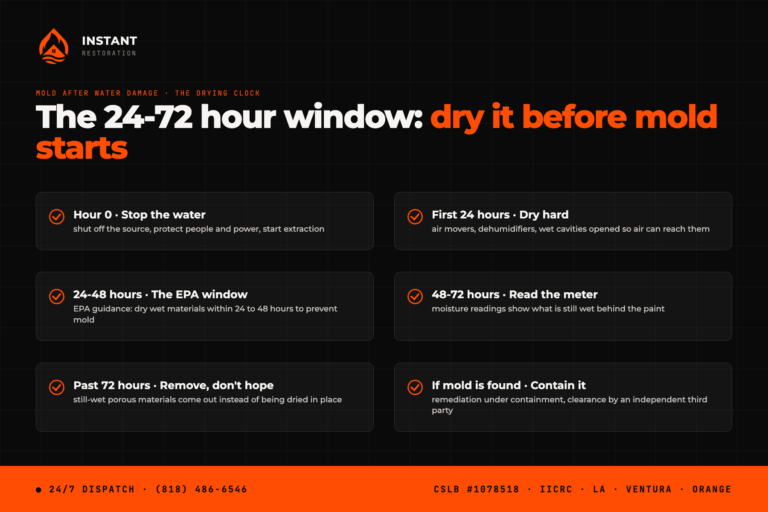
If the water came from a recent leak, the clock matters more than the sample. Our guide to how fast mold grows after water damage covers the first few days.
What happens after the report says there’s a problem?
The report tells you there’s growth somewhere. It doesn’t tell you how to remove it. That’s where we come in. On a remediation job, the moisture source gets found and fixed first, or the mold comes back. Then containment goes up so nothing we disturb travels into the rest of the house.
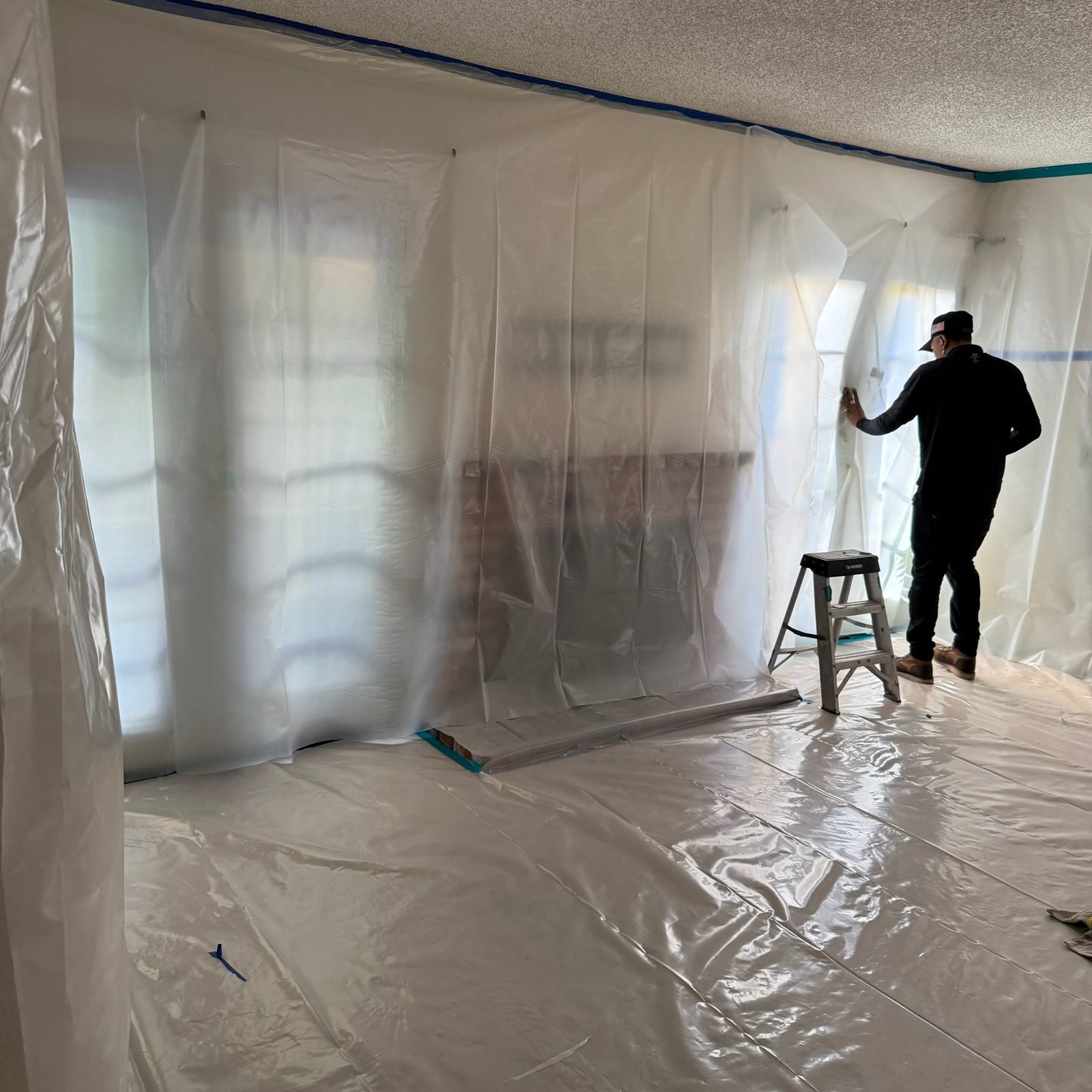
Containment going up on an Arcadia job: plastic sheeting taped over the walls and the floor.
Inside the containment, colonized material that can’t be cleaned comes out, the framing that stays is cleaned, and everything’s dried until it reads dry on a moisture meter. We work to the IICRC S520, the industry standard for mold remediation. Then the independent hygienist comes back for clearance before anything gets closed up or rebuilt.
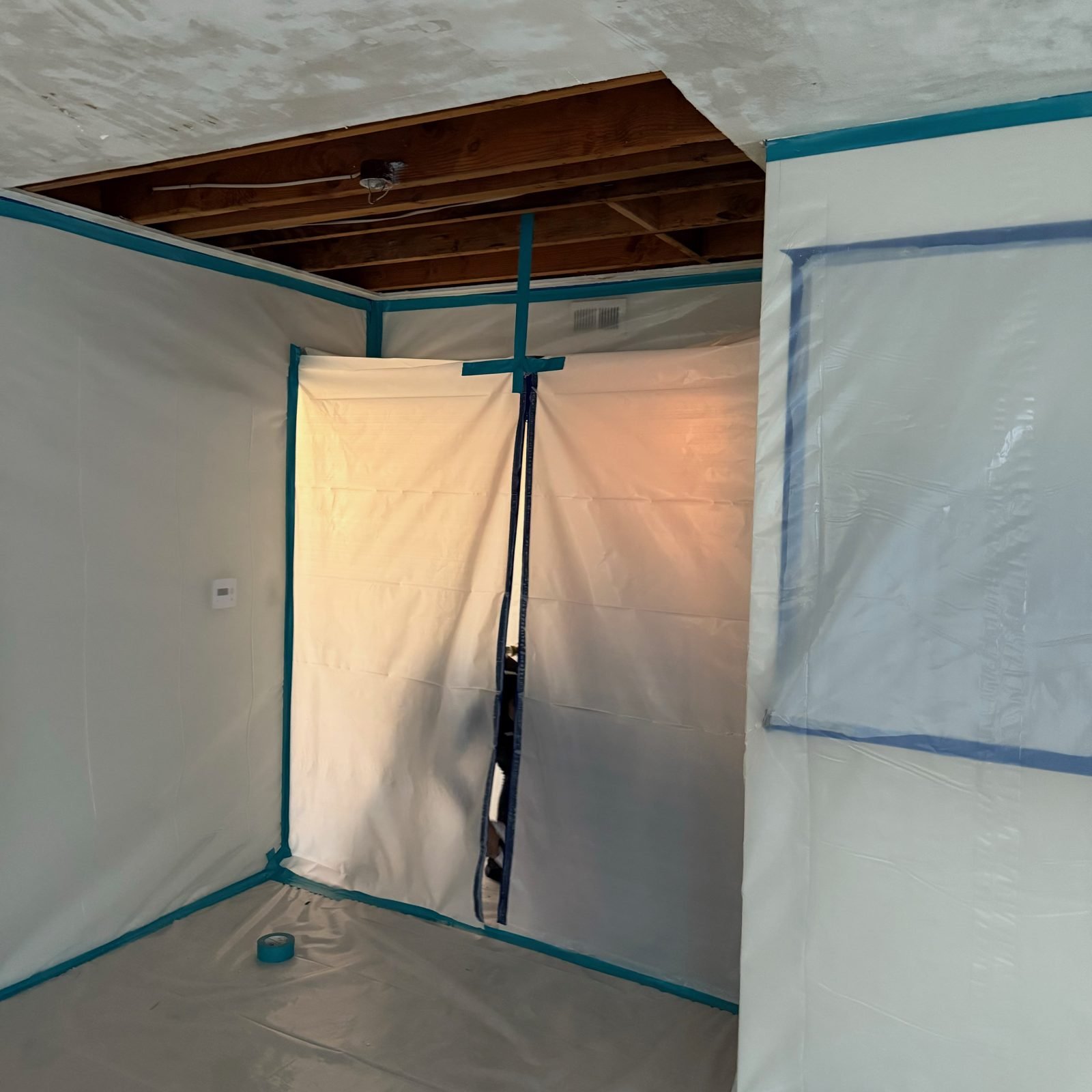
A zipper-door containment chamber on the same Arcadia job, under ceiling joists that have been opened up.
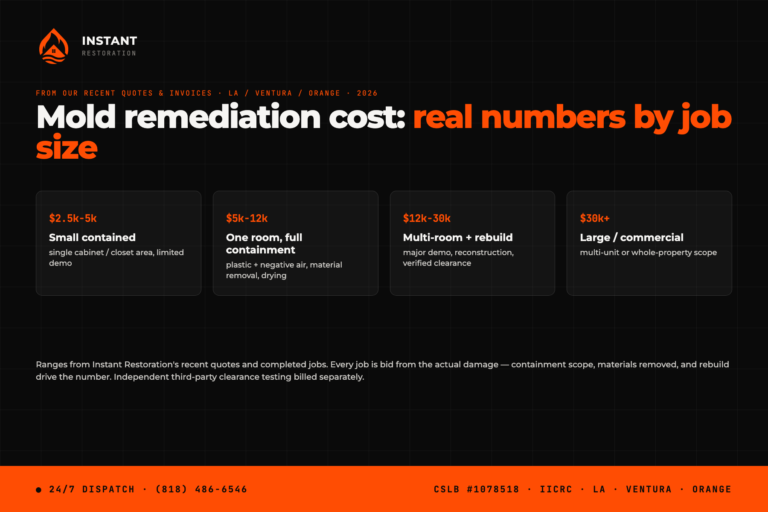
We’re clear about what we don’t do. From our mold removal and remediation page: Mold testing, Mold inspection, Air sampling, Surface sampling, Spore identification. Those belong to the hygienist. If you want to know what a job like this tends to cost, our mold remediation cost guide walks through it by job size, and if the growth is dark and you’re worried about what it is, start with what to do about black mold in your house. In Calabasas, see our Calabasas mold remediation page.
Got a report and not sure what comes next? Call (818) 486-6546. We answer 24/7, and you’ll get a written scope and price before work starts.
Oren Gedalia, Owner — IICRC-certified · CSLB #1078518